
The seamless integration of high-speed digital networks into the fabric of daily life has transformed Portugal into a premier destination for those who require constant, reliable access to the global village. As travelers touch down at Lisbon’s Humberto Delgado Airport or navigate the sun-drenched coastlines of the Algarve, they are met with a telecommunications infrastructure that ranks among the most sophisticated in the European Union. This level of connectivity is not merely a convenience but a fundamental component of the nation’s modern identity, supporting everything from remote work in historic villages to real-time navigation through the dense, winding streets of Porto. With mobile penetration rates reaching record highs, the country has successfully bridged the gap between its rich historical heritage and the demands of a data-driven future, ensuring that staying online is as effortless as ordering a bica at a local café.
Major Network Operators and Market Dynamics
Leading Service Providers and New Competitors
The landscape of Portuguese telecommunications is currently defined by a fierce rivalry between three long-standing giants—MEO, Vodafone, and NOS—each carving out a specific niche to attract a diverse range of users. MEO, the descendant of the former national incumbent, leverages its legacy infrastructure to provide the most comprehensive geographical footprint in the country, particularly in the rugged interior where other signals might falter. This makes MEO the primary recommendation for those planning extended stays in the rural Alentejo or the mountainous Serra da Estrela. In contrast, Vodafone Portugal has strategically positioned itself as the gateway for international visitors, maintaining a dominant retail presence at every major airport and offering prepaid “tourist packs” that prioritize ease of activation and immediate data availability for those just stepping off a plane.
The competitive environment has shifted significantly with the aggressive expansion of NOS and the market entry of Digi, a low-cost disruptor that has forced the incumbents to reconsider their pricing models. NOS has focused its capital expenditure on being the leader in 5G availability, ensuring that users in metropolitan areas spend a higher percentage of their time on ultra-high-speed bands compared to any other provider. Meanwhile, Digi has appealed to the budget-conscious segment, offering straightforward, no-frills data packages that provide high value in densely populated urban zones. Furthermore, the rise of Mobile Virtual Network Operators (MVNOs) has introduced a layer of specialized services, often providing English-language support and digital-first interfaces that cater specifically to the needs of the short-term international community and the growing population of digital nomads.
Performance in Urban and Metropolitan Hubs
In the bustling centers of Lisbon, Porto, Coimbra, and Braga, the mobile experience is characterized by a nearly ubiquitous presence of 4G and 5G signals that maintain a reliability rate exceeding 97 percent. These urban hubs serve as the testing grounds for the latest network optimizations, allowing for activities that demand massive bandwidth, such as high-definition 4K video streaming and low-latency cloud gaming, to occur without interruption. For the professional traveler, this means that conducting a high-stakes video conference from a coworking space in the Parque das Nações or a rooftop bar in Vila Nova de Gaia is as stable as using a wired connection. The density of cell towers in these areas ensures that even during large-scale events like the Web Summit or traditional festivals, the network remains resilient under the pressure of thousands of simultaneous connections.
However, the experience of urban connectivity is not entirely without its nuances, particularly when one transitions from modern boulevards into the ancient, stone-heavy architecture of the historic districts. While the 5G icon may remain visible on a smartphone screen, the actual data throughput can occasionally experience “indoor fading” as high-frequency signals struggle to penetrate the thick granite and limestone walls common in buildings dating back centuries. During peak evening hours, when local residents and tourists alike saturate the local towers with data-heavy traffic, minor fluctuations in speed may occur. This reality encourages savvy users to look beyond the signal bars and understand that true performance in a European city of this age often requires a balance between the latest cellular tech and the strategically placed Wi-Fi hotspots found in almost every commercial establishment.
Regional Coverage and Geographic Variations
The Coastal Belt and Tourism Corridors
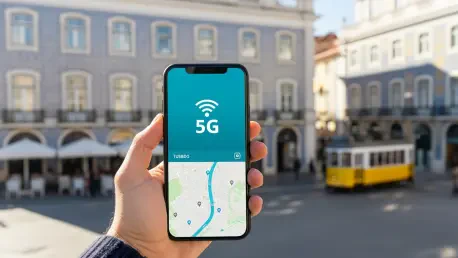
The most robust segment of Portugal’s telecommunications grid follows the western coastline, forming a continuous “connectivity corridor” that stretches from the northern border with Spain down through the industrial heartlands and into the southern Algarve. This region receives the vast majority of infrastructure investment because it houses the bulk of the population and the highest concentration of seasonal visitors. In this belt, 5G is no longer an outlier but the standard, providing the foundation for a digital lifestyle where ride-sharing apps, food delivery services, and real-time transit updates function with surgical precision. The Algarve, in particular, has seen massive upgrades to its network capacity to handle the dramatic surges in demand during the summer months, ensuring that the influx of international tourists does not lead to a localized digital blackout.
Even within the most picturesque and historically protected coastal areas, such as the narrow alleys of Lisbon’s Alfama or the riverside Ribeira in Porto, the network operators have managed to conceal small-cell technology to maintain signal integrity without marring the aesthetic of the architecture. This allows visitors to share high-resolution media instantly while exploring the labyrinthine streets that define the Portuguese urban experience. The reliability in these corridors is so high that many travelers find they can rely entirely on their mobile data plans for all their internet needs, often bypassing hotel Wi-Fi entirely. This coastal dominance ensures that as long as one remains within sight of the Atlantic or within a short drive of the main A1 and A2 highways, the quality of the internet connection will mirror that of any leading global tech hub.
Connectivity in the Rural Interior
Moving eastward from the Atlantic coast toward the Spanish border reveals a shift in the telecommunications landscape, where the sheer density of towers gives way to a more strategic, spread-out infrastructure. In the vast plains of the Alentejo or the deep valleys of the Douro, the focus of operators like MEO and Vodafone shifts from ultra-fast 5G to maintaining a rock-solid 4G backbone that can cover large, sparsely populated distances. While travelers will still find reliable service in major regional towns like Évora, Beja, or Castelo Branco, the spaces in between can occasionally present challenges for high-bandwidth activities. These “rural stretches” are where the distinction between network providers becomes most apparent, as the older incumbent networks often have a significant advantage in signal penetration across rolling hills and agricultural landscapes.
In these interior regions, 5G coverage is often localized to municipal centers, while the surrounding countryside may rely on lower-frequency bands that prioritize range over raw speed. During the peak of the summer tourism season, when the “interior route” becomes popular for those seeking a more authentic Portuguese experience, the local infrastructure can feel the strain of increased traffic. This can result in slower loading times for data-heavy applications during the middle of the day. Travelers are often advised to treat their mobile connection in these areas with a bit more foresight, perhaps downloading offline navigation data or essential travel documents before leaving the coastal hubs. Despite these variations, the overall rural connectivity remains remarkably high compared to many other European nations, with very few true “dead zones” remaining along the primary transit routes.
The Atlantic Islands: Madeira and the Azores
The autonomous regions of Madeira and the Azores represent a unique challenge for mobile connectivity due to their volcanic topography and their isolated position in the North Atlantic. Despite these geographical hurdles, the Portuguese government and major operators have invested heavily in submarine fiber-optic cables and satellite backhaul to ensure the islands are not left behind in the digital age. In Funchal, Ponta Delgada, and other major island settlements, the mobile experience is virtually indistinguishable from that of mainland Lisbon, with high-speed 4G and 5G readily available to residents and tourists. These islands have become unexpected hotspots for remote workers who seek a dramatic natural backdrop without sacrificing the ability to attend high-bandwidth virtual meetings or manage complex digital workflows.
However, the rugged interior of these islands—characterized by steep calderas, dense laurel forests, and high-altitude peaks—can naturally interfere with cellular reception. When hiking the levadas of Madeira or exploring the volcanic craters of São Miguel, the signal strength can drop significantly or disappear entirely in deep ravines and behind massive rock formations. Furthermore, the backhaul speeds on the smaller islands of the Azorean archipelago, such as Corvo or Flores, may not always match the lightning-fast standards of the mainland due to the logistical complexities of transporting data across such vast oceanic distances. Visitors to these regions are encouraged to use local Wi-Fi in their accommodations for large updates or backups and to view their mobile data as a vital, yet sometimes variable, resource for when they are on the move.
Practical Methods for Accessing Mobile Data
The Tradition of Physical SIM Cards
For many travelers, the physical SIM card remains the most tangible and trusted method of securing a local mobile connection, providing a sense of certainty that their device is properly configured for the Portuguese network. These cards are ubiquitous and can be purchased within minutes of clearing customs at the international airports in Lisbon, Porto, and Faro, where dedicated kiosks for Vodafone, MEO, and NOS operate with staff accustomed to assisting foreign visitors. Beyond the airports, every major “Centro Comercial” or shopping mall features sleek retail stores for these providers, offering a more personalized service for those who might need help navigating plan options. The process is standardized across the country: a visitor selects a prepaid plan, provides a form of identification—usually a passport or a national ID card—and the staff handles the registration and activation on the spot.
The requirement for identity registration is a cornerstone of Portuguese telecommunications law, intended to ensure security and accountability within the network. While this adds a small administrative step compared to some other markets, it typically takes less than ten minutes and ensures that the line is fully compliant and less likely to face sudden service interruptions. Physical SIM cards are especially favored by those using older smartphone models or budget devices that may not yet support the latest digital-first standards. Furthermore, having a physical card provides a backup; if a phone is lost or damaged, the SIM can often be transferred to a new device without needing to navigate complex digital recovery codes or contact customer support in a foreign language, making it a robust choice for long-term travelers.
Benefits of a Local Phone Number
One of the most significant, yet often overlooked, advantages of acquiring a local Portuguese SIM card—whether physical or digital—is the provision of a +351 phone number. While many travelers rely on internet-based messaging apps like WhatsApp or Telegram, a traditional local number remains an essential tool for navigating the practicalities of daily life in Portugal. Many local services, ranging from restaurant reservation systems to government-run health portals and banking apps, require a Portuguese number to send automated SMS verification codes. Without a local number, visitors often find themselves locked out of convenient digital features, such as the widely used MB WAY payment system or the ability to receive real-time updates from local ride-hailing drivers who may struggle to call international numbers due to high costs.
Moreover, a local number provides a psychological bridge between a visitor and the local community, making it easier to contact small businesses, guest houses, or local guides who may not always be active on international messaging platforms. It also avoids the excessive roaming charges that can be incurred when making traditional voice calls to local landlines or mobile numbers using a home-country plan. In an era where digital privacy is increasingly scrutinized, having a dedicated local number for a trip allows travelers to keep their primary personal number separate from the various local registrations required for public Wi-Fi or loyalty programs. This functional utility ensures that the traveler is viewed by the local digital ecosystem as a resident participant rather than a transient guest, unlocking a smoother and more integrated experience.
The Shift Toward eSIM Technology
The transition toward eSIM technology has fundamentally altered the way tech-savvy individuals plan their arrivals in Portugal, shifting the focus from physical acquisition to digital preparation. By 2026, the majority of mid-range and premium smartphones come equipped with eSIM capabilities, allowing users to download and install a Portuguese mobile profile before they even board their flight. This “zero-touch” approach eliminates the need to hunt for a kiosk after a long-haul journey or deal with the potential frustration of a lost SIM card tool. International providers have capitalized on this trend by offering user-friendly apps that sell data-only packages specifically tailored for Portugal, often allowing for activation the moment the device detects a local signal. This provides an immediate sense of security, as travelers can instantly access maps and translation tools as soon as the plane lands.
This digital-first strategy also allows for a high degree of flexibility that physical cards cannot match, as many modern devices can host multiple eSIM profiles simultaneously. A traveler can maintain their primary home-country number for urgent calls and texts while using a secondary Portuguese eSIM for all data-heavy tasks, seamlessly switching between them through their phone’s settings. This eliminates the risk of missing important notifications from home while still benefiting from local data rates. As the technology has matured, the installation process has become nearly foolproof, often requiring nothing more than scanning a QR code sent via email. For the modern traveler who prioritizes efficiency and a minimalist approach to physical accessories, the eSIM has rapidly become the preferred standard for staying connected in the Portuguese market.
Local vs. International eSIM Options
When choosing an eSIM for a trip to Portugal, travelers are often faced with a choice between international data resellers and the eSIM offerings from local Portuguese giants like MEO and Vodafone. International eSIM providers, such as Airalo or Holafly, offer the ultimate in convenience, providing English-language interfaces and transparent, flat-rate pricing that can be managed entirely through a single app. These services are ideal for those who only need data for navigation and social media and who do not want to deal with the administrative hurdles of local registration. However, these international plans are almost exclusively data-only, meaning they do not come with a local phone number, which can be a significant drawback for those who need to make traditional calls or receive SMS verification codes during their stay.
In contrast, the local operators—MEO, NOS, and Vodafone—have evolved to offer their own prepaid eSIM versions of their popular “tourist packs.” While these may require a bit more effort to set up, often involving a visit to a local website or the presentation of a passport for registration, they provide a much more comprehensive service. A local eSIM typically includes a generous allowance of local voice minutes and SMS, as well as significantly higher data caps for the same price as an international reseller’s plan. For power users, digital nomads, or anyone staying in Portugal for more than a few days, the local eSIM route is almost always the superior choice in terms of value and functionality. It bridges the gap between the convenience of digital installation and the full utility of a traditional local mobile subscription.
Managing Costs and Technical Requirements
Data Usage and Fair Use Policies
Understanding the economics of mobile data in Portugal is essential for avoiding unexpected service cut-offs or throttled speeds, especially for those who consume large amounts of media. In 2026, the Portuguese market is quite competitive, with data prices being some of the most reasonable in Western Europe, yet the fine print of “unlimited” plans remains a critical area for scrutiny. Most prepaid plans categorized as unlimited are subject to a “Fair Use Policy” (FUP), which establishes a high-speed threshold—typically ranging from 30GB to 100GB per month. Once this limit is reached, the operator may significantly reduce the data speed to 2G or 3G levels, which is sufficient for basic messaging but inadequate for streaming or professional work. This makes it vital for users to monitor their consumption through the operator’s official mobile app to ensure they don’t hit these limits mid-trip.
For the average traveler, selecting a plan that offers between 10GB and 20GB of data for a two-week stay is usually more than sufficient for heavy use of social media, maps, and occasional music streaming. However, those who plan to work remotely or use their phone as a primary hotspot for a laptop should seek out higher-tier plans or specialized “nomad” bundles that offer higher FUP thresholds. It is also important to note that many Portuguese plans include “zero-rating” for specific apps like WhatsApp, Instagram, or Facebook, meaning that usage within these applications does not count toward the primary data allowance. This can be a massive benefit for those who spend a lot of time on social media, but it requires the user to verify which specific apps are included in their selected package to maximize their data efficiency.
Hardware Compatibility and Frequency Bands
A successful mobile experience in Portugal is heavily dependent on the technical capabilities of the hardware being used, specifically regarding the frequency bands supported by the device. Portugal utilizes the standard European spectrum for its 4G and 5G networks, which typically includes the 800MHz, 1800MHz, 2100MHz, and 2600MHz bands for 4G, and the 700MHz and 3.5GHz bands for 5G. While most modern flagship smartphones from Apple, Samsung, and Google are “global” devices that support almost all of these bands, older or budget-oriented models specifically built for the North American or Asian markets may lack support for certain frequencies. This can result in a frustrating experience where a traveler’s phone shows only one bar of 4G or drops to 3G in areas where a local device would have a full 5G signal.
Furthermore, it is a prerequisite that any device brought into the country must be “carrier-unlocked” before it can accept a Portuguese SIM or eSIM. Many travelers from regions where subsidized phone contracts are common find themselves unable to use local services because their home carrier has locked the device to their network. It is highly recommended to verify the lock status and band compatibility with the manufacturer or carrier well before departure. Once in Portugal, travelers should ensure their network settings are configured to “5G Auto” rather than “5G On.” This allows the device to intelligently switch back to 4G when 5G is not necessary or unavailable, which significantly preserves battery life—a crucial consideration for those spending long days exploring the sights and relying on their phones for navigation and photography.
Security on Public Networks
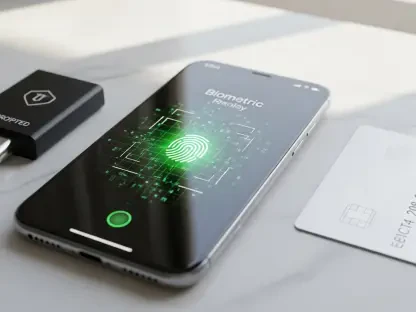
While the abundance of free public Wi-Fi in Portugal’s town squares, shopping centers, and cafes is a testament to the country’s digital openness, it also presents a set of security risks that travelers must navigate with care. Public networks, particularly those in high-traffic tourist areas like the Rossio in Lisbon or the beachfront in Quarteira, are prime targets for cybercriminals who may use “man-in-the-middle” attacks to intercept sensitive data. Because these networks are often unencrypted and open to anyone, logging into a banking app, accessing a corporate VPN, or entering credit card information while connected to them can expose a user to identity theft or financial loss. The convenience of free Wi-Fi should always be weighed against the inherent lack of privacy on these shared digital channels.
To mitigate these risks, the most effective strategy is to rely on a local mobile data connection whenever possible, using the phone as a secure personal hotspot for other devices like tablets or laptops. Because a cellular connection is encrypted by the provider, it is fundamentally more secure than an open public hotspot. For those situations where public Wi-Fi is the only option, the use of a reputable Virtual Private Network (VPN) is absolutely essential to create a secure tunnel for data transmission. Travelers should also disable “automatic joining” for open networks in their phone settings to prevent their devices from connecting to potentially malicious hotspots without their knowledge. By maintaining a disciplined approach to network security, visitors can enjoy the benefits of Portugal’s digital infrastructure without compromising their personal or professional information.
Best Practices for a Seamless Experience
Preparation and Redundancy
Maximizing the effectiveness of a mobile connection in Portugal begins with a proactive approach to preparation, ensuring that digital tools are ready to function even when the network becomes unpredictable. One of the most critical best practices is the use of redundancy; for instance, while 5G coverage is widespread, downloading offline maps for the entire country via Google Maps or specialized apps like Maps.me can be a lifesaver in the narrow canyons of the Douro Valley or the dense forests of Sintra. Similarly, saving digital copies of flight itineraries, hotel reservations, and the first few phrases of Portuguese translation in an offline-accessible format ensures that a traveler is never truly stranded if they encounter a localized signal drop. This “offline-first” mindset allows the mobile connection to serve as a powerful enhancement rather than a single point of failure.
Monitoring data usage is another essential habit that prevents the frustration of a sudden service disconnection in the middle of a trip. Most Portuguese operators provide a dedicated app that displays real-time balance and usage statistics, and some even offer widgets that can be placed on the home screen for at-a-glance tracking. Travelers should also familiarize themselves with the “top-up” or “recharge” process of their chosen provider before they actually run out of data. Most top-ups can be performed through the operator’s app using a credit card or at the ubiquitous “PayShop” terminals found in many small convenience stores and post offices. By keeping a close eye on their digital resources and having a backup plan for offline navigation, visitors can navigate the country with the confidence that they are always just a few taps away from the information they need.
Final Strategy for Travelers
The landscape of mobile connectivity in Portugal has matured into a user-centric ecosystem that rewards those who take a few moments to align their technology with their travel goals. For the vast majority of visitors, the most effective strategy is a hybrid approach: utilizing an eSIM for immediate data upon arrival while keeping an eye out for a local physical SIM if a Portuguese phone number becomes necessary for long-term functional tasks. By choosing an operator that matches their specific geographic itinerary—such as MEO for the rural heartlands or NOS for the tech-heavy cities—travelers can ensure they are always tapping into the strongest possible signal. This tailored approach allows for a much more fluid travel experience, where the technology fades into the background and simply works when it is needed most.
Ultimately, the goal of maintaining high-speed internet in Portugal is to enhance the journey, allowing for the spontaneous discovery of a hidden tasca in the hills or the effortless coordination of a meeting by the sea. The country’s commitment to 5G expansion and digital accessibility has created an environment where the “digital divide” is rapidly closing, making even the most remote corners of the territory feel connected. As long as travelers verify their hardware compatibility, respect the realities of fair use policies, and maintain basic security hygiene on public networks, they will find that Portugal’s digital infrastructure is among its greatest modern assets. With the right tools and a bit of foresight, the digital experience in this Atlantic nation was designed to be as enriching and seamless as the landscapes themselves.