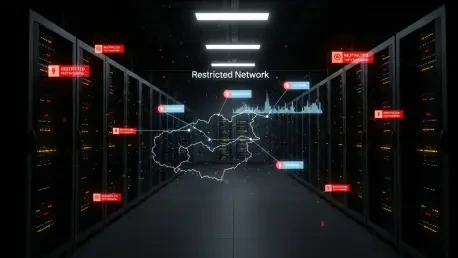

The internal socio-political landscape of Iran has reached a critical juncture where the state’s survival increasingly depends on a sophisticated and near-total blockade of the global information ecosystem. This digital iron curtain has transformed the Iranian internet from a tool of public engagement into a restricted intranet, where connectivity has plummeted to a staggering one percent of its normal capacity following recent regional escalations. By throttling bandwidth to such an extreme degree, the authorities have effectively severed the link between the domestic population and the outside world, ensuring that images of internal unrest, civilian casualties, and state crackdowns remain localized and largely invisible to the international community. This systematic strangulation is not merely a temporary measure but a structural realignment of how information flows within the country, forcing citizens into a state of digital darkness where even basic communication is treated as a subversive act.
While many citizens previously relied on Virtual Private Networks to navigate around state-imposed barriers, the government has refined its filtering techniques to neutralize most of these workarounds. This technological blockade has crippled the functional utility of social media platforms and disrupted essential domestic services that many Iranians depend on for daily survival. Mobile banking applications and local messaging services have faced significant instability, leaving the population unable to manage financial affairs or coordinate basic logistical tasks. The result is a nation gasping for what activists describe as a dying breath of communication, where the inability to load a simple video or send an encrypted message has become a defining feature of the wartime environment. The state’s strategy is clear: by rendering the internet non-functional, they can contain the spread of dissent and prevent the coordination of large-scale public movements that have historically challenged the regime’s authority.
The hypocrisy of this digital siege is perhaps most evident in the behavior of high-ranking officials who maintain full access to the very platforms they deny to the public. Recently, Foreign Minister Abbas Araghchi was observed engaging on global communication platforms, justifying his access by claiming he serves as the official voice of the Iranian people on the world stage. This assertion has triggered a profound wave of resentment among the few citizens who can still manage a brief connection, as it highlights a stark divide between the ruling elite and the governed. For the average Iranian, the government is not a representative voice but the primary force responsible for their enforced silence. This disconnect between state rhetoric and the lived reality of millions has further eroded the legitimacy of the clerical establishment, turning the internet into a symbol of the widening chasm between a tech-savvy population and an aging, repressive leadership.
The Technological Arms Race: Confronting Satellite Vulnerabilities
The Iranian state has significantly expanded its repressive reach by targeting alternative forms of connectivity, specifically satellite-based internet services that were once thought to be beyond their control. Security forces have reportedly deployed specialized patrol vehicles equipped with advanced radio signal scanners designed to pinpoint the exact geographic coordinates of Starlink terminals. These scanners detect the unique frequencies emitted by satellite dishes, allowing authorities to conduct targeted raids on residential and commercial properties. By eliminating these last remaining loopholes for independent information exchange, the regime is attempting to close the final window to the outside world. This aggressive stance turns what was intended to be a lifeline for connectivity into a high-risk liability, as the mere possession of such hardware is now treated with the same severity as active espionage or treason.
There is a growing debate among technical experts regarding the actual efficacy of these scanning technologies, with some suggesting that the reports of high-tech detection vehicles are part of a broader psychological warfare campaign. By projecting an image of total surveillance and omnipotence, the state hopes to instill a level of fear that encourages self-censorship among potential users. Whether the technology is as ubiquitous as claimed or not, the psychological impact on the population is undeniable. The fear of being caught with a satellite terminal—which often leads to prolonged detention and harsh sentencing—serves as a chilling deterrent that prevents many from even attempting to bypass the national filters. This technological arms race represents a new frontier in the struggle for information control, where the state utilizes every available tool to ensure that its narrative remains the only one permitted within the country’s borders.
The legal ramifications for those caught attempting to circumvent the digital blockade have become increasingly severe as the state attempts to maintain order during a period of external military pressure. Charges of espionage and cooperation with hostile foreign powers are frequently leveled against individuals found with prohibited communication equipment, reflecting a legal system that has been weaponized to serve the interests of national security at the expense of individual rights. These harsh penalties are not just about punishing the individual but are designed to send a clear message to the broader society that the cost of information freedom is higher than most can afford. As the regime continues to prioritize information sovereignty over the basic needs of its people, the struggle for digital access has become a central pillar of the wider fight for human rights and political reform in a rapidly changing regional landscape.
Tragic Consequences: The Minab School Strike and Legal Accountability
The physical devastation of ongoing military conflicts has mirrored the intensity of the digital siege, as evidenced by the catastrophic missile strike on the Shajareh Tayyebeh school in Minab. This incident, which occurred during a period of high-intensity military operations, resulted in a high number of civilian casualties, many of whom were children attending a girls’ elementary school. The strike has become a focal point for international human rights organizations, who have meticulously documented the aftermath and concluded that the operation likely violated the fundamental principles of international humanitarian law. Such events highlight the extreme vulnerability of non-combatants when military force is utilized in densely populated urban areas, particularly when the information regarding such strikes is tightly controlled and manipulated by state-run media outlets.
Despite the gravity of the civilian loss in Minab, the political response from the involved international actors has been characterized by a notable lack of transparency and a culture of mutual denial. While independent investigations and media reports have pointed toward specific military involvement, high-level officials from various defense departments have resorted to deflections, asserting that their forces do not target civilians or suggesting that the opposition was responsible for the tragedy. This pattern of avoidance and the absence of a credible, independent inquiry have left the families of the victims without any path toward justice or reparations. The incident stands as a sickening illustration of the human cost of modern conflict, where the fog of war is compounded by a deliberate state effort to obscure the facts and prevent the international community from holding the perpetrators accountable for potential war crimes.
The United Nations has issued urgent calls for a transparent and independent investigation into the Minab strike, emphasizing that the failure to distinguish between military targets and civilian infrastructure is a grave violation of the laws of armed conflict. The rhetoric from state leaders, ranging from claims of defensive necessity to outright denials of involvement, serves to further complicate the legal landscape and delay any meaningful resolution. This lack of accountability not only undermines the credibility of the international legal framework but also deepens the sense of abandonment felt by those living in the crossfire. As the war continues to take its toll on the most vulnerable members of society, the tragedy in Minab serves as a reminder that the suppression of information and the physical destruction of civilian life are two sides of the same coin in the regime’s efforts to maintain its grip on power.
Visceral Echoes: The Psychological Impact on the Global Diaspora
The trauma associated with Iran’s internal repression and external military challenges is not confined to the physical territory of the nation; it deeply affects the millions of Iranians living in the global diaspora. For those in North America, Europe, and Australia, the frequent and prolonged internet blackouts in their homeland are experienced as visceral disruptions to their daily lives and mental well-being. When communication lines are severed, the inability to reach loved ones during periods of reported violence creates a state of chronic, high-stakes anxiety that transcends geographic distance. This lack of information does not just cause worry; it manifests as a profound psychological rupture, where the uncertainty of a family member’s safety becomes a constant, haunting presence that interferes with the ability to function in a Western environment.
Recent qualitative research into these expatriate communities has highlighted a phenomenon where political violence effectively settles into the body. Members of the diaspora have reported a wide array of psychosomatic symptoms, ranging from sudden weight changes and insomnia to chronic physical pain, all of which coincide with periods of heightened tension or digital isolation in Iran. These physical reactions serve as a tangible record of the horror being experienced by their compatriots at home, occurring when words fail or when the channels of verbal communication are intentionally cut. The “body keeps the score” of the conflict, revealing that the impact of state-sponsored violence is far-reaching and leaves lasting scars on the collective Iranian psyche, regardless of where individuals are physically located.
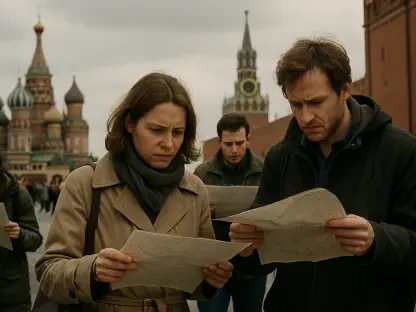
Furthermore, many Iranians living abroad describe a complex moral and emotional state characterized as being safe but summoned. Even though they are physically removed from the direct danger of state crackdowns, they feel an intense sense of responsibility and a symbolic debt toward those who remain in the country. This sense of duty often leads to a collapse of daily routines, as individuals obsessively monitor fragmented news updates and death tolls, trying to piece together the reality behind the digital iron curtain. Interestingly, this shared grief has also facilitated a significant shift in identity; a renewed sense of national pride has emerged that is entirely decoupled from the state’s ideology. Iranian identity is being re-centered on values of justice, resilience, and a shared humanity, effectively stripping the regime of its claim to represent the soul of the nation.
Fading Authority: The Rise of Satire and Political Decay
The internal political landscape of the clerical establishment is currently defined by a visible erosion of legitimacy, as the transition of leadership is met with public skepticism rather than traditional reverence. The appointment of recycled political figures to high-ranking military and advisory roles is widely viewed as evidence of a talent deficit within the ruling elite. These figures, many of whom have long histories of failure or public incompetence, have become the primary subjects of biting satire and mockery on the few social media channels that remain accessible through intermittent connections. This culture of ridicule suggests that the traditional mechanisms of ideological control, which relied on the projection of strength and divine authority, are no longer effective in the face of a disillusioned and tech-savvy population.
This rise in public mockery indicates a significant breakdown in the fear factor that has historically been used to maintain social order and silence dissent. When a population begins to openly lampoon the appearances, belt buckles, and public statements of its leaders, it signals that the psychological grip of the regime has been broken. Sarcastic commentary serves as a vital emotional outlet for public frustration, allowing citizens to vent their anger in a way that highlights the massive disconnect between state rhetoric of victory and the grim reality of economic collapse and digital isolation. The leadership is increasingly seen as a caricature of its former self, a collection of aging officials who are more concerned with self-preservation than addressing the fundamental grievances of the people they claim to lead.
The focus of this public ire often centers on the perceived incompetence of the military and economic advisors who have been brought back into the fold despite their previous failures. These appointments are interpreted not as strategic moves but as signs of a regime that has run out of new ideas and is forced to rely on a shrinking circle of loyalists. This internal decay is visible to the public, and it fuels the sense that the current system is unsustainable in the long term. As the gap between the state’s self-portrayal and the public’s perception continues to widen, the use of satire has become a powerful form of non-violent resistance, stripping the leadership of its dignity and challenging its right to govern in a way that traditional political discourse often cannot.
Global Stages of Resistance: Athletics and the Cost of Conscience
The spirit of resistance has permeated the world of international sports, providing a global platform for Iranian athletes to voice their opposition to the state’s policies. High-profile incidents, such as national team players refusing to sing the national anthem before major matches, have become powerful symbols of defiance that reach an international audience. These acts are not merely symbolic gestures; they carry immense personal risk, as the state media frequently brands such behavior as wartime treason. By using their visibility to challenge the regime, these athletes are bridging the gap between the domestic struggle and the global stage, demonstrating that the desire for fundamental change is a sentiment shared by even the most privileged members of society.
The Iranian government’s reaction to these protests involves aggressive and sophisticated efforts to reclaim control over its citizens, even when they are physically located in other countries. Authorities have allegedly utilized team staff and security details to relay direct threats to players and their families, attempting to coerce them into abandoning asylum claims or making public apologies. This transborder repression highlights the long reach of the security apparatus and the precarious position of those who choose to speak out. While some athletes have succumbed to this intense pressure and returned to Iran—often facing strict surveillance and the loss of their professional careers—others have successfully sought protection abroad, continuing their careers in leagues that offer them the freedom to express their political convictions without fear of state-sponsored retaliation.
These cases of athletic defiance underscore the intersection of professional sports, personal safety, and political ethics in the modern era. The choice between representing one’s country and protesting its government is a agonizing one, particularly when the consequences extend to family members back home. For the international community, these athletes represent the human face of the Iranian struggle, providing a narrative that counteracts the state’s propaganda. Their courage serves as an inspiration to those within the country who are silenced by the digital blockade, showing that even in the face of overwhelming state power, individual acts of conscience can have a profound impact on the global perception of a regime’s legitimacy and future stability.
Institutionalized Suppression: The UN Findings on Systematic Violence
A comprehensive analysis by the United Nations Special Rapporteur on human rights in Iran has confirmed that the state’s repressive measures are not isolated incidents but part of a coordinated and systematic campaign to crush dissent. The findings detail a persistent pattern of using lethal force, including the deployment of assault rifles and metal pellets against unarmed protesters, as a primary tool for maintaining order. These actions are supported by a legal framework specifically designed to make lawful assembly nearly impossible; applications for gatherings must be vetted by state-sanctioned groups, and broad national security laws are used to criminalize any form of unsanctioned public expression. This institutionalized suppression ensures that any challenge to the status quo is met with the full force of the state’s judicial and paramilitary power.
The UN report emphasizes that the recent protest movements are truly nationwide and represent a diverse cross-section of society, including students, workers, artists, and ethnic minorities. This unity of purpose across different social and economic classes is precisely what the regime fears most, leading to the increased use of forced confessions and the harassment of professionals who document state violence. Journalists, lawyers, and artists who attempt to provide a voice to the movement are frequently targeted for arrest and intimidation, further isolating the population and limiting the availability of accurate information. This systematic approach to silencing dissent reveals a regime that is unwilling to engage in any form of meaningful dialogue, choosing instead to rely on the infrastructure of fear to ensure its continued survival.
The findings of the international community provide a clear verdict on the state of human rights in the country, highlighting the urgent need for structural legal reforms and international accountability. The consistent feature of state violence, as documented by the Special Rapporteur, suggests that the current legal system is incompatible with the basic principles of international law. As the international community reviews these findings, there is an increasing call for targeted sanctions and diplomatic pressure to address the root causes of the repression. The UN analysis serves as a vital record of the struggle for justice in Iran, providing a foundation for future efforts to hold the leadership accountable for the systemic violations of human rights that have become the hallmark of their governance.
The permanent severance of the social contract between the Iranian state and its citizens has reached a point where temporary concessions or technological fixes can no longer bridge the divide. The regime’s reliance on digital isolation and physical force has succeeded in suppressing the immediate visibility of dissent, but it has simultaneously deepened the underlying grievances that fuel the movement for change. Moving forward, the international community must prioritize the development of technologies that can bypass state-level filtering, ensuring that the Iranian people have consistent access to the global internet. Supporting digital sovereignty is not just a matter of technological aid; it is a critical component of a broader strategy to empower civil society and provide a counter-narrative to state-sponsored propaganda that seeks to justify isolation and repression.
In light of these developments, future policy considerations should focus on creating secure, decentralized communication networks that are resilient to the types of scanning and jamming currently employed by security forces. International organizations and tech companies have a responsibility to collaborate on providing satellite-based tools that are affordable and easy to conceal, thereby reducing the risk to the individual user. Furthermore, the global community must remain steadfast in its pursuit of accountability for documented human rights violations, using the evidence provided by the United Nations to pressure the regime into legal and social reforms. The resilience of the Iranian people, both at home and in the diaspora, indicates that the desire for a transparent and just society remains undiminished, suggesting that the current era of digital darkness is a transitionary period rather than a permanent state of affairs. Following these steps will help ensure that the voices of those currently silenced are eventually heard on the world stage.