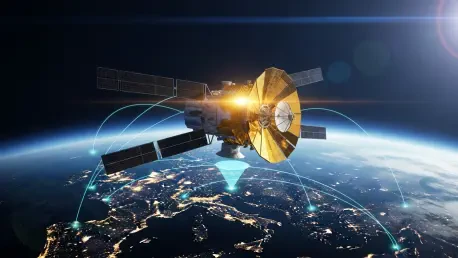

The bustling corridors of the Fira de Barcelona have become the epicenter of a cellular revolution that effectively erases the traditional boundaries between the sky and the terrestrial landscape. While previous years focused on the incremental rollout of urban 5G base stations, the 2026 Mobile World Congress has pivoted toward an ambitious, unified infrastructure known as Space 5G, aiming to provide an unbroken blanket of connectivity across the most inaccessible corners of the planet. This shift is not merely a technical curiosity but a response to the growing global demand for resilient, ubiquitous data access that remains functional regardless of geography or local infrastructure failures. From the massive exhibition halls, it is clear that the industry has reached a consensus: the next phase of mobile evolution will be defined by how well we integrate orbital constellations with the fiber-optic networks at our feet.
This year’s convergence of aerospace giants and telecommunications stalwarts suggests that the era of specialized satellite phones is rapidly drawing to a close. Instead, the focus has shifted toward making every consumer device a satellite-capable node, ensuring that the “no signal” notification becomes a historical artifact. As the world navigates through 2026, the collaboration between satellite operators and traditional mobile carriers has moved from experimental pilots to concrete, multi-year deployment strategies. The narrative in Barcelona is one of seamlessness, where the user experience is prioritized through intelligent switching between ground towers and low-earth orbit constellations. This transition is underpinned by massive investments in new spectrum allocations and the rapid miniaturization of antenna technology, setting a new standard for what it means to be truly connected in a modernized, global society.
SpaceX and the Direct-to-Cell Revolution
The Evolution of Starlink
SpaceX has redefined its presence at the conference by transitioning from a provider of specialized internet terminals to a central player in the mobile handset ecosystem through its rebranded “Starlink Mobile” service. In contrast to the original Starlink hardware that required a clear view of the sky and a powered router, the current initiative focuses on utilizing second-generation satellites to link directly with the unmodified smartphones already in the pockets of millions. This evolution represents a significant engineering feat, as it requires the satellites to mimic the behavior of a terrestrial cell tower while orbiting hundreds of miles above the Earth. During technical briefings, it was revealed that the sheer scale of the new antenna arrays on these satellites allows them to pick up the relatively weak signals emitted by standard mobile devices, effectively turning the sky into a massive, distributed network of overhead base stations.
The roadmap for this technology is centered on a high-intensity launch schedule intended to place 1,200 second-generation satellites into orbit starting in mid-2027. These specific units are being manufactured with enhanced digital processors capable of managing significantly higher data throughput, aiming for a theoretical peak of 150Mbps per user. While this speed is a maximum laboratory figure, the real-world implication is that satellite internet is finally entering the performance bracket of 4G and early 5G terrestrial services. To solidify its market position, SpaceX has moved beyond technical demonstrations to establish critical commercial ties, most notably a landmark agreement with Deutsche Telekom. This partnership ensures that European subscribers will be among the first to experience integrated satellite roaming, marking a strategic shift where satellite capacity is treated as a premium extension of a standard cellular data plan.
Technical Hurdles and Hybrid Strategies
Despite the momentum surrounding Starlink Mobile, the industry remains grounded in the reality that space-based networks still face significant physical constraints compared to high-density urban fiber. One of the primary discussions in Barcelona involves the inherent latency and bandwidth limitations that occur when thousands of users attempt to access a single satellite beam simultaneously. Engineering experts emphasize that while the 150Mbps peak is impressive, the actual user experience in a crowded area will likely be lower, positioning the service as a vital safety net rather than a total replacement for city-wide 5G networks. Consequently, the strategy for 2026 and beyond focuses on a hybrid model where the satellite layer activates automatically in dead zones, maritime environments, or during natural disasters that disable ground-based equipment.
Furthermore, the deployment of 1,200 second-generation satellites is just one phase of a much larger, more complex logistical operation that requires constant coordination with international frequency regulators. The transition from the 6,500 first-generation satellites currently in orbit to a more capable, direct-to-cell fleet involves sophisticated orbital maneuvering and spectrum management to avoid interference with existing terrestrial services. SpaceX’s approach involves a sophisticated software-defined radio system that can adjust frequencies in real-time based on the user’s location. This level of adaptability is what allows the company to promise a future where a smartphone can maintain a data connection in the middle of the Atlantic Ocean or deep within a national park, providing a level of reliability that was previously reserved for expensive, government-grade hardware.
Global Competitors and Regional Coalitions
The Rise of AST SpaceMobile
A powerful alternative to the SpaceX model has emerged in the form of AST SpaceMobile, which has rallied a formidable coalition of traditional European and global telecom operators including Vodafone, Orange, and Telefónica. Unlike the “constellation of many” approach, AST SpaceMobile utilizes a strategy centered on fewer, much larger satellites equipped with massive, unfolding antenna arrays that span hundreds of square feet. These “BlueBird” satellites are designed to function as high-powered, wide-area base stations that can provide standard 4G and 5G signals to unmodified devices over vast geographic areas. This philosophy is deeply “carrier-friendly,” as it allows existing mobile operators to extend their coverage maps to 100% of a country’s territory without the astronomical costs associated with building physical towers in rugged or sparsely populated terrain.
The rivalry between the US-led private constellation model and this carrier-backed alliance was a major talking point throughout the event, highlighting a significant geopolitical divide in how space assets are governed and utilized. The AST SpaceMobile approach is particularly attractive to European regulators and operators who prefer a collaborative model that integrates directly into the existing telecommunications framework. By partnering with established carriers, AST avoids the direct-to-consumer friction that sometimes characterizes the SpaceX business model. This collaboration ensures that the satellite layer is managed as a wholesale capacity boost for the operators, allowing them to offer “seamless global roaming” as a native feature of their existing subscriptions, which simplifies the billing and user experience for the end-consumer.
China’s Integrated Connectivity Vision
The technological narrative at the congress was further enriched by the sophisticated offerings from China Telecom and ZTE, who presented a highly mature ecosystem that bridges the gap between high-orbit and low-orbit capabilities. China Telecom, as a primary license holder for satellite mobile services, demonstrated a portfolio of over 40 smartphone models and various vehicle-integrated systems that are already compatible with the Tiantong-1 satellite network. A particularly impressive innovation is their “DCM semantic coding” technology, an AI-driven compression standard that allows high-definition images to be reduced to less than 4KB without losing critical visual information. This breakthrough addresses the primary bottleneck of high-orbit satellites—limited bandwidth—by enabling the rapid transmission of visual data during emergency response scenarios where every second and every kilobyte counts.
ZTE’s vision for the future extends even further with its blueprint for “space-air-ground integration,” which serves as a foundational pillar for the upcoming 6G standards. At their exhibition pavilion, ZTE showcased a 6G prototype that utilizes a massive 2048-antenna array in the U6 frequency band, designed to handle ten times the capacity of today’s 5G-Advanced networks. The goal of this architecture is to create a three-dimensional network where the transition between a terrestrial base station, a low-altitude drone, and an orbital satellite is entirely imperceptible to the user. This level of integration suggests that by 2028, the very concept of a “network handover” will be handled by predictive AI, ensuring that high-bandwidth applications like augmented reality or autonomous navigation never experience a interruption, even when moving across vast, unpopulated distances.
Hardware Innovation and Consumer Accessibility
Silicon Advancements in Wearables and Phones
The shift toward Space 5G is being accelerated by a new generation of silicon that brings satellite connectivity to the smallest of consumer form factors. Qualcomm made a significant impact by debuting its Snapdragon Wear Platform Premier Edition, a 3nm chipset that manages to pack satellite communication, Wi-Fi, and Ultra-Wideband capabilities into a footprint suitable for a smartwatch. This development is transformative for the wearables market, as it allows a person to maintain a lifeline to emergency services or send location pings directly from their wrist, even if their smartphone is lost or out of battery. The inclusion of satellite features in mass-market chips indicates that this is no longer a niche luxury but a standard safety expectation for consumer electronics in 2026.
Simultaneously, MediaTek and Samsung have introduced their own modem technologies designed to withstand the unique challenges of non-terrestrial communication. MediaTek’s M90 5G modem is specifically engineered to handle high-speed emergency alerts via low-orbit networks, ensuring that critical public safety information can reach users even when ground networks are offline. Samsung’s recent laboratory verifications for its NR-NTN modem have proven that mobile devices can maintain stable connections even in extreme environmental conditions that typically degrade satellite signals. These hardware advancements mean that the complex mathematics required to compensate for the Doppler effect and high latency of moving satellites is now handled silently by the phone’s processor, making the space link as easy to use as a standard Wi-Fi connection.
Software Solutions and Future Standards
While hardware provides the physical link, the true viability of Space 5G relies on sophisticated software and AI-driven efficiency to maximize limited orbital resources. Nokia has remained at the forefront of this movement by developing an “Ultra-efficient AI Voice Codec” in partnership with Fraunhofer IIS. This technology uses machine learning to reconstruct human speech from incredibly small data packets, allowing for high-quality voice calls over satellite links that would normally be too slow for clear communication. By prioritizing the most essential data—the human voice—Nokia is ensuring that the fundamental purpose of a mobile device remains intact even in the most bandwidth-constrained environments. This focus on software optimization is a critical trend, as it allows operators to support more users on the same satellite without needing to launch more hardware.
As the industry moves closer to 2028, the role of AI in managing these complex, multi-layered networks will only grow. From semantic image compression to predictive signal switching, software is the bridge that makes the ambitious promises of Space 5G a reality. The consensus among engineers at the conference is that the physics of space will always present challenges, but the intelligence of our coding can circumvent many of these limits. This holistic approach, combining advanced 3nm silicon with AI-enhanced codecs and massive antenna arrays, signifies a departure from the “brute force” methods of early telecommunications. The result is a more resilient, efficient, and truly global network that treats the entire planet as a single, connected cell, paving the way for a world where connectivity is as ubiquitous as the air we breathe.
Implementing the Unified Network Strategy
The advancements showcased in Barcelona have established a clear set of priorities for the telecommunications industry as it prepares for the full-scale commercialization of Space 5G. It is no longer enough to simply launch satellites; the next steps involve the rigorous standardization of non-terrestrial network (NTN) protocols to ensure that devices can roam between different providers and constellations without compatibility issues. Regulatory bodies and private enterprises must now work in tandem to finalize spectrum sharing agreements that prevent interference between high-powered satellite beams and the existing terrestrial 5G infrastructure. Moving forward, the focus must shift toward creating affordable data plans that integrate these satellite features, making them accessible to everyday consumers rather than just enterprise or emergency users.
The transition to this unified network model has successfully demonstrated that the technological foundations—from 3nm chips to AI-powered voice codecs—are now in place. Future considerations will likely revolve around the sustainable management of low-earth orbit, ensuring that the proliferation of new constellations does not lead to orbital congestion or increased debris risks. Industry leaders are encouraged to continue the trend of “carrier-friendly” collaborations, as these partnerships provide the most efficient path to bringing space-based connectivity to the general public. By focusing on these actionable goals, the global community can ensure that the momentum gained in 2026 leads to a permanent end to connectivity gaps, fostering a truly inclusive digital economy that reaches every person on Earth.