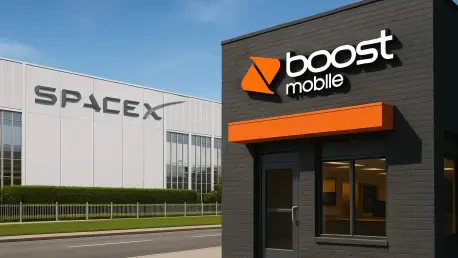

While Starlink has proven satellite-to-cell capabilities, physical limitations in urban density are forcing SpaceX to seek terrestrial assets to ensure reliable indoor connectivity. The aerospace firm is currently attempting to disrupt a market valued at over two hundred billion dollars by pivoting from space-based internet to a traditional mobile carrier model. This shift comes after significant friction with established industry leaders who have successfully blocked direct access to their nationwide cellular networks. By targeting EchoStar’s Boost Mobile, the company hopes to secure a ready-made retail presence and a pathway into the pockets of millions of American consumers. This tactical evolution suggests that orbital technology alone cannot solve the last-mile problem in concrete-heavy metropolitan areas. Consequently, the pursuit of terrestrial infrastructure represents a critical pivot in the overarching mission to provide seamless global communication, blending high-altitude satellite arrays with the familiar ground-level towers that define modern mobile usage.
Navigating the Big Three’s Defensive Front
The established telecommunications landscape is characterized by a high degree of consolidation, where Verizon, AT&T, and T-Mobile exert nearly total control over the physical assets necessary for wireless service. These incumbents have recently formed a unified front against new entrants, specifically rejecting multiple requests for wholesale network access that would have allowed for a more traditional market entry. Executives from these major carriers have argued that facilitating a rival with massive capital reserves and a history of industry disruption would be counterproductive to their long-term commercial interests. This protective posture is not merely a competitive choice but a fundamental defense of the multi-billion dollar investments made into 5G and fiber-optic backbones over the last decade. By maintaining a closed ecosystem, the big players are essentially forcing potential competitors to either build their own redundant systems or find alternative methods to enter the market.
The potential acquisition of Boost Mobile is viewed by many as a strategic bypass intended to circumvent this gatekeeping, yet it introduces a complex web of legal and contractual liabilities. Most existing wholesale agreements between brand owners and network providers include specific change-of-control provisions designed to prevent a competitor from gaining leverage through a secondary purchase. If SpaceX moves forward with the EchoStar deal, it faces the immediate threat of AT&T or T-Mobile terminating the underlying network service that Boost customers rely upon. Such a move would effectively render the brand a hollow shell, leaving the new owner with a massive database of users but no technical means to provide them with cellular signal. This legal uncertainty underscores the high risks involved in Musk’s current trajectory, as the backdoor entry relies heavily on the interpretation of dense corporate contracts that were written specifically to maintain the status quo and prevent external disruption from well-funded outsiders.
Spectrum Acquisition: Building the Foundation
To mitigate the risk of being completely shut out by existing providers, SpaceX has aggressively pursued the acquisition of low-band airwaves, committing nearly eight billion dollars to secure a nationwide portfolio of 800 MHz spectrum. This particular frequency is highly valued in the industry because its long wavelengths can easily penetrate physical obstacles such as building walls, dense foliage, and geographical terrain. By accumulating these rights from entities like Grain Management and EchoStar, the company is laying the groundwork for a standalone network that could eventually function without the cooperation of the Big Three. This massive investment indicates a long-term commitment to infrastructure independence, moving beyond the limitations of high-frequency satellite signals that often struggle in high-density urban environments. However, possessing the spectrum is only the first phase of a broader plan that requires a significant leap from managing orbital constellations to maintaining a massive terrestrial footprint of hardware and fiber.
Even with a robust spectrum portfolio, the physical reality of building a nationwide network of cell towers remains a logistical hurdle of unprecedented proportions for a private company. Unlike the rapid deployment of Starlink satellites, which are launched on reusable rockets, the construction of ground-level towers involves navigating local zoning laws, environmental regulations, and complex property rights across thousands of municipalities. The sheer volume of hardware required to provide reliable service in major cities dwarfs the complexity of SpaceX’s previous aerospace ventures, requiring an estimated investment that could reach tens of billions of dollars over several years. While the company has proven its ability to iterate and scale manufacturing quickly, the slow pace of terrestrial permitting and construction presents a stark contrast to the agility of space-based operations. This reality suggests that while spectrum provides the legal right to transmit, the lack of a physical tower network remains the most significant bottleneck in the quest to become a major mobile carrier.
Strategic Evolution: Collaboration versus Competition
The relationship between SpaceX and T-Mobile provides a unique case study in the tension between cooperative technology and direct market rivalry. Currently, the two entities maintain a partnership known as T-Satellite, which focuses on providing emergency messaging and basic data coverage in remote areas where traditional cell signals are unavailable. While this collaboration has been touted as a breakthrough for public safety, it is strictly limited to supplementary services and does not grant SpaceX access to T-Mobile’s terrestrial 5G infrastructure for a full-scale mobile service. This dynamic illustrates a strategic boundary where incumbents are willing to use satellite technology to fill gaps in their own maps but are entirely unwilling to empower a competitor to steal their primary customer base. As SpaceX moves closer to launching its own retail wireless brand, this existing partnership is likely to face severe strain, as the distinction between a helpful technology provider and an existential business threat becomes increasingly blurred.
The strategic maneuver toward acquiring terrestrial assets represented a realization that orbital technology alone could not penetrate the high-value urban wireless market. Stakeholders determined that the path forward required a dual-layered approach, combining the broad reach of satellite coverage with the reliable indoor penetration of a ground-based network. To succeed, the company focused on securing favorable legal rulings regarding existing wholesale contracts while simultaneously accelerating the deployment of localized micro-cell technology to reduce reliance on traditional tower leases. Industry leaders suggested that the most viable next steps involved a multi-year transition toward becoming a vertically integrated carrier that controlled both the space-based and ground-based elements of the communication chain. This evolution highlighted the necessity for new entrants to look beyond hardware and focus on navigating the rigid regulatory and contractual frameworks that governed the industry. Ultimately, the focus shifted toward building a hybrid ecosystem.