
The American home broadband market, long defined by regional monopolies and consumer frustration, is undergoing a seismic shift as T-Mobile unleashes a multifaceted offensive designed to fundamentally reshape the competitive landscape. This strategic initiative is built upon a comprehensive, dual-track approach that combines the expansive reach of its 5G wireless network with a rapidly growing, high-speed fiber-optic infrastructure. This two-pronged assault on the status quo positions the company as a formidable disruptor, directly challenging the entrenched business models of industry giants like Comcast and Charter. By merging technological innovation with a refreshingly consumer-centric model, T-Mobile is mounting the most significant challenge to the traditional broadband industry in decades, heralding a new era of competition and choice for millions of households. This is not merely a new service offering; it is a calculated campaign to dismantle long-standing industry norms and redefine value for the American consumer.
The Foundation of Disruption
A central pillar of T-Mobile’s strategy is its aggressive dismantling of the industry norms that have long been a source of consumer dissatisfaction. Rather than simply competing on speed or price, the company is fundamentally altering the customer relationship with its consumer-friendly policies. This includes transparent pricing that eliminates hidden fees, the complete removal of binding annual contracts, and an industry-first five-year price guarantee for its fiber customers. These moves directly address the most common pain points associated with legacy internet service providers, such as unpredictable bill increases after promotional periods expire and costly equipment rentals. By placing consumer certainty and transparency at the core of its value proposition, T-Mobile is not just entering a market; it is actively seeking to win the trust and loyalty of a customer base that has grown weary of the conventional broadband experience, forcing a re-evaluation of standard industry practices.
This disruptive approach is forcing a tectonic shift in a market structure that has often resembled a collection of regional quasi-monopolies, particularly in areas dominated by a single powerful cable provider. The arrival of a well-capitalized and aggressive competitor is creating a more dynamic and competitive environment where inertia is no longer a viable strategy for incumbents. Legacy providers are now under immense pressure to react to T-Mobile’s advances. This has already begun to manifest as accelerated investments in their own network upgrades and, more significantly, a potential reconsideration of their long-held pricing and service models. The telecommunications industry is now in a palpable state of flux, driven almost entirely by T-Mobile’s relentless push for market share. The established giants can no longer take their customer base for granted and must now actively compete on terms being set by this new, formidable challenger in the home internet arena.
A Two-Pronged Technological Assault
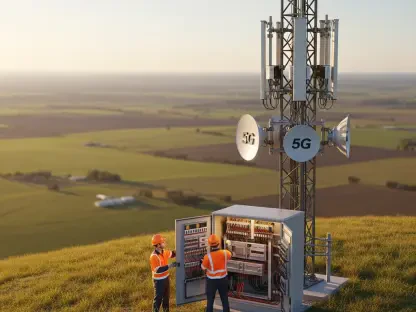
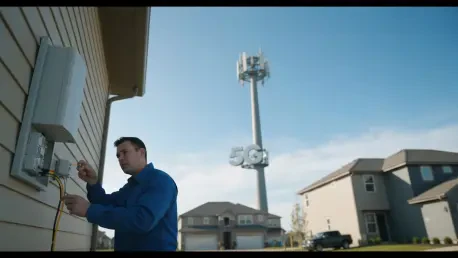
While fiber represents the cutting edge of its expansion, T-Mobile’s 5G Home Internet service remains the successful and well-established foundation of its broadband strategy. This fixed wireless access (FWA) solution has already proven its market viability, attracting nearly 7 million customers and demonstrating a strong consumer appetite for a credible alternative to traditional cable. The primary strategic advantage of the 5G service lies in its ability to leverage the company’s extensive, pre-existing mobile network infrastructure. This allows for remarkably rapid deployment and provides meaningful coverage in suburban and rural areas where the prohibitive cost of laying new fiber-optic cable has historically limited consumer choice. For customers, the appeal is rooted in its simplicity and convenience, eliminating the need for complex professional installations and long waits for technicians, often allowing for self-setup within minutes of receiving the equipment. This has been a critical factor in its ability to poach subscribers from incumbents.
In a pivotal evolution from its wireless-only origins, T-Mobile’s official launch of its fiber home internet service in June 2025 signaled a direct challenge to the gold standard of internet connectivity. The initial rollout provided immediate access to over 500,000 households with a clear and highly competitive three-tiered service structure: Fiber 500 (500 Mbps), Fiber 1 Gig (1 Gbps), and Fiber 2 Gig (2 Gbps). What truly distinguishes this offering is not just the symmetrical gigabit speeds but the radical simplicity and transparency of its business model. By eliminating monthly equipment fees, installation charges, and annual contracts, T-Mobile directly attacks the most common frustrations associated with traditional providers. The most impactful of these policies is the five-year price guarantee, an unprecedented move that shields customers from the unpredictable and often steep price hikes that are commonplace after introductory promotional periods expire, providing long-term peace of mind.
Strategic Investments and Future Growth
This ambitious fiber expansion is underpinned by a calculated and aggressive strategy of acquisitions and partnerships designed to rapidly scale its physical infrastructure. The cornerstone of this strategy was the April 2025 joint venture with EQT Infrastructure to acquire Lumos Networks, a single transaction that provided T-Mobile with immediate control over a substantial 7,500-mile fiber network serving 475,000 homes in the Mid-Atlantic region. The company’s financial commitment to this venture is significant, with an initial investment of $950 million and a further $500 million earmarked for targeted expansion between 2027 and 2028. This growth is being further fueled by the impending acquisition of Metronet, another major fiber provider, which the company confirmed was nearing closure. Through these decisive strategic moves, T-Mobile has set an ambitious but achievable target of reaching between 12 and 15 million households with its fiber service by the end of 2030, a goal that would firmly cement its status as a major national player in the wired broadband market.
The company’s expansion is supported by continuous and significant investment in its core network infrastructure, creating benefits that cascade across its entire portfolio of services. A prime example is the $2 billion network enhancement project in Florida, which was completed in mid-2025 and delivers tangible improvements for both mobile and home internet customers in the state. Furthermore, T-Mobile is planning a strategic refarming of its 4G LTE spectrum beginning in 2026. This intricate process will reallocate valuable wireless resources to enhance the overall capacity and performance of the 5G network, a move that will directly improve the experience for its millions of FWA home internet users. This highlights a key synergy and inherent cost advantage for T-Mobile: its ability to leverage a single, constantly evolving wireless infrastructure to power multiple revenue streams, a strategic luxury that purely wired competitors do not possess and cannot easily replicate.
Redefining the Consumer Broadband Experience
Ultimately, the most significant impact of T-Mobile’s broadband offensive was the tangible benefit it delivered to American consumers. The introduction of a strong, well-funded, and consumer-focused competitor injected a much-needed dose of competition into markets that had long been characterized by limited choice and provider complacency. This external pressure led directly to better service offerings and more competitive pricing across the entire industry as incumbents were forced to adapt or risk losing market share. The five-year price lock on fiber service proved to be a particularly transformative policy, one that forced an industry-wide shift toward greater pricing transparency and long-term stability for customers. As T-Mobile continued its march toward its ambitious 2030 goals, the battle for broadband supremacy intensified, shaping the trajectory of American home connectivity and promising a more competitive, affordable, and consumer-friendly market for the next generation.