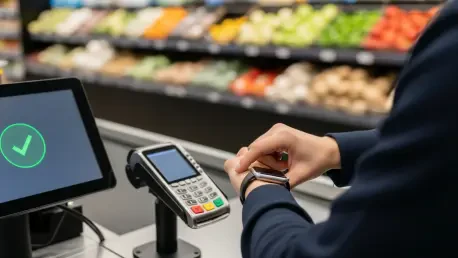

The familiar rustle of paper money and the jingle of coins are becoming increasingly rare sounds in American cities as the nation undergoes a profound and rapid shift in how it handles transactions. A detailed new study provides a comprehensive ranking of 40 of the country’s largest urban centers, evaluating their preparedness for an economy where digital payments are not just an option but the norm. As consumers increasingly favor the speed and convenience of contactless cards, mobile wallets like Apple Pay, and even cryptocurrencies, this report offers a clear snapshot of which metropolitan areas are embracing this financial evolution and which are maintaining a firmer grip on traditional currency. The findings reveal a fascinating and uneven landscape, highlighting the cities that have built robust digital infrastructures and those where cash continues to hold sway, providing crucial insights into the future of commerce in the United States.
A Tale of Two Metrics
To objectively measure each city’s transition away from physical currency, the study’s methodology was built upon two distinct yet complementary indicators: the prevalence of Apple Pay and the number of businesses accepting cryptocurrency. This dual-focus approach was designed to capture both mainstream digital adoption and a forward-looking embrace of financial innovation. The acceptance of Apple Pay, representing the current wave of consumer convenience, was weighted to account for 60 percent of a city’s final score. This metric was analyzed with significant granularity, assessing its availability across seven high-frequency business categories: restaurants, fast-food chains, supermarkets, coffee shops, bars, gas stations, and parking facilities. This deep dive into everyday spending habits provides a realistic measure of how seamlessly a resident or visitor can navigate the city’s commercial landscape using only a mobile wallet.
Conversely, the adoption of cryptocurrency payments, such as Bitcoin, contributed the remaining 40 percent of the total score, serving as a barometer for a city’s openness to emerging and decentralized financial systems. The measurement involved a comprehensive tally of every establishment across a wide array of sectors that allows customers to complete transactions using digital currencies. This included not just predictable sectors like finance and tech, but also retail, hospitality, professional services, and even niche markets. By combining the widespread practicality of mobile payments with the pioneering spirit of crypto adoption, the study created a holistic and nuanced framework for what it truly means for a city to be “cashless-ready.” This method ensures that the ranking reflects not only the present state of digital convenience but also a city’s potential to lead in the next phase of financial technology.
The Nation’s Digital Payment Capitals
Emerging at the forefront of this economic transformation, Philadelphia has secured its position as the most cashless-ready city in the United States, achieving a formidable total score of 77.3 out of a possible 100. The city’s top ranking is propelled significantly by its outstanding integration of mobile payment systems into the fabric of its local commerce. An impressive 84 percent of the businesses analyzed within the city readily accept Apple Pay, making it an exceptionally convenient environment for users who rely on their mobile devices for daily purchases. Beyond this mainstream digital prowess, Philadelphia also demonstrates a remarkably strong ecosystem for cryptocurrency transactions. The study identified 45 separate establishments that accept digital currencies, a figure that places it among the national leaders in financial innovation. This acceptance is not confined to the expected financial sector; it extends into a diverse array of markets, including veterinary services and hospitality venues, signaling a broader and more integrated embrace of these new financial tools.
Following closely behind the leader are New York City and Chicago, both of which have made substantial progress in their journey toward a less cash-dependent economy. New York City claimed the second spot with an overall score of 76 out of 100, a placement driven overwhelmingly by its unparalleled leadership in cryptocurrency adoption. Home to a remarkable 94 businesses that accept crypto payments—more than double the number in any other city surveyed—New York earned a perfect score in this specific category, reflecting its status as a global financial hub unafraid to experiment with emerging technologies. In contrast, Chicago, which ranked third with a score of 71.6, built its high standing on the foundation of mobile payment integration. The Windy City excels where everyday convenience is key, with over 90 percent of its analyzed businesses accepting Apple Pay. This widespread adoption has made mobile wallets a ubiquitous feature of Chicago’s commercial life and was the primary contributor to its strong overall ranking.
The Digital Divide in Urban America
While some cities are rapidly adopting digital payment systems, the report also underscored a significant digital divide, identifying several major urban centers where cash continues to dominate the local economy. San Antonio ranked last among the 40 cities studied, with a very low score of 12.8 out of 100. This was attributed to a sluggish embrace of new payment technologies, with just over half of its businesses accepting Apple Pay and a mere seven establishments allowing cryptocurrency payments. This indicates an environment where residents and visitors must still rely heavily on physical currency for many daily transactions. Other metropolitan areas lagging in the cashless transition included Fort Worth, San Jose, Minneapolis, and Indianapolis, all of which posted scores in the lower tier of the rankings. However, a noteworthy trend observed even among these slower-moving cities is that Apple Pay acceptance still generally exceeds the 50 percent mark, suggesting that while the pace of change varies dramatically, the nationwide shift toward digital options is an undercurrent affecting all urban landscapes.
A closer analysis of the two core metrics revealed distinct and divergent trends shaping the country’s cashless evolution. The adoption of cryptocurrency, for instance, remains heavily concentrated in major financial and technological hubs. New York City stands as the undisputed leader, leveraging its deep financial roots to foster a thriving crypto ecosystem. Philadelphia and Los Angeles followed, with Los Angeles showing a particularly interesting niche with a higher-than-average number of medical service providers accepting digital currencies. Meanwhile, Apple Pay has become a near-ubiquitous standard in many other urban centers, representing a more mainstream path to a cashless society. Atlanta, Detroit, and Las Vegas led the nation in this regard, boasting acceptance rates so high in restaurants, supermarkets, and entertainment venues that mobile wallets have become seamlessly integrated into the daily spending habits of their residents, proving that widespread convenience is a powerful driver of technological adoption.
Forging a New Financial Landscape
The study’s findings painted a clear picture of a nation in transition, with cities like Philadelphia, New York, and Atlanta setting the pace for a future where digital wallets could render physical ones obsolete. The comprehensive data revealed that the path to a cashless society was not monolithic; some urban centers prioritized cutting-edge financial technologies like cryptocurrency, while others focused on the widespread integration of convenient mobile payment systems for everyday use. This divergence highlighted the complex interplay between technological innovation, consumer behavior, and commercial infrastructure that shaped each city’s unique economic identity. The report ultimately provided a valuable benchmark, illustrating not just which cities had succeeded in building a digital-first economy, but also exposing the significant gaps that remained in others, offering a roadmap for the ongoing evolution of commerce in America.