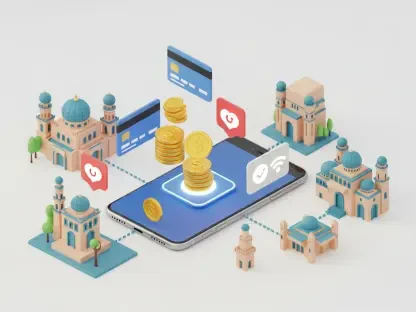

The ubiquity of smartphone-based financial transactions has fundamentally altered the Spanish retail landscape, leading to a pivotal moment where digital peer-to-peer services challenge the traditional hegemony of physical plastic cards. While the country has historically been a stronghold for contactless card payments, the arrival of Bizum’s new proximity payment feature in May 2026 marks a decisive shift toward a unified mobile ecosystem. With a user base exceeding 29.5 million individuals, the platform is no longer merely a tool for settling small debts between friends or splitting dinner bills at local tapas bars. It has evolved into a comprehensive financial powerhouse that integrates seamlessly with existing banking infrastructure, offering a localized alternative to global tech giants. This transition reflects a broader European trend where national payment solutions seek to regain domestic control over transaction flows while simplifying the user experience for millions of citizens who already rely on the app daily. The integration into physical stores represents the final frontier for a service that has already conquered the digital and social spheres of Spanish life.
1. The Technological Evolution: NFC Integration and Offline Reliability
The implementation of Near Field Communication technology within the Bizum framework allows shoppers to finalize transactions by simply hovering their smartphones over a merchant’s payment terminal, mirroring the familiar motion used with standard credit cards. This evolution effectively removes the friction that previously limited the service to online environments or direct phone-number-based transfers, placing it on equal footing with established mobile wallets. To initiate a payment, a customer accesses their designated banking application or the specific payment utility, verifies their identity through biometric authentication, and brings the device into contact with the point-of-sale hardware. Because the system utilizes the same physical infrastructure as existing contactless methods, merchants do not need to invest in new equipment to accept these payments. This level of compatibility ensures that the barrier to entry remains low for both businesses and consumers, facilitating a rapid rollout across major metropolitan areas and smaller provincial towns alike.
Beyond the standard tap-to-pay functionality, the technical architecture of this new rollout addresses common digital hurdles, such as intermittent connectivity issues that often plague high-traffic retail environments. Developers have engineered the system to allow transactions to proceed even when mobile data signals are weak or temporarily unavailable, ensuring that the checkout process remains as reliable as traditional chip-and-pin technology. This reliability is coupled with a backend process that treats every transaction as an instant bank transfer, which represents a significant departure from the delayed clearing cycles typically associated with major international credit card networks. For the average consumer, this means the balance reflects the purchase immediately, providing a clearer and more accurate picture of their financial standing at any given moment. Such transparency is increasingly valued by younger demographics who prefer real-time budget tracking over the deferred billing cycles that can lead to unexpected debt or overdraft fees at the end of the month.
2. Market Impact: Economic Advantages for Local Merchants
Small and medium-sized enterprises stand to benefit the most from this shift, as the competitive fee structure associated with bank-led payment networks often undercuts the percentages demanded by legacy international card providers. By processing payments through a domestic framework supported by 39 affiliated Spanish banks, local merchants can reduce their operational overhead while benefiting from immediate liquidity since funds are transferred without the typical multi-day waiting periods. This immediate access to capital is crucial for independent retailers who operate on thin margins and require consistent cash flow to manage inventory and payroll obligations efficiently. Moreover, the integration of loyalty programs and digital receipts directly into the banking interface offers these businesses a sophisticated way to engage with their customer base without the need for expensive third-party marketing software. As more businesses realize the cost-saving potential of bypassing traditional merchant service fees, the incentive to prioritize mobile transfers over plastic will continue to grow.
The rapid adoption of this service is underpinned by its massive existing footprint, which already encompasses over 90,000 online retailers and 12,500 charitable organizations that have integrated the platform into their digital checkout flows. Transitioning these existing relationships into the physical realm is a natural progression that leverages the trust users have built over years of performing peer-to-peer transfers. During the current period spanning 2026 to 2028, the platform is expected to witness a surge in transaction volume as the 105 million online operations recorded last year are supplemented by billions of everyday in-store purchases. This ecosystem effect creates a powerful feedback loop: as more consumers use the app for groceries or clothing, more vendors are pressured to optimize their systems for it, which in turn encourages even more users to leave their physical wallets at home. By centralizing everything from charitable donations to utility bill payments and now physical retail within a single interface, the service effectively creates a secure and efficient domestic banking circuit.
3. Strategic Outcomes: Navigating the Future of Retail Finance
Stakeholders within the financial sector recognized that the true challenge lay not in the technology itself, but in the psychological transition away from decades of reliance on physical cards. To maintain momentum, it was essential for consumers to regularly audit their mobile security settings, ensuring that biometric overrides and transaction limits were correctly configured to protect their digital assets in this new environment. Financial institutions responded by providing educational resources that empowered users to take full control of their spending through integrated analytics tools that categorized retail expenditures in real time. Looking ahead, the focus shifted toward expanding this domestic success into a cross-border initiative that could eventually allow travelers to use the same seamless system across the European Union. Businesses that proactively integrated these payment options found themselves better positioned to capture the loyalty of a tech-savvy generation that valued speed and simplicity over traditional methods. Spain successfully navigated a major milestone in the pursuit of a truly cashless society by prioritizing a localized and efficient digital infrastructure.