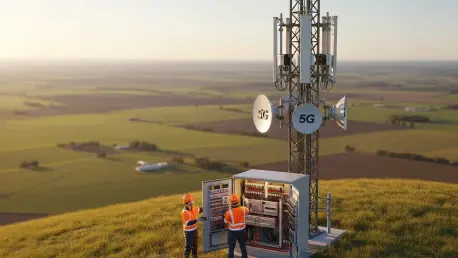

The persistent challenge of maintaining high-speed digital access in remote Australian towns has reached a critical turning point as infrastructure demands outpace existing hardware capacities in regional hubs like Warialda. Telstra has recently announced a major engineering project aimed at revitalizing the local base station, a move intended to provide a necessary boost to both 4G and 5G performance across the community. This initiative reflects a strategic push to accommodate the soaring consumption of high-bandwidth data, which has become a staple of modern agricultural and commercial operations. By modernizing the physical site, the provider plans to significantly expand capacity, which should result in faster download speeds and a more stable streaming environment for residents. Mike Marom, the Regional General Manager, highlighted that this overhaul is a vital component of a broader mission to eliminate the digital divide between metropolitan centers and rural areas. This project represents a proactive measure to stay ahead of data consumption trends and prepare for full 5G integration.
Managing the Transition: Operational Impacts and Mitigation Strategies
Implementing such complex hardware replacements inevitably requires a period of planned downtime, which is scheduled to occur between April 9 and April 18. During this window, residents may encounter intermittent service disruptions or a complete loss of mobile signal as technicians integrate the new 5G modules into the existing framework. To minimize the economic and social impact, the provider has advised the community to rely on Wi-Fi calling features through fixed-line connections, which remain operational. Local businesses, in particular, face the challenge of maintaining transaction continuity; they are being urged to migrate EFTPOS terminals to NBN or local Wi-Fi networks to avoid revenue losses during the maintenance phase. While mobile services will fluctuate, landline and NBN internet services are not part of the upgrade scope and will continue to function normally, ensuring that basic communication remains accessible for everyone in the area throughout the construction.
Long-Term Connectivity: Future-Proofing the Rural Infrastructure
The successful deployment of these upgrades established a foundation for sustained economic growth by ensuring that regional infrastructure stayed ahead of the rapidly evolving technological curve. It was essential for local stakeholders to review their internal network configurations to capitalize on the increased bandwidth provided by the new 5G capabilities. Residents who updated their hardware to compatible 5G devices found that the resilience of the network improved significantly, even during peak usage periods. Furthermore, the integration of emergency call rerouting through alternative networks ensured that public safety was never compromised during the transition. Moving forward, the focus shifted toward optimizing internet-of-things applications in the local agricultural sector, where high-speed data allowed for more precise resource management. The project effectively demonstrated that proactive investment in rural telecommunications could create a seamless digital experience.