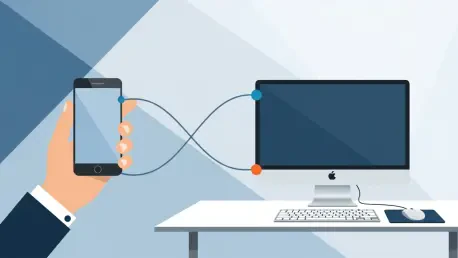

The concept of a single, pocketable device that seamlessly transitions from a daily smartphone to a fully functional desktop computer has long been a holy grail for tech enthusiasts and mobile professionals alike. While many have tried and failed to deliver on this promise, a new contender has emerged, aiming to bridge the gap between mobile convenience and desktop productivity. This device, the NexPhone, presents an ambitious vision but one that raises critical questions about whether its hardware can truly support its lofty software aspirations.
The Lingering Dream of a Single Device for Everything
The pursuit of convergence—a single device that handles all computing needs—is not a new phenomenon. For years, manufacturers have attempted to merge the portability of a smartphone with the power of a PC. These efforts have often resulted in compromised experiences, with mobile operating systems struggling to provide a genuine desktop environment or underpowered hardware failing to run demanding applications effectively.
The NexPhone enters this landscape with a bold proposition: to offer not just one but three distinct operating systems on a single handheld device. By providing Android for mobile use and both Windows and Linux for desktop tasks, it aims to succeed where others have fallen short. The core idea is to eliminate the need for multiple gadgets, offering a streamlined solution for users who are constantly switching between their phone and computer.
The NexPhone Unboxed: A Closer Look at Promise and Problems
At the heart of the NexPhone’s appeal is its remarkable multi-boot capability. Shipping with Android 16, it also allows users to boot into a full version of Windows 11 or Debian Linux, a feature that sets it apart in a crowded market. This software flexibility is its greatest strength, offering unparalleled versatility for developers, IT professionals, and tech hobbyists who value having multiple environments at their fingertips.
However, the device’s hardware reveals a significant disconnect between its capabilities and its ambitions. The NexPhone is powered by a Qualcomm QCM6490 system-on-a-chip, a processor primarily designed for industrial and enterprise IoT applications, not for the rigors of a modern desktop operating system like Windows. Despite a generous 12GB of RAM, this processing unit is poised to be a major bottleneck, leading to a sluggish and frustrating user experience when running anything beyond basic productivity tasks.
Compounding the performance issues are a dated physical design and concerns over battery life. The chassis is reminiscent of a budget smartphone from the late 2010s, lacking the premium feel expected of a flagship device. Furthermore, its 5,000 mAh battery, while adequate for a standard Android phone, is unlikely to sustain the power demands of a full Windows session for an extended period, limiting its practicality as a portable PC replacement.
Expert Analysis: An Intriguing Concept, a Compromised Reality
Industry analysis suggests that while the NexPhone is a fascinating proof of concept, it is ultimately a product of significant compromises. The decision to use an IoT-focused processor to run a full desktop OS is its critical flaw. This mismatch ensures that the Windows experience will be far from seamless, relegating it to a novelty feature rather than a reliable productivity tool. For users expecting a smooth, responsive desktop, the reality will likely be disappointing.
The device’s pricing strategy, with a pre-order cost of $199 and a planned retail price of $549, places it in a challenging market position. While the initial price is tempting for early adopters, the full price puts it in competition with more polished and powerful alternatives. The consensus is that the NexPhone is an ambitious experiment that showcases what is possible but fails to deliver a practical, everyday solution.
To Buy or Not to Buy: A Practical Guide for Potential Users
The decision to purchase the NexPhone hinges entirely on user expectations. For developers, tinkerers, and tech enthusiasts who are drawn to its unique multi-boot functionality and understand its hardware limitations, the device could be a compelling and affordable gadget for experimentation. Its ability to run Linux and Windows natively on a mobile form factor is a powerful draw for this niche audience.
Conversely, the average consumer or professional seeking a reliable smartphone-PC hybrid should exercise caution. Anyone who requires smooth performance for multitasking, content creation, or any resource-intensive application on Windows will find the NexPhone inadequate. For these users, waiting for a future iteration with a more powerful, purpose-built processor would be the more prudent choice. The dream of a true all-in-one device remains just out of reach, as the NexPhone serves as a reminder that ambition must be matched by execution.