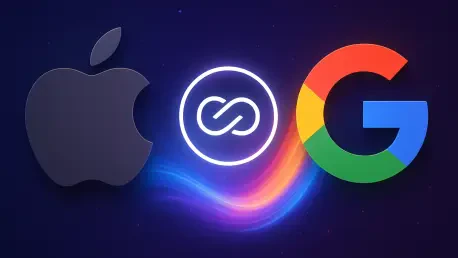

With a rich background spanning mobile gaming, app development, and enterprise solutions, Nia Christair has a unique vantage point on the forces shaping our digital lives. We sat down with her to dissect the groundbreaking partnership between Apple and Google, a deal that promises to redefine the role of artificial intelligence in the world’s most popular mobile ecosystem. Our conversation explored the strategic calculus behind this alliance of rivals, the immense technical challenges of revitalizing Siri, the tightrope walk of balancing privacy with performance, and the regulatory shadows cast by past antitrust battles.
Apple evaluated competitors like OpenAI and Anthropic before this deal. What specific capabilities in Google’s Gemini likely made it the “most capable foundation” for Apple’s goals, and what does this signal about the strengths of competing models? Please share your analysis.
When Apple says “most capable foundation,” they’re not just looking at raw intelligence; they’re looking at a complete package. My analysis is that Google’s Gemini offered an unparalleled combination of maturity, scalability, and integration readiness. This isn’t just about a smart chatbot; it’s about a robust engine that can be deeply woven into an entire operating system. It signals that while competitors like OpenAI and Anthropic have incredibly impressive models, Gemini, backed by Google’s massive cloud infrastructure, was likely the only one ready to handle the sheer volume and complexity of Apple’s user base from day one. It’s a massive vote of confidence that says Gemini is not just a product, but an industrial-strength platform.
Considering Apple’s historical strategy of vertical integration, how significant is this multi-year partnership with a direct competitor? Could you elaborate on the potential trade-offs Apple weighed between maintaining ecosystem control and accessing Google’s advanced AI technology?
This is a seismic shift in strategy for Apple, and it speaks volumes about the pressure they were under. For decades, their brand has been built on the magic of controlling both the hardware and the software. To partner with a direct competitor on a feature as central as its personal assistant is a major concession. The trade-off was stark: cling to their ideology of vertical integration and risk being left in the dust by the generative AI revolution, or swallow their pride to deliver the “wow factor” users have been demanding. The public perception that Siri was falling behind was becoming a real liability. Ultimately, they chose immediate, best-in-class capability over the long, arduous path of building it all themselves.
The overhaul for a more personalized Siri has faced delays but is now expected this year. What specific, user-facing improvements might we see from integrating Gemini, and what are the key technical hurdles in transforming a legacy assistant with this new foundation?
We should expect a leap from a task-based assistant to a truly conversational partner. Instead of just setting alarms or searching for photos, the new Siri should be able to understand complex, multi-part requests and maintain context across a conversation. The current Apple Intelligence is effective but often invisible; this will be the opposite. The primary technical hurdle is immense; it’s like performing a brain transplant. You can’t just plug Gemini in. Apple’s engineers have to completely re-architect how Siri understands user intent, how it securely accesses on-device data, and how it calls upon this new cloud-based intelligence without creating lag or compromising the user experience. It’s a delicate, high-stakes surgery on the very soul of the iOS interface.
Apple emphasizes on-device processing and privacy, while Google’s business is data-driven. How will these two giants navigate data privacy in this partnership? Can you describe the technical architecture that would allow this collaboration while upholding Apple’s stated privacy commitments?
They’ll navigate this with a very carefully designed hybrid architecture. Apple will continue to lean heavily on its own on-device models for most tasks, handling sensitive information like summarizing personal notifications right on your iPhone. When a query requires the power of a model like Gemini, Apple will act as an aggressive privacy firewall. The data sent to Google’s servers will almost certainly be anonymized, stripped of any personally identifiable information, and routed through Apple’s own tightly controlled infrastructure. Think of Apple as the gatekeeper that translates your request into a sterile, anonymous query, gets the powerful answer from Google, and then re-integrates it into your personal context back on your device.
In light of the recent antitrust ruling against Google’s exclusive default search deals, how does this new AI partnership complicate the regulatory landscape? What steps might the companies be taking to structure this agreement to avoid similar monopoly concerns in the future?
The timing of this deal is incredibly fraught, and it puts both companies right back under the regulatory microscope. They are walking on eggshells. The most critical step they’ve taken, which we know from a source familiar with the matter, is ensuring the deal is not exclusive. This is a direct lesson learned from the ruling by Judge Amit Mehta, which took aim at those exact kinds of exclusive agreements. By leaving the door open to work with other AI firms, Apple creates a legal defense against claims that they are helping Google build a new monopoly in AI. This agreement is likely structured far more as a technology licensing deal, not a default placement deal like the search partnership that cost Google billions.
What is your forecast for the future of AI-powered personal assistants, considering this major collaboration between two of the world’s largest tech companies?
My forecast is that this partnership officially ends the first era of personal assistants and launches a new, far more ambitious one. We are moving beyond simple voice-activated remote controls for our phones. The future is a hybrid model where deeply personal, private tasks are handled by efficient on-device AI, while complex, creative, and knowledge-intensive needs are seamlessly handed off to colossal cloud-based brains like Gemini. This move by Apple and Google will force an industry-wide acceleration. The new benchmark for a personal assistant won’t be about accurately setting a timer; it will be about its ability to be a genuinely helpful, context-aware, and creative collaborator in every facet of our digital lives.