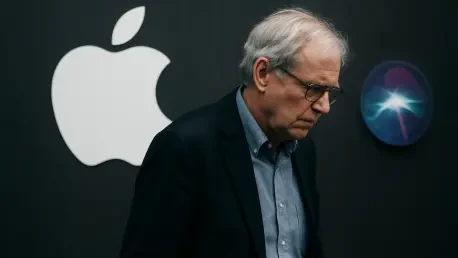

In a move that reverberates through Silicon Valley and directly impacts millions of users, Apple’s senior vice president of AI, John Giannandrea, is stepping down from his leadership role as the company grapples with significant delays and mounting pressure in the artificial intelligence sector. This high-stakes departure signals a potential reckoning for a tech giant long celebrated for its seamless user experience, which now finds its reputation on the line in the relentless race for AI dominance. The transition comes at a critical juncture, with unfulfilled promises surrounding its “Apple Intelligence” and a noticeable gap emerging between its capabilities and those of its chief competitors.
The AI Arms Race and Why This Leadership Change Matters
The technology industry is currently defined by a hyper-competitive battle for AI supremacy, where companies like Google and Microsoft are rapidly deploying advanced generative AI features. Within this landscape, Apple’s internal struggles have become increasingly public. The company’s core identity is built on delivering polished, intuitive products, but recent setbacks in AI development threaten this legacy. Delays in enhancing Siri and rolling out key Apple Intelligence features risk creating a perception that the innovator has become a follower.
This widening gap between Apple and its rivals places immense pressure on the company. As competitors integrate sophisticated AI into their ecosystems, consumer expectations have skyrocketed. Each delayed feature or underwhelming update from Apple makes its own shortcomings more pronounced. Consequently, a leadership change is not merely an internal shuffle; it is a strategic necessity aimed at closing this gap and reaffirming the company’s position at the forefront of consumer technology.
A Perfect Storm of Departures Delays and Legal Fallout
The departure of John Giannandrea, who joined from Google in 2018, marks the end of an era for Apple’s AI division. He will move into an advisory capacity before a planned retirement in 2026. While the company publicly praised his work on Apple Foundation Models and Search, his exit coincides with a period of significant turbulence. This perfect storm is compounded by the unfulfilled promises of Apple Intelligence, where several key experiences announced to the public have yet to be released.
These delays have tangible consequences beyond market perception. The company is now facing a false advertising lawsuit alleging that it misled consumers about the true AI capabilities of the iPhone 16. The lawsuit’s central claim is that Apple’s marketing outpaced its technological reality, creating a discrepancy between advertised features and actual user experience. This legal challenge crystallizes the growing frustration over the company’s AI progress.
Company Praise vs Consumer Pushback A Tale of Two Narratives
In the wake of the leadership change, two conflicting narratives have emerged. Apple’s official statement paints a positive picture, crediting Giannandrea with building a “world-class team” and advancing critical AI technologies. This public-facing position is a standard corporate maneuver designed to maintain stability and confidence during a period of transition, emphasizing past achievements over current challenges.
In stark contrast, the view from the marketplace and the courtroom tells a different story. The aforementioned lawsuit serves as a powerful testament to consumer sentiment, reflecting deep-seated frustration over the gap between marketing hype and product reality. This pushback highlights a disconnect between the company’s internal assessment and the external experience of its user base, creating a public relations challenge that new leadership must immediately address.
Charting a New Course for Apple’s AI Ambitions
To navigate these turbulent waters, Apple is passing the torch to Amar Subramanya, another distinguished alumnus of Google who most recently served as a corporate vice president of AI at Microsoft. His appointment brings a fresh perspective and a wealth of experience from two of Apple’s primary competitors in the AI space.
The mandate for Subramanya is immense and clear: right the ship, accelerate the development timeline, and finally deliver on Apple’s long-overdue AI promises. The path forward requires addressing several strategic imperatives. This includes streamlining the AI division to foster faster innovation, rebuilding consumer trust that has been eroded by delays, and, most importantly, closing the competitive technology gap to ensure Apple’s ecosystem remains a leader in the next generation of computing.
The departure of a key executive amidst product delays and legal challenges ultimately marked a pivotal moment for Apple’s artificial intelligence ambitions. This transition was not just a change in leadership but a necessary inflection point that forced the company to confront its strategic shortcomings. The events that unfolded set the stage for a dramatic new chapter, where the pressure to innovate and deliver became more intense than ever before.