
With a rich background in mobile gaming, app development, and hardware design, Nia Christair has witnessed the evolution of personal technology firsthand. As Silicon Valley buzzes with news of Google’s return to the smart glasses arena, a decade after the polarizing debut of Google Glass, we sit down with her to explore what has changed. Our conversation will delve into the critical lessons Google must apply from its past, from navigating the delicate balance of fashion and function to rebuilding public trust and finding that elusive “killer app” that could finally make smart glasses a mainstream reality.
The article notes Google Glass failed partly because it looked “dorky.” With new fashion partners like Warby Parker, how can Google’s designers navigate the “uncanny valley” of smart glasses to create a device that is stylish and socially acceptable, avoiding the pitfalls of the past?
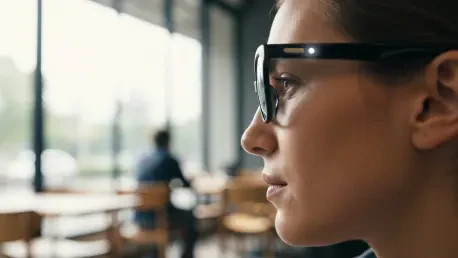
That’s the core challenge, isn’t it? The original Google Glass looked like an electronics product, a piece of hardware you wore on your face. It was impossible to ignore that big boom hovering over your eye, which immediately created a social barrier. It sat firmly on the unacceptable side of what I call the “uncanny valley” of wearables. With partners like Warby Parker and Gentle Monster, Google is signaling that it understands the assignment this time: these have to be fashion items first, tech second. The key is subtlety. Success will be a device where the technology is so seamlessly integrated that it almost disappears. It’s a very fine line to walk; in my opinion, the standard Ray-Ban Meta glasses are on the acceptable side, but the version with the display starts to lean back into that uncanny territory. Google must prioritize making something people genuinely want to wear all day, even if the battery isn’t on.
The “glasshole” moniker stemmed from people feeling they were being secretly recorded. The article mentions Meta uses an indicator light. What specific design or user interface choices can Google implement to make non-users feel comfortable and secure around these new AI glasses?
Ah, the “glasshole.” I remember that time well, as I was an early Glass user myself. That term wasn’t just about the device looking strange; it was born from a deep social anxiety. A small indicator light, like Meta uses, is a step in the right direction, but I am not convinced it’s enough to satisfy the growing opposition to cameras in glasses. We’re talking about rebuilding a social contract that Google Glass broke. Google needs to design for the non-user. This could mean more overt, universally understood cues. Perhaps a distinct, gentle sound that plays when recording starts, or a more prominent, but elegantly designed, visual indicator that’s impossible to miss. The solution has to be about radical transparency, making anyone in the vicinity feel informed and respected, not just watched. It’s less about the feature itself and more about the social consideration baked into the design.
You argue that Gemini AI, despite its power, might not be the “killer app” Google needs. Beyond features like real-time translation or navigation, what specific, step-by-step user experience could truly set these glasses apart from competitors and justify their existence to consumers?
Exactly. Gemini is an incredibly powerful engine, but an engine isn’t the car. A “killer app” is the journey it enables that you couldn’t take before. Forget just showing turn-by-turn directions. Imagine you’re walking through a historic district. The glasses see a building, access your Google Photos, and whisper, “This architecture is similar to that cathedral you loved in your photos from Italy.” It then checks your Google Calendar, notes your dinner reservation in an hour, and says, “That restaurant is a 15-minute walk. There’s a park on the way you’ve never visited, and the sun is setting. Want me to guide you there?” It’s that deep, proactive, and intensely personal contextual awareness, weaving together your past memories, present location, and future plans, that could make these glasses indispensable. It’s an experience a phone can’t replicate because it’s not seeing the world with you in real-time.
The article highlights that Google is mirroring Meta’s strategy by offering both audio-only and display glasses. What specific market segment is Google targeting with this dual approach, and how can its deep integration with services like Gmail and Google Photos provide a real advantage over Meta’s offering?
This dual approach is a very savvy way to de-risk the market entry. The audio-only glasses serve as a gentle on-ramp for the curious consumer, someone who wants the benefits of an AI assistant without the social or aesthetic hurdles of wearing a face-mounted display. It’s a lower barrier to entry. But Google’s true trump card is its ecosystem. Meta is built around your social graph, but Google is built around your entire life. The ability for Gemini to have deep contextual knowledge from your Gmail conversations, your work in Google Docs, and your memories in Google Photos is a profound advantage. Take the real-time translation feature. The article notes my own experience with Meta’s version, where the audio translation talks over people. Google’s ability to provide on-screen captions is a far superior solution, and it’s a direct result of leveraging its core software strengths to create a better hardware experience.
You state that in their initial years, these AI glasses will be peripheral devices, dependent on a connected Android phone. What major technological or user behavior milestones must be reached for smart glasses to evolve from a smartphone accessory into a truly standalone computing platform?
For smart glasses to cut the cord, two major hurdles must be cleared. First is the technology itself. We need a revolutionary leap in battery density and processor efficiency. A standalone device that only lasts a few hours is a non-starter. You also need independent, power-efficient cellular connectivity built right in. But the bigger, more complex milestone is a shift in user behavior. Right now, our phones are the center of our digital lives. For glasses to replace them, they must offer an experience that is not just slightly better, but an order of magnitude more intuitive and essential for certain tasks. We need to reach a point where reaching for your phone feels slow and cumbersome compared to the glanceable, voice-driven interface of the glasses. That won’t happen until the technology is invisible and the “killer app” is so compelling that you feel at a disadvantage without it.
What is your forecast for the consumer smart glasses market? Considering Google, Meta, and likely Apple’s entries, will these devices become mainstream, or will they remain a niche product for tech enthusiasts for the foreseeable future?
My forecast is one of cautious optimism, with a long time horizon. For the next three to five years, I fully expect smart glasses to remain a niche market for early adopters and tech enthusiasts. The fundamental challenges—cost, social acceptance, battery life, and the lack of a universal killer app—are still very real. Google has an incredible opportunity here; its AI and deep integration with the data of a billion users could make its glasses the best, most useful product on the market. However, it also has disadvantages, like its past reputation and the exclusion of iPhone users. The entire category will likely remain in this enthusiast phase until Apple enters the market. An Apple product would validate the form factor for the mainstream and force the entire industry to accelerate. Until that day, Google and Meta are in a fascinating race, but they’re still paving the road, not just driving on it.