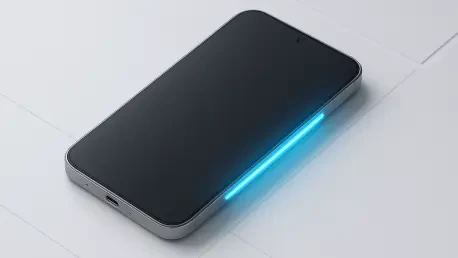

The persistent struggle between minimalist hardware aesthetics and the functional necessity of glanceable status updates has reached a definitive turning point with the release of the Google Pixel 11 Pro. For years, manufacturers opted for Always-On Displays that provided constant information at the cost of battery longevity and occasional screen burn-in concerns, but users remained nostalgic for the discreet convenience of the legacy notification LED. Google has addressed this demand by introducing HiLight, a sophisticated, multi-spectrum light bar integrated directly into the upper chassis of the new flagship device. This is not merely a return to the simple blinking dots of the past; rather, it is a significant engineering feat that utilizes ultra-efficient micro-LED technology to convey complex information without requiring the user to wake the entire display. By bridging the gap between passive notification systems and high-energy screen usage, the Pixel 11 Pro establishes a new standard for how modern smartphones communicate with their owners during idle periods.
The Engineering of HiLight: A Multi-Spectrum Approach to Information Density
The technological foundation of the HiLight system relies on a precision-engineered array of organic light-emitting diodes situated beneath a semi-translucent segment of the camera visor. Unlike traditional LEDs that were restricted to specific colors and basic pulse patterns, this new implementation supports a wide dynamic range of brightness and over sixteen million distinct hues to represent various application categories. Users are now able to assign specific gradients or rhythmic pulses to individual contacts or high-priority applications, allowing for immediate recognition of an incoming message’s importance from across a room. Furthermore, the light intensity adjusts automatically based on ambient lighting conditions, ensuring that the signal remains visible in direct sunlight while remaining soft and unobtrusive in darkened environments. This level of granular control demonstrates a commitment to functional design that prioritizes the user’s focus by reducing the constant need to physically interact with the touchscreen for every minor update.
Beyond mere aesthetics, the integration of the HiLight system with the latest Tensor G6 chip allows for real-time processing of notification urgency through localized machine learning models. The hardware is designed to interpret the semantic content of incoming alerts, changing its behavior if a message contains keywords indicating an emergency or a time-sensitive appointment. This intelligent behavior ensures that the visual feedback is not just a repetitive distraction but a curated stream of information that respects the user’s cognitive load. For instance, a continuous soft amber glow might indicate a ride-share vehicle is approaching, while a sharp blue flicker could signify a direct communication from a family member. By offloading these visual cues to a dedicated low-power micro-controller, the device maintains a high degree of responsiveness without taxing the primary processor cores. This architectural choice significantly extends the daily battery life for power users who receive hundreds of notifications throughout a typical workday.
Aesthetic Integration and Hardware Sustainability: Balancing Form With Power Efficiency
The physical design of the Google Pixel 11 Pro incorporates the HiLight module so seamlessly that it remains entirely invisible when it is not actively transmitting information to the user. Google utilized a proprietary nano-etched glass finish on the camera bar that allows light to pass through with high clarity while maintaining a uniform, premium texture that matches the rest of the device. This approach avoids the cluttered look of older smartphones that featured dedicated circular cutouts for sensors, preserving the clean lines that have become the signature of the Pixel series. The durability of the light bar is also a focal point, as the glass housing is reinforced with a sapphire-infused coating to prevent scratches that could diffuse the light or diminish the clarity of the signals. This robust construction ensures that the notification system remains functional throughout the entire lifecycle of the phone, resisting the environmental wear and tear that typically degrades external components.
The successful deployment of HiLight on the Pixel 11 Pro provided a clear roadmap for the future of ambient computing and user-centric design. It demonstrated that hardware manufacturers could successfully reintroduce discarded features by enhancing them with modern materials and artificial intelligence. Developers were encouraged to begin integrating these visual cues into their notification logic to reduce user reliance on high-energy display interactions. For consumers, the transition toward using these discreet signals helped in cultivating a more mindful relationship with their devices, minimizing the impulse to check screens for every incoming alert. Moving forward, the industry was expected to observe an expansion of these low-power indicators across a broader range of wearable and mobile hardware. Professionals were advised to customize their light profiles to distinguish between critical work tasks and personal updates, ensuring that technology served as a tool for productivity rather than a constant source of interruption.