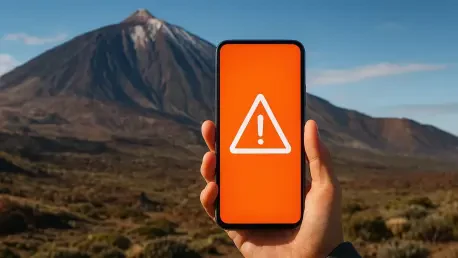

The Government of the Canary Islands is scheduled to broadcast three distinct ES-Alert notifications to mobile devices between 9:00 am and 2:00 pm during the upcoming VOLCANEX drill. This simulation, set for October 22, marks a significant milestone in regional disaster management by putting the island’s civil protection protocols to a rigorous public test. The exercise focuses on Guía de Isora, specifically addressing the unique geological challenges presented by the local volcanic landscape. During these hours, mobile phones throughout the region will emit a loud, distinctive warning tone accompanied by vibration, overriding silent modes to ensure the message is received. It is vital for residents and visitors to understand that this is a simulated event designed to refine emergency coordination rather than a response to an actual threat. By utilizing the ES-Alert system, authorities aim to verify the reach and reliability of cell broadcast technology across the difficult mountainous terrain of Tenerife.
1. The Sequence of Scheduled Emergency Notifications
The alert sequence is divided into three logical phases designed to simulate the progression of a real volcanic event. The first notification is island-wide, shifting Tenerife’s simulated status to an “orange” alert level under the Special Plan for Civil Protection and Emergency Response to Volcanic Risk. This phase does not mandate real-world evacuations but serves as a call to heightened awareness for emergency services and the public. Following this, a second, more localized message will be broadcast specifically to the municipalities of Guía de Isora and Santiago del Teide. This communication focuses on a mock precautionary evacuation for the villages of Aripe and Chirche. While the general public remains unaffected, these specific areas serve as the testing ground for logistical maneuvers. Finally, a third broadcast will signify the official conclusion of the VOLCANEX drill, clearing the digital airwaves and providing closure for all recipients who participated in the mass notification test.
A critical aspect of this exercise is the technical performance of the ES-Alert system, which relies on mobile phone antennas rather than individual telephone numbers. Because the signal originates from high-capacity masts, notifications may inadvertently reach individuals on neighboring islands like Gran Canaria, La Palma, La Gomera, and El Hierro. This spillover is particularly common for those traveling through maritime corridors or located in high-elevation coastal regions. Authorities emphasize that receiving these messages outside of Tenerife does not imply that the recipient is in danger or subject to the simulated restrictions. The primary objective is to evaluate the signal’s saturation and identify any potential dead zones or excessive overlaps in the coverage map. This data is invaluable for the Tenerife Island Council as they refine their contingency plans for the Santiago del Teide-Guía de Isora sector, an area currently classified as having a very high volcanic threat within the island’s disaster plan.
2. Essential Safety Protocols for Mobile Device Users
When the mobile device triggers the intense warning tone, it is imperative to follow a specific set of protocols to ensure personal safety. The first step for any individual is to maintain their composure; recognizing that the alert is part of a scheduled test prevents unnecessary panic and allows for a rational response. Once calm, users should move to the second step, which is to review the text thoroughly. Carefully reading the information displayed on the screen is necessary to understand the specific nature of the drill and the instructions being simulated. For those who are operating a vehicle or machinery when the alarm sounds, the third step is to pull over at the earliest safe opportunity. It is vital to find a secure spot to stop before interacting with the phone to prevent traffic accidents caused by distraction. These initial actions ensure that the individual remains safe while acknowledging the emergency information, reflecting the behavior expected during an actual eruption event.
After the content of the message has been understood, the fourth protocol is to dismiss the notification by tapping the “Accept” button on your screen. This action acknowledges receipt and silences the alarm, allowing the device to return to its normal state. The fifth step involves community responsibility; individuals are encouraged to inform vulnerable neighbors or elderly family members who may not be familiar with the ES-Alert system and could be startled by the noise. A brief explanation that the event is a planned simulation can prevent undue stress among those less tech-savvy. Finally, the most critical administrative instruction is to not call emergency lines like 112 or local police to ask about the alert. These communication channels must remain completely open for actual, non-simulated emergencies that may occur simultaneously. By following these steps, the public contributes to the overall success of the exercise, demonstrating a high level of civic preparedness essential for geological risk management.
3. Operational Goals and Infrastructure Preparedness
The VOLCANEX Tenerife 2026 exercise is far more than a simple test of mobile phone technology; it is a comprehensive stress test for the island’s entire disaster response infrastructure. The operation involves a multi-agency approach, including the Tenerife Island Council, local police, civil protection units, and humanitarian organizations. By simulating the evacuation of Aripe and Chirche, planners are able to evaluate the logistics of moving people with reduced mobility, tourists who may face language barriers, and even domestic animals. The drill provides a platform to test the capacity of emergency shelters and the speed at which essential services can be rerouted to support a displaced population. Furthermore, the exercise allows for the evaluation of critical infrastructure protection, such as power grids and water supplies, which are often the most vulnerable during volcanic activity. These real-time scenarios offer insights that theoretical models cannot provide today, highlighting coordination complexities.
The execution of the VOLCANEX drill provided essential data that strengthened the regional emergency framework and improved the reliability of the ES-Alert system for the long term. The exercise successfully demonstrated how digital notifications could reach a vast majority of the population within seconds, even in remote or rugged terrain. One of the most significant takeaways was the importance of public awareness; as residents became more familiar with the warning tones, the potential for chaos during a real event was significantly reduced. The technical feedback allowed engineers to fine-tune coverage areas, ensuring that future messages became even more targeted. For future readiness, residents should keep their devices updated to at least Android 11 or iOS 15.6 and develop a localized support network for their neighborhoods. This proactive approach turned a technical test into a foundation for community resilience, ensuring that every citizen remained prepared for any future environmental challenges.