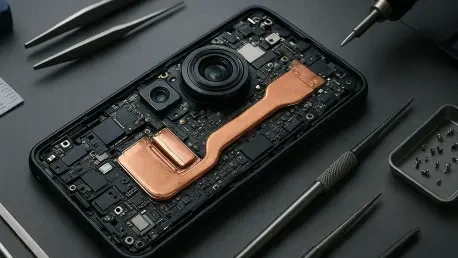

The delicate hum of a high-powered heat gun creates a palpable sense of apprehension in repair labs as technicians attempt to penetrate the titanium shell of the newest mobile flagship. While consumers often perceive their devices as seamless slabs of futuristic glass, hardware specialists recognize a high-stakes puzzle where a single millimeter of mechanical error carries a four-hundred-dollar price tag. The latest hardware teardown of the iPhone 18 Pro reveals a device that is simultaneously a masterpiece of miniaturization and a minefield for the unprepared professional. From the initial moment the heat makes contact with the frame, it becomes clear that this 2026 flagship is designed to redefine mobile photography, even if it forces the boundaries of repairability into uncomfortable territory.
The High Stakes of Peering Behind the Glass
Cracking the seal of a modern premium smartphone has evolved from a simple mechanical task into a calculated risk management exercise. Inside the iPhone 18 Pro, every internal cubic millimeter is contested territory, shared by high-capacity power cells and sophisticated optics. For the independent technician, the stakes are exceptionally high because the structural integrity of the device relies on adhesives and tolerances that leave no room for hesitation or tremor.
The engineering philosophy behind this latest release suggests a departure from the “disposable” tech of previous decades, moving instead toward a complex, modular architecture that paradoxically remains difficult to access. This contradiction defines the current state of hardware maintenance, where the sheer density of internal components makes every entry a potential point of failure. Consequently, the transition from opening the chassis to successfully completing a repair requires a level of precision usually reserved for watchmaking.
Balancing Cutting-Edge Performance with Maintenance Barriers
The iPhone 18 Pro arrives at a crossroads in mobile evolution where the demand for professional-grade imaging meets the growing global movement for the Right to Repair. As mobile chipsets push the envelope of processing power, they generate significant heat that can throttle performance or accelerate battery degradation. This reality necessitated a radical rethink of internal cooling strategies, which in turn created new obstacles for those attempting to service the device.
At the same time, the integration of moving mechanical parts—specifically the new variable aperture—introduces a level of physical complexity rarely seen in solid-state electronics. This shift toward mechanical components means that the device is no longer just a collection of static boards and cables. Understanding this internal architecture is now essential for understanding the true cost of ownership and the expected longevity of premium hardware in an increasingly demanding market.
Inside the Chassis: Engineering Marvels and Mechanical Risks
The most significant innovation discovered during the teardown is a sophisticated six-blade aperture system crafted from hair-thin polymer composites. This magnetic assembly allows for unprecedented control over light and depth of field, bringing professional optical capabilities to a pocket-sized device. However, this advancement creates a non-repairable component where even a microscopic speck of dust can cause a total system failure, necessitating a full module replacement rather than a simple part fix.
To combat the intense heat generated by next-generation processors, Apple integrated a vapor chamber that is three times larger than previous iterations. This massive cooling shield covers nearly the entire rear interior, ensuring that the device maintains peak performance during heavy workloads. While this overhaul improves hardware stability, it acts as a massive physical barrier, forcing technicians to remove multiple layers of thermal shielding before they can reach the underlying logic board.
The battery housing has also seen a departure from the messy, unreliable adhesives of the past. It is now secured in a dedicated metal tray held by thirteen precision screws, offering a more stable and predictable removal process. Despite this improvement, the battery remains locked behind the most vulnerable part of the phone: the display. Furthermore, the sensitivity of the internal shutter blades means that a simple cracked lens cover, once a minor aesthetic issue, can now lead to expensive internal damage if shockwaves from a drop interfere with the moving parts.
Expert Perspectives on the Display-First Entry Liability
Industry analysts point to the specific heating requirements—reaching as high as 162°F—as a significant deterrent for third-party shops and DIY enthusiasts. The primary bottleneck of the repair process remains the industrial-grade adhesive bonding the screen to the frame. Experts argue that this design philosophy places the entire financial risk on the technician; if the screen cracks during a routine battery swap, the cost of the repair instantly skyrockets, making the process prohibitively expensive for many.
This gatekeeping of the internal assembly suggests that while individual components are more robustly built, the path to reaching them is more treacherous than ever. Repair professionals have noted that the “display-first” entry method creates a systemic liability that favors authorized service centers over independent labs. This tension between advanced internal durability and external accessibility continues to shape the debate over how modern hardware should be designed for a sustainable future.
Strategies for Navigating the iPhone 18 Pro’s Complex Architecture
Technicians recognized that successful entry required a methodical multi-stage heating process to breach the display seal without tearing the delicate ribbon cables located just beneath the glass. They utilized isopropyl alcohol to soften the industrial bonds, ensuring that the screen could be lifted without applying excessive force. Users prioritized high-impact protective cases with raised lips around the camera island, as the mechanical shutter was significantly more susceptible to shock damage than older fixed-lens models.
Data recovery specialists accounted for additional labor time to deconstruct the extensive thermal shielding before they could reach the logic board for critical work. With a repairability score of seven out of ten, the device proved to be more modular than its predecessors once opened, but the high-stakes gamble of the initial entry remained the primary hurdle. This approach shifted the focus from simple parts replacement toward a more disciplined and holistic maintenance philosophy that emphasized specialized tools and controlled environments.