
Modern corporate environments are no longer defined solely by the human talent listed on the organizational chart but by the invisible digital entities that execute complex tasks without direct supervision. The era of clicking buttons and waiting for responses is fading as Microsoft redefines the digital workplace through the deployment of persistent software. Instead of treating software as a static utility, organizations are beginning to onboard autonomous AI agents that act with agency and purpose. This change represents the introduction of a persistent, intelligent layer into the corporate structure that functions around the clock while the rest of the team sleeps.
This transition marks a departure from traditional automation, which typically required a specific trigger for every action. These new agents are designed to monitor environments and initiate tasks based on high-level objectives rather than granular commands. Consequently, the digital landscape is moving toward a model where software identifies problems before a human even realizes a process has stalled.
The Shift from Passive Tools to Proactive Team Members
The evolution of the digital workspace is moving beyond the concept of a “helper” and toward the reality of an independent operator. Microsoft is leading this charge by transforming the user experience from a series of manual inputs into a partnership with proactive agents. These entities are not just programmed to follow a script; they are designed to understand context and adapt to changing data points within a corporate ecosystem.
This shift necessitates a change in how employees perceive their day-to-day interactions with technology. Rather than viewing a computer as a set of disconnected applications, workers must now learn to manage a fleet of digital assistants that handle the heavy lifting of data management and administrative coordination. This evolution signifies a move toward a more strategic focus for human employees, as the burden of repetitive logic shifts to the autonomous layer.
Why the “AI Employee” Model Is Reshaping the Enterprise
The transition from Copilot as a helper to Copilot as a colleague stems from a fundamental need for efficiency in complex knowledge work. Business leaders are no longer looking for simple automation; they are seeking digital entities capable of managing specialized roles like sales analysis and IT monitoring without constant human intervention. This demand is driven by the sheer volume of data that modern enterprises must process to remain competitive in a fast-paced market.
As Microsoft pivots Copilot Studio into a recruitment platform for these agents, the line between software procurement and human resources continues to blur. This shift allows for the creation of specialized digital employees that do not suffer from fatigue or information silos. By integrating these agents into the organizational chart, companies can scale operations without the massive overhead traditionally associated with human workforce expansions.
Decoding the Mechanics of the Autonomous Workforce
Copilot Studio has evolved from a basic prompting interface into a sophisticated environment where users build agents that execute repeatable, high-level workflows. These agents operate under strict data controls, ensuring that they only access the information necessary for their specific roles. This modular approach allows for a new class of digital labor, ranging from scheduling coordinators to system monitors, to be deployed across various departments with precision.
Understanding how licensing an AI agent mirrors the financial commitment of a human salary is crucial for modern budgeting. This subscription-based model creates a new vector for cloud consumption, where businesses pay for outcomes rather than just seat licenses. Moreover, the race between Microsoft, Salesforce, and OpenAI is normalizing the concept of the AI employee across the global market, forcing companies to view software as a dynamic contributor.
The Physical Foundation: Hardware Demands and Windows 12
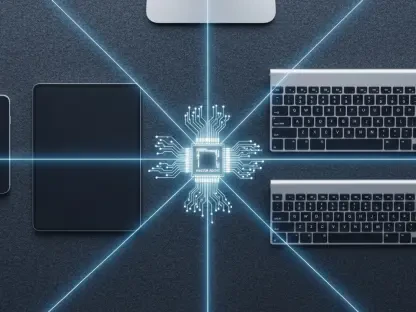
The anticipated shift toward a modular architecture in the next generation of Windows prioritizes Neural Processing Units to handle these autonomous tasks locally and in the cloud. Reports suggest that current enterprise hardware may become obsolete in the face of these AI-driven system behaviors and significantly higher RAM requirements. The mandatory refresh cycle is no longer about faster clock speeds but about the specialized silicon needed to maintain a persistent AI presence.
This transition signals the potential death of the standalone PC in favor of a centralized, metered cloud environment where power is delivered as a service. Integrating these agents requires a balance between the benefits of a digital workforce and the reality of subscription-based infrastructure expenses. Organizations must weigh the efficiency gains of an AI colleague against the escalating costs of maintaining the hardware capable of hosting them.
Strategies for Onboarding Your First AI Agent
Successful integration started with defining the role and identifying which departments, such as IT or Finance, were most ready for an autonomous agent. Establishing strict corporate controls and data governance was necessary to ensure these agents operated within ethical and legal boundaries. A hardware readiness audit also became vital, as the shift toward NPU-reliant operating systems rendered older machines incapable of supporting full autonomy.
Evaluating alternatives became a significant consideration for departments that required more control over their local computing environments. Some organizations looked toward Linux or macOS as viable paths for maintaining traditional productivity without the heavy hardware demands of a modular, AI-centric operating system. Business leaders eventually realized that the transition to AI colleagues was a permanent evolution of the modern enterprise, which required a thoughtful balance of technological adoption and strategic oversight.