
The landscape of mobile music production has transformed from a collection of simple sketchpads into a sophisticated environment where professional-grade performance tools are no longer the exception but the expectation for modern creators. As mobile hardware capabilities have expanded, the demand for software that balances immediate tactile feedback with deep technical flexibility has reached an all-time high. The release of the Samposium performance sampler by SynthFamDSP represents a significant shift in how developers approach the iOS ecosystem, moving away from rigid, pre-defined interfaces toward a truly modular and user-defined experience. This application serves as a comprehensive multi-layer sampler that bridges the gap between casual beat-making and complex live performances. By prioritizing the ergonomics of a touch-based environment, the software addresses the specific challenges of producing high-quality audio on portable devices while providing a set of tools that rivals traditional hardware samplers found in professional studios.
Modular Design and Ergonomic Control
Customizable Interface Architecture
The defining characteristic of this new sampling environment is a grid-based interface that empowers users to redefine their physical interaction with the software. Instead of forcing musicians to adapt to a static layout, the application allows for the complete customization of pad sizes, colors, and behaviors, ensuring that the visual feedback matches the creative intent of the performer. Each pad acts as an independent entity, capable of being moved and resized to accommodate different hand sizes or specific performance styles, which is particularly beneficial for those transitioning from traditional hardware controllers. This modularity extends to the way audio is triggered and manipulated, providing a level of personalization that is rarely seen in mobile applications. This approach effectively reduces the friction between a creative idea and its sonic realization, as performers can arrange their most-used samples in a way that feels natural and intuitive, thereby minimizing the cognitive load during high-pressure live sets or complex recording sessions in the studio.
Beyond the purely aesthetic choices, the structural flexibility of the interface allowed users to build specialized layouts for different musical genres. For instance, a percussion-heavy setup might utilize larger pads for primary kicks and snares while keeping smaller, color-coded pads for auxiliary hits and atmospheric textures. This organizational freedom was coupled with a responsive touch engine that ensured every tap was registered with zero perceptible latency, which is a critical requirement for any instrument intended for live use. By treating the screen as a blank canvas rather than a fixed set of buttons, the developer recognized that the most effective tool is one that can be molded to the specific workflow of the individual artist. This philosophy of user-centric design ensured that the software remained accessible to beginners while providing the deep configuration options required by professional sound designers who demand total control over their performance environment and the physical arrangement of their digital instruments.
Intuitive Sampling and Gesture Control
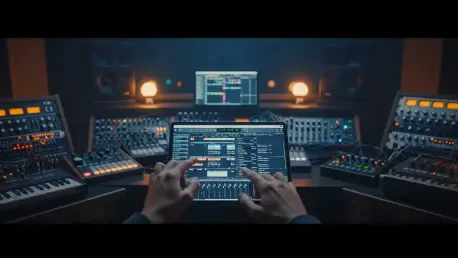
Beyond the visual organization of the workspace, the sampler excels in its ability to capture and sculpt audio in real time using advanced multi-touch gestures. Users are able to bend, twist, and manipulate samples with fluid motions, transforming static sounds into evolving textures that respond immediately to the nuances of human touch. The integration of high-resolution waveform visualization allows for precise editing of start and stop points, while dedicated controls for pitch shifting and looping provide the necessary tools for traditional sample-based production. Each independent pad can record audio directly from external microphones or high-fidelity audio interfaces, making it a versatile hub for on-the-spot sound design. This capability is enhanced by the inclusion of six choke groups and a three-band parametric EQ for every individual pad, allowing for a level of surgical precision usually reserved for desktop digital audio workstations. The result is a performance instrument that feels alive, encouraging exploration and accidental discovery through its highly responsive and tactile feedback system.
The physical interaction with the waveforms provided a more intimate connection to the sound than traditional mouse-and-keyboard setups could offer. Performers could literally grab the audio, stretching and warping it to create unique transitions or rhythmic variations on the fly. This gestural approach was particularly effective when combined with the internal resampling engine, which allowed the main output to be recorded back into a pad. This meant that a highly processed, manipulated performance could instantly become a new source for further exploration. The software handled these complex tasks with a level of stability that inspired confidence, ensuring that the creative flow was never interrupted by technical limitations. By focusing on the direct manipulation of audio data, the application successfully bridged the gap between a standard playback device and a true expressive instrument, allowing for a level of performance nuance that was previously difficult to achieve within the confines of a mobile operating system or traditional hardware.
Advanced Processing and Professional Integration
Comprehensive Signal Chain and Effects
The internal signal processing capabilities provide a robust foundation for sound designers looking to push the boundaries of conventional sampling techniques. A reorderable multi-effects chain serves as the heart of the creative process, featuring a diverse array of modules including distortion, bit-crushers, phasers, and ring modulators. One particularly unique addition is the string resonator, which adds organic, physical-modeling-style characteristics to synthesized or recorded sounds. While the current version focuses on these traditional and experimental processors rather than a granular engine, the depth of control over low-pass and high-pass filters ensures that every sample can be tailored to fit perfectly within a mix. Furthermore, the ability to resample the main output directly within the application opens up significant possibilities for layering and complex sound design. This feature allows performers to capture a live improvisation or a processed sequence and instantly turn it into a new sample, facilitating a workflow that emphasizes continuous evolution and the building of intricate, multi-layered compositions.
The flexibility of the signal routing meant that each effect could be placed exactly where it was needed in the chain, allowing for the creation of complex textures that evolved over time. For example, a user could place a bit-crusher before a filter to create harsh, digital grit that was then smoothed out by a resonant sweep, or reverse the order for a completely different sonic character. This level of control extended to the dedicated tuner and EQ for each pad, ensuring that every element of a composition was harmonically and sonically balanced. The inclusion of 300 MB of royalty-free content provided an immediate starting point, but the true power of the system lay in how it treated these sounds. By applying the built-in effects and filters, even the most basic sample could be transformed into something entirely original. This emphasis on transformation rather than simple playback established the software as a serious tool for electronic music production, where the ability to create unique timbres is often the most important factor in a successful track.
Connectivity and Future Workflow Enhancements
To ensure that the sampler fits into a broader production environment, the developer has implemented a variety of industry-standard synchronization and control protocols. The inclusion of Ableton Link allows for seamless wireless tempo synchronization with other music applications and hardware, while full MIDI support ensures compatibility with external controllers and keyboards. A built-in step sequencer supporting up to 512 steps provides the backbone for rhythmic arrangements, effectively turning the sampler into a powerful groovebox capable of driving entire tracks. Perhaps most importantly for the professional community is the current development of an AUv3 version, which is presently undergoing beta testing. This transition will allow the sampler to be hosted directly inside popular mobile DAWs, transforming it from a standalone performance tool into a fully integrated plugin. The addition of a 300 MB library of royalty-free samples further lowers the barrier to entry, providing immediate material for users to experiment with while they explore the deep randomization functions and creative timing features that define this versatile audio platform.
The integration of randomization features provided a constant source of inspiration, allowing producers to break out of creative ruts by generating unexpected patterns or settings. This was particularly useful when combined with the extensive sequencer, which allowed for the creation of intricate polyrhythms and evolving sequences that could span hundreds of steps. By supporting MIDI Mappings, the application became the centerpiece of a larger studio setup, controlling other instruments or being controlled by external hardware with ease. The move toward AUv3 support was a clear indication that the developers viewed the mobile platform as a professional environment, equal in potential to desktop systems. This foresight ensured that the sampler would remain relevant as mobile production workflows continued to mature, offering a bridge between different software environments and hardware configurations. The result was a tool that felt both complete as a standalone unit and indispensable as part of a larger, more complex musical ecosystem that prioritized flexibility and interoperability above all else.
Evolution of Mobile Sampling Standards
The introduction of Samposium into the iOS market set a new benchmark for how performance-oriented samplers should balance complexity with usability. It was observed that the modular approach to user interface design successfully addressed the diverse needs of the mobile musician, offering a level of physical customization that was previously unavailable. This flexibility proved to be a significant advantage, as it allowed the software to evolve alongside the user’s growing technical requirements. Moving forward, creators should look toward integrating this sampler into larger workflows, particularly as the AUv3 version moves out of beta and into a stable release. It was clear that the ability to resample internally and manipulate audio through multi-touch gestures provided a unique creative edge that traditional software often lacked. Producers who prioritized tactile interaction and live improvisation found that this platform offered a more expressive experience than static sampling tools, suggesting a shift in the industry toward more performative software architectures.
As the production landscape continues to favor portable and flexible solutions, the integration of professional features like Ableton Link and comprehensive MIDI support will remain essential. It was recommended that users explore the deep randomization and sequencing capabilities to discover new sonic territories that were not easily accessible through conventional composition methods. The transition from standalone application to a hosted plugin represented a critical step in the professionalization of mobile audio tools, and it was noted that such developments would likely encourage more artists to adopt the iPad as their primary production hub. The successful deployment of this sampler underscored the importance of ergonomics in software design, demonstrating that a tool’s power is only as effective as the interface that allows a human to control it. This project provided a roadmap for future developers, highlighting that the key to modern music software lies in providing a robust technical foundation that remains entirely adaptable to the specific, evolving needs of the contemporary artist.