
The silent living rooms of suburban households tell a story that venture capitalists and Silicon Valley engineers never anticipated: the high-fidelity headsets meant to transport us to digital realms are instead collecting dust on bookshelves. While the beginning of this decade saw a fever pitch of excitement surrounding the metaverse, the landscape in 2026 has shifted with a dramatic, almost clinical precision. Instead of a virtual reality headset in every home, the tech industry is grappling with a VR winter characterized by stagnant sales figures and a rapid pivot toward hardware that facilitates interaction with the real world. The curiosity that once drove consumers to experiment with bulky, isolating hardware is being replaced by a demand for devices that integrate into the rhythms of daily life rather than obstructing them. This cooling interest represents more than just a dip in a product cycle; it is a fundamental reassessment of how humans want to interact with the digital world.
The End of the Metaverse Honeymoon Phase
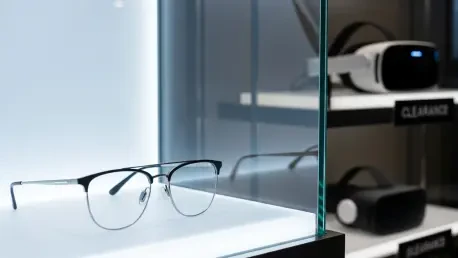
The tech world is currently navigating a sobering reality where the dream of a fully immersive digital existence has hit a physical and psychological wall. During the height of the pandemic, the narrative of the metaverse felt like an inevitable evolution, a way to transcend the limitations of physical distance. However, as the novelty has worn off, users have found that the digital utopias promised by developers often feel empty, lonely, or simply unnecessary for the tasks of modern life. The shift in 2026 is visible in the way major electronics retailers have moved VR displays from the front of the store to the back clearance aisles. The “honeymoon” with total immersion has ended because the friction of the technology began to outweigh the magic of the experience.
This shift toward more practical hardware marks a turning point in consumer electronics. For years, the industry operated on the assumption that if the graphics were sharp enough and the latency low enough, people would naturally want to spend hours inside a headset. That assumption ignored the basic human desire for presence and the reality that most people do not want to be “plugged in” for extended periods. Consequently, the market is seeing a resurgence of interest in “glanceable” technology—devices that provide information in small, helpful bursts rather than demanding total sensory takeover. This transition is not a failure of imagination but a recalibration of utility, as the focus moves from escaping reality to enhancing it through subtle, AI-driven layers.
The decline of the metaverse narrative has also forced a rethink of social connectivity in digital spaces. While early proponents suggested that 3D avatars would replace video calls, the actual user behavior has trended toward the opposite. People have found that a simple text or a high-definition video call provides more emotional resonance than a cartoonish representation in a virtual room. As a result, the platforms that once bet everything on virtual social hubs are now pivoting to find ways to make traditional 2D interfaces more efficient using artificial intelligence. This realization has punctured the hype bubble, leading to a market where the value of a device is measured by its ability to save time in the real world rather than its ability to consume time in a virtual one.
Why the Immersive Dream Is Stalling in 2026
Understanding the current market contraction requires looking at the persistent hurdles that have plagued virtual reality since its inception. Despite billions of dollars in investment, the transition from a niche gaming hobby to a ubiquitous computing platform has proven more difficult than even the most optimistic projections suggested. One of the primary deterrents remains the ergonomic and social barrier; the physical strain of wearing “eyes-covered” hardware for extended periods is a physiological hurdle that software simply cannot fix. Users frequently report “VR fatigue” or motion sickness, and the social isolation of wearing a device that hides one’s face makes it a non-starter for multi-person households or public use.
The financial barrier to entry serves as another insurmountable wall for the average household. Even with manufacturing efficiencies, a high-end, truly immersive device often costs more than a premium laptop or a professional-grade camera. In a global economy where consumers are increasingly conscious of the “cost-per-use” ratio, a device that is used only once or twice a week for gaming struggles to justify its high price tag. While a smartphone or a pair of smart glasses might be used hundreds of times a day, a VR headset remains a destination device. This lack of daily utility makes it a luxury that many are choosing to bypass, especially as the search for a “killer app” beyond gaming and specialized training continues to yield disappointing results for the mass market.
Beyond the physical and financial constraints, there is the fundamental issue of the “mental load” required to enter virtual reality. Unlike picking up a phone or glancing at a watch, using a VR headset requires a conscious decision to disconnect from one’s immediate surroundings. It involves clearing a physical space to avoid tripping, putting on the gear, and often dealing with battery management and software updates. In the fast-paced environment of 2026, these extra steps act as a significant friction point. The industry has struggled to provide a compelling daily use case that makes this effort worthwhile for the average person who is not a dedicated gamer or a specialized professional.
Analyzing the Strategic Shift Among Tech Giants
The cooling interest in VR has forced the industry’s most prominent players to recalibrate their ambitions, moving away from total immersion toward more grounded, AI-driven solutions. Meta’s strategic retreat is perhaps the most visible example of this realignment. The company has implemented significant structural changes, including staff reductions in its Reality Labs division and the closure of several high-profile game studios that were once central to its metaverse vision. The shuttering of Horizon Workrooms, which was once touted as the future of the corporate office, suggests that the “virtual headquarters” model has failed to gain traction with businesses. Instead, Meta is now prioritizing AI-enabled smart glasses that offer higher user engagement and a more seamless integration into the user’s lifestyle.
Apple’s journey with the Vision Pro further illustrates the luxury hurdle that continues to stymie the market. While the device remains a technical marvel, its prohibitive price tag and the weight of the hardware have kept it positioned as a tool for “technophiles” and developers rather than a household essential. Apple has discovered that even the most polished ecosystem cannot overcome the fact that people are hesitant to wear a heavy computer on their face for a long duration. This has led to a strategic shift within Cupertino to focus more on the “spatial computing” aspects that can eventually be shrunk down into a glasses form factor, acknowledging that the current goggles are a bridge to a future that is much more lightweight and less intrusive.
Amidst the decline of pure VR, Mixed Reality (MR) is showing more resilience as a middle ground. Devices like the Quest 3 and the Galaxy XR are maintaining a foothold by allowing users to stay connected to their physical surroundings through high-resolution pass-through cameras. By interacting with digital overlays while still seeing the real world, users feel less isolated and safer in their environments. This focus on “staying present” is the guiding philosophy for hardware development moving forward. The tech giants have realized that the successful wearable of the future will not be the one that takes you to a different world, but the one that makes your current world easier to navigate using artificial intelligence.
Hard Numbers: The Growing Gap Between VR and Smart Wearables
Recent market data provides a clear picture of where consumer interest is actually flowing, showing a stark contrast between traditional headsets and new wearable forms. Forecasts for 2026 indicate that pure VR-only shipments will drop from 200,000 units in 2025 to fewer than 50,000 units. This collapse signals a decisive loss of favor for isolated experiences among the general public. In contrast, the rise of XR glasses—lightweight devices that act as secondary screens for smartphones—is seeing steady growth. These devices are gaining popularity because they offer a clear utility as portable monitors for watching movies or working on the go, all while maintaining a price point that is significantly lower than a full VR rig.
The most explosive growth, however, is occurring in the category of AI smart glasses. Meta’s Ray-Ban collaboration, for instance, sold a staggering 7 million units in 2025, with projections suggesting the market could reach nearly 19 million units by 2029. This is not just a marginal increase; it is a fundamental shift in the wearable market. Consumers are voting with their wallets for devices that look like traditional eyewear but contain powerful AI assistants, cameras, and speakers. The data suggests that for every person interested in a fully immersive 3D world, there are dozens more who simply want a pair of glasses that can translate a menu in real-time or take a hands-free photo during a hike.
This statistical gap highlights the “utility vs. novelty” divide that is currently defining the industry. While VR shipments are shrinking, the engagement metrics for AI-enabled wearables are climbing, largely because these devices fit into existing habits rather than demanding new ones. The market is witnessing a divergence where “spatial computing” is being split into two tiers: a high-end, niche tier for professional 3D work and gaming, and a massive, consumer-facing tier centered on AI-enhanced reality. The growth of the latter is fueled by the fact that smart glasses can be worn for twelve hours a day, whereas a VR headset is rarely worn for more than two.
Practical Advantages of the “Eyes-Open” AI Approach
The shift toward AI smart glasses represents a new paradigm in wearable technology that prioritizes mobility and utility over high-fidelity graphics. One of the most significant advantages of this “eyes-open” approach is social acceptance. Unlike VR headsets, which create a physical and psychological wall between the wearer and their environment, smart glasses are designed to be worn in public and during social interactions. They allow for eye contact and the maintenance of social cues, making them a tool for connection rather than a cause of isolation. This makes them far more viable for a workforce that is increasingly mobile and a consumer base that values “being in the moment” even while staying connected.
By leveraging multimodal AI, these devices allow users to interact with their environment in ways that were previously impossible. An AI assistant in a pair of smart glasses can “see” what the user sees, providing real-time translation of foreign languages, identifying plants or landmarks, and offering voice-guided navigation without the user ever having to look down at a phone screen. This hands-free interaction is a massive ergonomic win. By removing the heavy lenses and complex processors required for VR, manufacturers have achieved a form factor that is indistinguishable from traditional eyewear. This solves the “comfort puzzle” that has plagued the wearable industry for decades, making all-day use a comfortable reality for the first time.
However, as this technology moves into the mainstream, it must navigate new challenges, specifically regarding privacy and surveillance. The inclusion of cameras and microphones in everyday eyewear has reignited debates about “wearable surveillance” and the rights of bystanders. Manufacturers are responding by including more prominent recording indicators and robust encryption, but the social contract regarding these devices is still being written. Additionally, there is a growing demand for more ruggedized options for industrial environments, where the benefits of hands-free AI could revolutionize safety and efficiency. The evolution of smart glasses will depend as much on solving these societal and structural issues as it will on the hardware itself.
The transition from the immersive dreams of the metaverse toward the practical utility of AI smart glasses was a necessary evolution in the tech landscape. As users expressed a clear preference for devices that enhanced their existing lives rather than replacing them with digital facsimiles, manufacturers shifted their focus toward lightweight, socially integrated hardware. This period of market correction served as a reminder that technology must ultimately serve human needs for connection, comfort, and efficiency. The move toward “eyes-open” computing suggested that the most successful digital tools were those that disappeared into the background of our daily routines. By prioritizing multimodal AI and ergonomic design, the industry established a more sustainable path forward for wearable technology. Industry leaders then began focusing on privacy-first frameworks to ensure that the next generation of smart eyewear could be adopted without compromising the trust of the public. This strategic maturation ensured that while the VR winter was cold for hardware sales, it paved the way for a more practical and integrated future of augmented living.