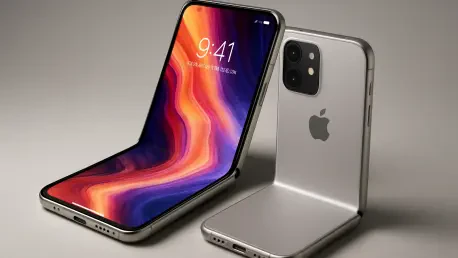

For years, the concept of a foldable iPhone has been the tech industry’s most tantalizing rumor, growing from a whisper into a hum of supply chain leaks and analyst predictions. While competitors like Samsung pioneered the foldable market, Apple remained on the sidelines, observing and perfecting its approach. Now, compelling evidence, including breakthrough technology showcased at CES 2026, suggests the wait is nearly over. The “iPhone Fold” is no longer a question of if, but when. This article delves into the meticulous planning, critical technological advancements, and strategic timing behind Apple’s entry, exploring whether its patience will deliver a device that redefines the category and proves worth the wait.
A Decade in the Making Apple’s Patient Path to the Perfect Fold
Apple’s work on a foldable device began long before consumer models appeared, with patents dating to 2014. The delay was not disinterest but a strategy rooted in uncompromising standards for quality. Learning from past issues like “antenna-gate,” Apple knew a foldable with a visible crease or fragile hinge would be a public relations catastrophe. The company needed certainty that every component could withstand daily use by millions of customers. This patient approach meant waiting for the entire manufacturing ecosystem, from flexible OLEDs to intricate hinges, to mature enough for a no-compromise device.
Deconstructing the Breakthrough The Technology Behind the iPhone Fold
The convergence of several key innovations appears to have finally met Apple’s exacting requirements. It’s not one single component but a trio of advancements in display technology, mechanical engineering, and processing power that are paving the way for Apple’s grand entrance. These breakthroughs promise to solve the core issues that have plagued earlier generations of foldables, setting the stage for a product that is both elegant and resilient.
The Crease-Free Revolution Samsung’s Display as the Missing Piece
The most significant hurdle for any foldable is the screen, and CES 2026 revealed the solution. Samsung Display, a key Apple partner, unveiled a resilient folding panel with no visible crease—a holy grail for the form factor. This is a generational leap, not an incremental improvement. Reports suggest this technology is the result of a close, multi-year collaboration with Apple, designed to meet its stringent aesthetic and durability standards. This flawless display is believed to be the centerpiece of the inaugural iPhone Fold, providing the seamless user experience Apple required.
Beyond the Screen The Unsung Heroes of Durability
A perfect screen is useless without a perfect mechanism. The new display’s integrity lies in the hinge’s complex engineering, supported by specialized components. Analyst Ming-Chi Kuo previously identified South Korean supplier Fine M-Tec as a future Apple partner, which recent events confirm. The company developed a new metal plate technology placed within the hinge to mitigate stress on the display and prevent creasing. Fine M-Tec’s recent $12 million investment to expand production is a clear signal that manufacturing is ramping up to supply both Apple and Samsung for their foldable launches.
The Power Within Why Apple Silicon Unlocks True Foldable Potential
The final piece is Apple’s own custom silicon. The performance and efficiency of the A-series chips give Apple a unique advantage, allowing a device that is both impossibly thin and powerful. The rumored iPhone Fold is expected to be just 5.6mm thick unfolded, yet it will be one of the most powerful smartphones available. Unlike competitors who sacrificed performance or battery, Apple’s integrated ecosystem ensures a no-compromise experience. This synergy will likely elevate the iPhone Fold from a novelty to a true productivity powerhouse.
Reading the Tea Leaves What Analysts and the Supply Chain Are Telling Us
The chorus from industry insiders is becoming too loud to ignore. Morgan Stanley analyst Erik Woodring confirmed in a client note that the foldable iPhone remains on track for a Fall 2026 launch. This timeline is supported by forecasts targeting 15 to 20 million units in the first year, with an initial build of 7 to 8 million for the launch. Leaked specifications suggest a device with a 7.8-inch unfolded display, comparable to an iPad mini. It is expected to feature an Apple-designed 5G modem, Touch ID, and a four-camera array, solidifying its premium position.
The Strategic Verdict Is Apple’s Late Entry a Masterstroke
All signs point to Apple’s late entry into the foldable market as a strategic masterstroke. By waiting, the company sidestepped the public beta-testing phase early adopters endured, avoiding issues with screen durability and design compromises. The takeaways are clear: Apple waited until the technology was ready, leveraging a crease-free display, a robust hinge, and the power of its own silicon. For consumers considering a foldable, the recommendation is to wait. Apple appears poised to release a polished, powerful, and durable product that will exceed current market expectations.
The Final Fold A New Chapter for the iPhone
Apple’s patience is set to culminate in a device that does more than just bend; it aims to set a new standard for an entire product category. The arrival of the iPhone Fold will represent a pivotal moment, combining a perfected, durable design with the industry-leading performance that users expect from the company. It reinforces a core tenet of Apple’s philosophy: it’s not about being first, but about being the best. When the final details are revealed, the foldable iPhone may not only justify its long wait but also usher in a new chapter of mobile computing, fundamentally changing how we interact with our most personal device.