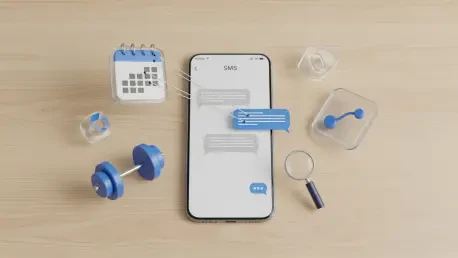

The digital marketplace has reached a point of saturation where the average smartphone user spends more time managing notifications and updates than actually utilizing the features of their myriad applications. This exhaustion, often referred to as app fatigue, has paved the way for a transformative shift toward minimalist, invisible technology that integrates seamlessly into existing habits. TXTDrop is spearheading this movement with “Ed,” an artificial intelligence assistant that operates entirely through SMS, effectively bypassing the need for dedicated software downloads or complex user accounts. By utilizing a communication channel that is already native to every mobile device, the platform aims to democratize access to advanced machine learning. This strategic pivot recognizes that the future of digital interaction lies not in flashy graphical interfaces, but in the efficiency of direct text-based conversations. It provides a bridge for individuals who find current app ecosystems overly cumbersome. As the tech industry evolves in 2026, this shift toward text-centric AI suggests that the most powerful tools are those that require the least amount of technical friction to operate effectively.
Maximizing Productivity: The Power of Simplified Communication
The versatility of this SMS assistant is demonstrated by its ability to handle more than 165 distinct tasks, effectively consolidating the functions of dozens of separate apps into a single contact. Users can manage complex project timelines, schedule appointments, and retrieve specific information without ever leaving their messaging interface. This consolidation is particularly valuable for professionals who need to maintain focus while juggling multiple responsibilities throughout the day. Rather than jumping between a calendar app, a task manager, and a search engine, they can simply text a request and let the AI handle the backend logistics. This streamlined workflow reduces cognitive load and minimizes the distractions that often arise from opening a smartphone and being greeted by a wall of app icons. The system functions as a centralized hub for digital life, providing a consistent point of contact for virtually any request. This level of integration suggests that the era of the “everything app” may actually manifest as an “everything contact” that leverages the existing infrastructure of cellular networks.
Extending beyond typical administrative tasks, the platform incorporates specialized modules like “Coach Ivan” to provide high-level physical performance analysis through basic multimedia messaging. This feature allows users to upload videos of their exercise routines or sports techniques to receive real-time feedback on their form and efficiency. By analyzing movements across a wide spectrum of activities, the AI provides the kind of technical insight that was previously only available through expensive wearable sensors or professional coaching sessions. This integration of visual data processing into an SMS framework highlights the technical depth hidden beneath the simple text interface. It proves that an AI does not need a complex graphical user interface to deliver high-quality, data-driven results for physical well-being. Whether a user is perfecting a golf swing or checking their posture during weightlifting, the assistant provides actionable advice that is immediately applicable. This blend of simple input and sophisticated output illustrates how text-based AI can rival, and in some cases surpass, the utility of dedicated fitness applications by providing more direct and personalized feedback loops.
Humanizing Interaction: Emotional Support and Trust
One of the most distinctive features of this assistant is its capacity to handle sensitive personal situations with a degree of structure and empathy through the “After Loss Guide.” When a user communicates the death of a loved one, the AI shifts into a specialized support mode that provides both emotional validation and practical assistance. This includes a comprehensive checklist of necessary actions, such as navigating the complexities of life insurance claims or notifying government agencies like Social Security. During moments of intense grief, the cognitive burden of researching these requirements can be overwhelming, making the direct delivery of information via SMS incredibly valuable. The system acts as a steady guide, breaking down daunting bureaucratic processes into manageable steps that can be addressed at the user’s own pace. By offering this support within a familiar messaging environment, the AI provides a sense of stability and presence that a static website or a cold, automated form simply cannot replicate. It transforms the assistant from a mere productivity tool into a compassionate resource that supports users during the most difficult periods of their lives.
To further bridge the gap between human and machine, the assistant is personified through the “Ed” persona, a legacy branding inspired by the founder’s father. This decision to humanize the technology is a strategic move intended to foster a deeper sense of trust and continuity between the user and the software. Unlike standard algorithms that often feel clinical or detached, Ed is designed to be a reliable and helpful companion that learns the user’s preferences over time. This personification helps to mitigate the skepticism that some people feel toward artificial intelligence, framing it as a dependable partner rather than a mysterious black box. The use of a relatable name and a consistent personality makes the interaction feel more like a long-term relationship and less like a series of transactional data exchanges. As users become more comfortable with this persona, the barrier to asking for help—whether for technical tasks or emotional support—decreases significantly. This human-centric design approach ensures that the technology remains anchored in the values of helpfulness and reliability, which are essential for the long-term adoption of AI in the personal and professional spheres of everyday life.
Expanding Reach: Market Accessibility and Future Integration
The market strategy for this SMS-based AI focuses heavily on capturing the attention of demographics that have been underserved by the current app-driven economy. While much of the tech industry targets younger, mobile-first users who are comfortable with constant digital flux, there is a massive global population that values stability and ease of use above all else. By positioning the assistant as a constant and unobtrusive presence, TXTDrop appeals to individuals who want the power of AI without the social or technical overhead of social media-integrated applications. This focus on “invisible” technology—tools that work quietly in the background without demanding attention—has already garnered industry recognition for its potential to reshape the digital landscape. The platform provides a solution for those who are wary of the privacy implications and data-tracking practices common in free mobile apps. Because the service operates on a subscription-based model, it aligns the interests of the developer with those of the user, prioritizing functional utility and data security over the monetization of personal information through targeted advertising.
Global accessibility is another cornerstone of the platform’s strategic focus, as SMS remains one of the few truly universal communication standards that transcends geographic and economic borders. In regions where high-speed internet is unreliable or where data costs are prohibitively high, a text-based AI offers a lifeline to advanced information and services that would otherwise be inaccessible. This reach allows the assistant to serve as a vital tool for education, health information, and economic coordination in diverse environments across the world. By leveraging the existing global telecommunications infrastructure, the service can scale rapidly without the need for localized app stores or region-specific hardware configurations. This universality ensures that the AI can act as a consistent resource for travelers, remote workers, and residents of developing nations alike. As the global digital economy continues to expand from 2026 into the future, the reliance on standard communication protocols like SMS will remain a key factor in ensuring that technological progress is inclusive. The ability to provide high-level machine learning through such a ubiquitous channel positions the assistant as a central player in the ongoing evolution of global connectivity.
Strategic Outcomes: Reflections on Minimalist Digital Adoption
The emergence of SMS-based AI assistants signaled a significant departure from the era of specialized mobile applications, suggesting that the most sustainable path for technology was integration rather than isolation. Users who adopted these systems found that they could reduce their screen time significantly while still maintaining a high level of productivity and personal organization. The transition highlighted the fact that the actual value of artificial intelligence was not found in the interface through which it was accessed, but in the accuracy and relevance of the information it provided. Organizations and individuals alike began to prioritize services that minimized digital friction and maximized immediate utility. This shift encouraged developers to look beyond traditional app stores and consider how existing communication channels could be repurposed for more advanced tasks. By focusing on the user’s existing habits, the technology became a seamless part of the daily routine rather than another digital chore to be managed. This evolution ultimately proved that simplicity was the ultimate sophistication in the design of personal productivity tools.
Moving forward, the success of these minimalist systems provided a blueprint for the next generation of digital infrastructure, emphasizing the importance of accessibility and trust. Stakeholders in the technology sector realized that to reach a truly global audience, they had to design tools that worked for everyone, regardless of their technical proficiency or hardware capabilities. The focus shifted toward creating AI that could assist with complex life events, such as the bereavement processes supported by specialized guides, rather than just trivial tasks. This deepened the relationship between humans and their digital tools, transforming them into essential companions for both practical and emotional needs. The legacy of these SMS assistants remained in their ability to make high-level machine learning feel like a natural extension of human conversation. As the industry progressed, the emphasis remained on creating “invisible” technology that empowered users without overwhelming them. This approach ensured that technological advancements contributed to a more balanced and efficient lifestyle, where the focus remained on the quality of life rather than the quantity of applications on a device.