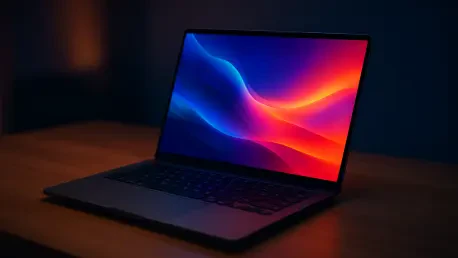

The replacement of the traditional screen notch with an interactive Dynamic Island signals a major visual update for the next generation of professional portable computers. This architectural shift represents more than just a cosmetic change; it reflects a broader strategy to harmonize the software experience across all high-end devices. Reports suggest that Apple is finalizing a new flagship tier, likely to be branded as the MacBook Ultra, which will sit above the current Pro lineup to redefine the limits of mobile productivity. This upcoming device aims to resolve user demands for a more immersive interface, moving away from static designs that have defined the laptop category for years. By integrating hardware elements previously reserved for the iPhone, the company is bridging the gap between its mobile and desktop ecosystems. The development of this tier highlights a commitment to extreme performance, ensuring that the brand maintains its dominance in the professional workstation market today.
Advanced Display Systems
The primary hardware advancement driving this evolution is the transition from existing mini-LED panels to sophisticated tandem OLED screens. This specific technology utilizes a dual-stack architecture to provide significantly higher brightness levels and improved longevity compared to traditional single-layer OLED displays. By utilizing this method, the new MacBook Ultra can achieve true black levels and an infinite contrast ratio, which is essential for creative professionals working in high-dynamic-range video and photography. Furthermore, the efficiency of these panels allows for a thinner overall chassis, as OLED does not require the bulky backlighting units found in current liquid crystal displays. This reduction in thickness provides necessary space for additional internal components or larger battery cells. The inclusion of a 120Hz ProMotion refresh rate ensures that fluid motion remains a staple of the experience for every professional user while the screen remains remarkably thin and light for such a powerful professional machine.
Integrating a multi-touch interface into a professional laptop requires a significant departure from traditional design philosophies that prioritized a hands-off screen approach. To support this new interaction model, the hardware features a reinforced mechanical hinge designed to minimize screen wobble during touch input, ensuring a stable surface for gestures and navigation. This touchscreen functionality is not intended to replace the trackpad but rather to serve as a secondary input method for specific creative tasks and organizational workflows. Engineers have worked on a specialized iteration of macOS that adapts UI elements, such as menus and window controls, to be more touch-friendly without sacrificing the precision required for professional software. This dual-input strategy acknowledges the growing hybrid nature of modern work, where users frequently switch between typing and direct screen manipulation to achieve maximum efficiency. Such a shift positions the laptop as a versatile tool capable of handling creative demands.
Hardware and Power
The internal specifications of these next-generation machines are equally ambitious, centering on the upcoming M5 Pro and M5 Max silicon. These chips leverage a refined 3nm manufacturing process to deliver substantial gains in performance, catering to intensive workloads such as 3D rendering and large-scale data analysis. There are also indications that a future leap toward AI-centric M7 silicon is already being planned, which would further enhance on-device machine learning capabilities. For the first time, these professional laptops may offer integrated cellular connectivity via an optional 5G modem, providing users with independent internet access regardless of Wi-Fi availability. This inclusion transforms the laptop into a truly mobile workstation, allowing professionals to maintain high-speed connections while traveling or working in the field. The combination of silicon and connectivity ensures the device remains productive everywhere, reflecting the needs of the modern workforce who require power on the go.
The development of the MacBook Ultra demonstrated a clear shift in how professional computing was approached by hardware designers. By successfully merging a high-fidelity OLED display with a responsive touch interface, engineering teams addressed the limitations that previously hindered hybrid workflows. Stakeholders recognized that the integration of cellular connectivity and advanced thermal solutions established a new benchmark for mobile workstations. Moving forward, professionals should evaluate their current hardware cycles to prepare for the transition toward these touch-enabled platforms. It became evident that software developers needed to optimize their suites for a dual-input environment to leverage the capabilities of the M5 silicon. These advancements suggested that the traditional boundary between tablet and laptop was finally disappearing. Organizations that adopted these tools early gained a significant advantage in creative output. This evolution confirmed that the future of the professional laptop relies on tactile input.