
While mobile broadband signals now blanket the vast majority of the African continent, a staggering discrepancy remains between the number of people living within reach of a network and those who actually subscribe to or utilize data services. This phenomenon, often referred to as the usage gap, represents a significant hurdle for economic development and social inclusion across diverse regions from Lagos to Nairobi. Despite the rapid expansion of 4G and 5G infrastructure through 2026, millions of potential users are currently sidelined by a complex interplay of socioeconomic factors rather than a lack of technical availability. The situation presents a unique paradox: the digital pipes are laid, but the flow of information is restricted by barriers that transcend physical hardware. Addressing this divide is no longer just a technical challenge for engineers but a multi-faceted mission requiring coordination among policy makers and manufacturers to ensure the digital revolution is inclusive.
Identifying the Primary Barriers to Adoption
Part 1: Hardware and Entry Costs
The high price of an entry-level smartphone still consumes a disproportionate percentage of the average monthly income for many households across sub-Saharan Africa. Even with the introduction of innovative financing models and subsidized devices, the upfront cost remains a prohibitive wall for the bottom quintile of the population in both urban and rural settings. Manufacturers have introduced budget-friendly models, yet these often lack the longevity or performance needed for modern web applications or secure banking. Furthermore, the secondary market for refurbished electronics, while growing, struggles with quality control and battery life issues that discourage first-time buyers from making the leap to mobile internet. This economic reality means that even if a high-speed tower is visible, the residents may remain tethered to basic 2G voice services because the entry ticket is priced far beyond their reach. Solving this requires credit scoring and localized manufacturing.
Part 2: Service Affordability
Beyond the initial purchase of a handset, the recurring expense of data bundles continues to stifle consistent internet usage for those who manage to acquire a device. While the price per gigabyte has trended downward from 2026 to 2027, it has not yet reached the affordability threshold recommended by international development agencies for mass adoption. High taxation on telecommunications services in several African jurisdictions further inflates the cost for the end user, making daily browsing a luxury rather than a utility for most people. For a small-scale farmer, the choice between purchasing a data top-up and meeting basic household needs is often an easy one, leading to sporadic usage that prevents full integration into the digital economy. To bridge this specific gap, operators must look toward zero-rating essential educational services while lobbying for tax reforms that recognize internet access as a fundamental utility rather than a luxury good to be heavily taxed.
Strategic Solutions for Universal Connectivity
Part 3: Literacy and Content
A lack of digital literacy remains a formidable obstacle, as many individuals possess the hardware but lack the confidence or knowledge to navigate the complex web ecosystem effectively. This barrier is particularly pronounced among older generations and rural populations who have had limited exposure to formal digital training. Without a clear understanding of how to utilize search engines, secure mobile banking apps, or access government portals, the internet remains an intimidating and seemingly irrelevant space. Local community centers have begun implementing grassroots training programs, but these efforts need to be scaled significantly to reach the millions currently in the dark. Furthermore, the scarcity of high-quality content produced in local African languages diminishes the perceived value of mobile internet for non-English speakers, creating a functional disconnect. Fostering a local content ecosystem is essential for making the internet a daily necessity.
Part 4: Infrastructure and Policy
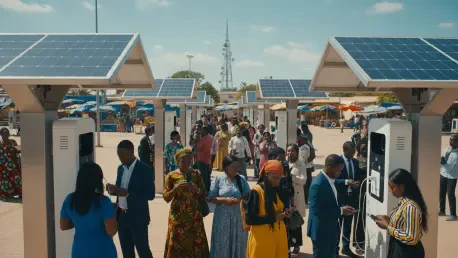
The infrastructure challenges were further complicated by energy poverty, as many potential users lacked reliable access to the electricity needed to keep devices charged throughout the day. This hurdle required a shift toward decentralized energy solutions, such as solar-powered charging stations and battery-efficient network hardware, which were rolled out extensively through 2026. Governments and private enterprises collaborated to eliminate import duties on affordable smartphones, which significantly lowered the entry barrier for millions of first-time users. Additionally, the implementation of nationwide digital literacy campaigns empowered citizens to utilize mobile platforms for financial management. These coordinated efforts eventually narrowed the usage gap by addressing the underlying socioeconomic constraints rather than merely focusing on physical network expansion. By treating internet access as a foundational utility, stakeholders ensured the digital transition contributed to resilience.