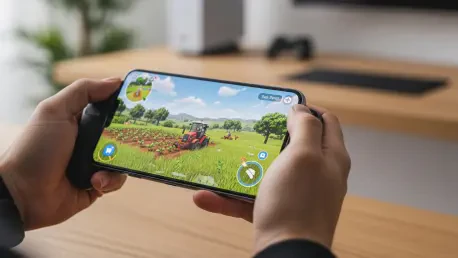

The perception of mobile gaming as a mere playground for aggressive monetization and shallow mechanics has been thoroughly dismantled by the arrival of high-end hardware-agnostic ports. This landscape is no longer dominated solely by predatory “cash grab” mechanics or repetitive daily loops that once turned seasoned gamers away from their smartphones in favor of more traditional hardware. Instead, a wave of sophisticated PC and console ports has begun to saturate the digital storefronts, proving that modern smartphones are capable of hosting experiences that rival any dedicated console. This shift represents a profound maturation of the medium, where the convenience of a handheld device finally aligns with the narrative and mechanical depth expected by enthusiasts. As consumers demand more value from their hardware, developers are responding by treating the mobile platform as a primary target for serious titles rather than an afterthought for secondary spin-offs. This movement is not just about technology; it is about a fundamental shift in the gaming culture where portability no longer implies a compromise in quality.
Strategic Shifts in Mobile Game Publishing
Transforming Legacy Hits: Part 1. Natsume Classics
A major driver of this change is the revitalization of legacy console content for a modern mobile audience, where established franchises find new life on high-resolution screens. For example, Natsume, Inc. has successfully transitioned classic titles like The Lost Valley and Skytree Village to iOS and Android, offering complete farming simulations as one-time standalone purchases. This strategy signals to the broader industry that there is a significant appetite for “complete” games that lack the hidden costs typically associated with the mobile app marketplace. It is an approach that treats the smartphone as a legitimate successor to dedicated handheld consoles rather than just a secondary platform for simplified spin-offs. By delivering the full console experience without stripping away features, developers are proving that the mobile audience is ready for complexity. These titles demonstrate that players are willing to pay a premium price if the content justifies the investment through depth and longevity.
Transforming Legacy Hits: Part 2. Redefining Premium Content Models
Similarly, the “cozy gaming” genre has found a second life through meticulously optimized ports like Tiny Bookshop, which redefine the expectations for mobile management games. Originally a PC and Switch hit, the mobile version bridges the gap between free-to-play and premium models by offering a free demo before requiring an upfront payment for the full experience. This allows players to test the game and ensures that they are not frustrated by awkward controls before they commit to the purchase. By focusing on UI redesigns that prioritize touch sensitivity, developers are proving that complex management systems can feel right at home on a pocket-sized screen. This model reduces the risk for consumers while maintaining the integrity of the developer’s vision, as it avoids the need for intrusive advertisements. It creates a sustainable middle ground that respects the player’s time and intelligence, fostering a loyal community that values quality over novelty.
The New Standard for High-Quality Mobile Ports
Integrating Deep Storytelling: Part 1. Narrative Closures
The arrival of narrative-heavy games like Discounty further challenges the long-standing notion that mobile gaming must be an endless and mindless experience. By bringing a full 20-hour “spooky cozy” mystery to smartphones, developers are catering to a demographic of players who want a high-quality, story-driven experience on their primary personal device. Unlike traditional mobile management games that often lack a definitive end or meaningful character development, these ports offer a structured narrative arc and a polished, ad-free environment. This trend underscores a growing demand for portable stories that do not sacrifice substance for the sake of accessibility on a smaller screen. The success of such titles proves that players value closure and artistic intent over the infinite treadmill of typical mobile engagement metrics. By prioritizing a satisfying conclusion, developers are building a more respectful relationship with their audience, focusing on the quality of time spent rather than just the quantity.
Integrating Deep Storytelling: Part 2. Blockbuster Mechanics
Perhaps the most significant milestone in this evolution is the blockbuster port of Dave the Diver, which brings its entire multi-genre gameplay loop to mobile hardware without compromise. By including the full base game and all its subsequent expansions, it serves as a critical benchmark for how high-intensity action and deep management systems can coexist on a phone. The success of these titles suggests that the old boundary between “mobile games” and “real games” has effectively dissolved. As developers continue to embrace upfront pricing and high-end optimization, the smartphone is cementing its status as a viable third pillar for serious gaming alongside PCs and consoles. This shift is also encouraging larger studios to reconsider their porting pipelines, leading to faster release cycles and better cross-platform integration. The result is a richer ecosystem where a single purchase often grants access to a game across multiple devices, further blurring the lines between different gaming environments.
Navigating the Evolution of the Handheld Ecosystem
The industry successfully transitioned from fragmented mobile experiences to a unified gaming ecosystem where quality was no longer tethered to a specific device. Developers recognized that the path forward required a commitment to premium content and a rejection of the predatory monetization models that once defined the platform. This shift solidified the smartphone’s role as a primary device for both indie gems and blockbuster titles, which significantly altered consumer expectations. Moving forward, publishers should prioritize cross-platform save synchronization and universal controller support to ensure the movement between mobile and home environments remains seamless. There must be a continued focus on optimizing user interfaces for smaller screens without diluting the core mechanics that made the original titles successful. As mobile hardware achieved parity with entry-level gaming PCs, the opportunity for sophisticated storytelling and complex gameplay became a standard requirement rather than a luxury.