
The arrival of the Samsung Galaxy Z Fold8 marks a definitive end to the era of the tall and narrow “remote control” form factor that has defined the foldable market since its inception. For years, users have voiced concerns regarding the cramped external displays that made simple tasks like texting or browsing social media feel like a compromise rather than a convenience. By adopting a “passport” style design, Samsung has successfully pivoted toward a geometry that prioritizes immediate usability and human-centric ergonomics. This change represents the most significant departure from the original design philosophy established nearly seven years ago, reflecting a mature understanding of how people actually interact with large-format mobile devices. The new proportions transform the handset from a niche gadget into a sophisticated tool that feels as natural in the palm of a hand as a standard high-end smartphone. This shift signifies more than just a change in dimensions; it is a fundamental acknowledgment that the hardware must adapt to the user’s lifestyle, ensuring that the transition from a closed state to an open one is a choice rather than a necessity forced by a restrictive outer interface. Furthermore, this design evolution addresses the long-standing critique that foldables were too bulky for everyday carry, offering a more balanced weight distribution that enhances the overall premium feel of the device.
A Fundamental Shift: Engineering the Passport Form Factor
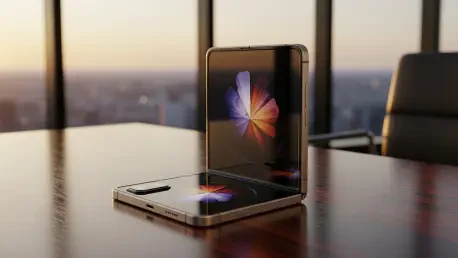
The physical dimensions of the Galaxy Z Fold8 have been meticulously recalibrated to balance the demands of portability with the necessity of a large-screen experience. Measuring approximately 81.9 by 123.9 millimeters with a thickness of only 9.7 millimeters when folded, the device achieves a square-like profile that mimics the dimensions of a traditional passport. This shorter and wider stance is not merely an aesthetic choice; it dramatically lowers the center of gravity, making the phone feel significantly more stable during one-handed operation. Despite the inclusion of complex hinge mechanisms and multi-layered display components, the engineers managed to keep the total weight to just over seven ounces. Such a reduction in bulk is a remarkable achievement, as it removes the fatigue often associated with prolonged use of heavier foldable units. The result is a chassis that slips into pockets with ease and rests comfortably in the grip, effectively bridging the gap between the compact nature of a standard smartphone and the expansive utility of a tablet. This refinement ensures that the device no longer feels like a prototype, but rather a polished piece of consumer electronics that meets the rigorous standards of modern mobile life.
In a strategic move to accommodate a broader range of user preferences, the lineup has been split into two distinct models for the current hardware cycle. While the standard Galaxy Z Fold8 champions the new passport-style architecture, the companion Galaxy Z Fold8 Ultra remains available for those who have grown accustomed to the taller, narrower legacy design. This diversification allows the main model to target the general consumer who prioritizes pocketability and everyday efficiency, while the Ultra model serves as a powerhouse for those who require maximum vertical real estate for specific professional workflows. By offering these two unique configurations, the manufacturer has effectively addressed the diverse feedback from a global user base that remains divided on the ideal aspect ratio for foldable screens. This two-tier approach ensures that the innovation of the passport design does not alienate long-time fans of the original series, but rather provides an inviting entry point for those who were previously deterred by the unconventional proportions of earlier folding devices. It marks the first time that the series has offered such a distinct choice in physical form, highlighting a commitment to serving both the mass market and the dedicated power user.
Visual Excellence: Redefining Screen Real Estate and Durability
The reimagined 5.5-inch cover screen serves as the primary interface for the majority of daily interactions, featuring a 16:10 aspect ratio that feels strikingly familiar to anyone who has used a premium flat-screen device. This wider canvas provides ample horizontal space for a full-sized virtual keyboard, allowing for rapid typing with both thumbs without the persistent typos that plagued narrower designs. It is no longer just a secondary notification window or a tool for quick glances; the outer display now functions as a high-performance smartphone screen in its own right. Users can comfortably scroll through dense research papers, edit spreadsheets, or engage in mobile gaming without feeling the immediate pressure to unfold the device. This newfound autonomy for the external display significantly reduces wear and tear on the internal hinge and flexible panel, as the need to open the phone is now driven by a desire for a larger view rather than a functional requirement to bypass a cramped interface. The increased width also allows for better rendering of modern mobile applications, which are typically designed for wider aspect ratios, ensuring that no content is cut off or awkwardly scaled.
Upon opening the device, the 7.6-inch internal display reveals a 4:3 aspect ratio that closely mirrors the dimensions of a traditional small tablet or a digital e-reader. This square-oriented canvas is exceptionally well-suited for modern content consumption, as it minimizes the significant letterboxing that often occurs when viewing high-definition video on unconventional screen shapes. To ensure the longevity of this expansive folding panel, a sophisticated architecture of titanium alloy films and reinforced support plates has been integrated beneath the display surface. These high-strength materials provide a rigid foundation that protects the sensitive organic light-emitting diodes while maintaining an incredibly slim profile. Moreover, the implementation of these new materials has resulted in a central crease that is nearly imperceptible to both the eye and the touch, creating a seamless visual field. The hinge mechanism itself has been refined to provide a firm and satisfying snap, offering the tactile feedback of a high-quality mechanical tool and instilling confidence in the structural integrity of the folding motion over thousands of cycles. This combination of advanced material science and thoughtful design ensures that the internal display remains as durable as it is beautiful.
Computational Prowess: Performance and Intelligent Systems
Powering this sophisticated hardware is the Snapdragon 8 Elite Gen 5 chipset, a processor specifically optimized to handle the unique thermal and power demands of a multi-screen environment. Paired with 16 GB of high-speed random access memory, the Galaxy Z Fold8 delivers a level of performance that matches or exceeds current flagship desktop-class mobile workstations. This immense processing power allows for fluid multitasking, where users can effortlessly run several resource-heavy applications simultaneously in split-screen or windowed modes. Whether it is rendering high-resolution video while participating in a video conference or managing complex financial models alongside real-time data feeds, the system remains responsive and cool to the touch. This eliminates the performance gap that once existed between foldable devices and traditional flagship smartphones, ensuring that early adopters no longer have to sacrifice raw speed for the sake of a folding screen. The hardware is designed to remain relevant and capable for several years, providing a stable platform for the next generation of mobile software. It represents a significant leap forward in mobile computing, where the limitations of the form factor no longer dictate the limitations of the internal performance.
The software experience is anchored by Android 17 and the latest iteration of One UI 9, which introduce a suite of advanced “agentic” artificial intelligence features designed to streamline complex digital workflows. These intelligent tools are deeply integrated into the operating system, allowing for native tasks such as the automated summarization of lengthy documents, the organization of chaotic email threads, and real-time language translation without relying on external cloud processing. By leveraging the power of Google Gemini directly on the device, the Galaxy Z Fold8 offers a personalized assistant that learns user habits to anticipate needs and suggest context-aware actions. Furthermore, the commitment to a seven-year software update cycle ensures that the device will continue to receive the latest security patches and feature enhancements well into the early 2030s. This longevity is a crucial factor for a premium investment of this magnitude, providing peace of mind that the technological capabilities of the phone will evolve alongside the rapidly changing landscape of mobile computing and artificial intelligence. The integration of software and hardware creates a cohesive ecosystem that feels more like a proactive partner than a passive tool, changing the way users interact with their digital environments.
Strategic Trade-Offs: Imaging and Market Viability
Balancing the requirements of a high-end camera system with the physical constraints of a slim, folding chassis required a series of calculated engineering trade-offs. The Galaxy Z Fold8 features a dual 50-megapixel sensor array that excels in producing vibrant, detailed images across a variety of challenging lighting conditions, from bright outdoor landscapes to dim indoor environments. While some professional photography enthusiasts might note the absence of a dedicated long-range telephoto lens, this omission was a deliberate choice to maintain the sleek “passport” profile of the device. Integrating a large periscope zoom module would have necessitated a significant increase in thickness or the inclusion of a prominent camera “bump” that would interfere with the phone’s balanced feel. For the vast majority of users, the current camera configuration provides more than enough clarity and color accuracy for social media, document scanning, and casual memory-keeping. This approach highlights a shift in focus toward daily practicality and refined aesthetics over the pursuit of extreme optical zoom capabilities that often add unnecessary bulk to mobile devices. It is a pragmatic decision that prioritizes the overall user experience and pocketability of the phone.
With a starting price positioned around $1,900, the Galaxy Z Fold8 remains a premium tier product, yet it represents a turning point where the perceived “foldable tax” is finally justified by its unparalleled ergonomics. In the current market, consumers are increasingly looking for devices that offer longevity and versatile utility rather than just novelty, and the Z Fold8 addresses this demand by providing a polished, mature experience. The redesign effectively removes the barriers of awkward handling and perceived fragility that once kept foldable technology relegated to the realm of enthusiasts and early adopters. By successfully merging the best attributes of a standard smartphone with the expansive possibilities of a tablet, the device establishes itself as a primary computing tool for professionals and creative individuals alike. As the industry continues to move forward from 2026 to 2028 and beyond, the influence of this passport-style design is likely to be seen across the broader mobile landscape, as other manufacturers attempt to replicate the balance of form and function that Samsung has achieved with this landmark release. It stands as a testament to the fact that foldable devices have finally reached a level of refinement that makes them a viable choice for a much wider audience of smartphone users.
Forward-Looking Insights: Next Steps for the Foldable Ecosystem
The launch of this device demonstrated that the hardware hurdles of the foldable category were largely overcome through clever engineering and a willingness to abandon outdated design tropes. Developers were encouraged to pivot their focus toward optimizing application interfaces for the 4:3 and 16:10 aspect ratios, ensuring that software felt native to the new passport dimensions rather than stretched or distorted. This shift prompted a broader industry movement toward “responsive” mobile design that adjusted dynamically to various screen shapes, a trend that benefited the entire ecosystem of Android tablets and folding phones. Users who transitioned to this new form factor found that their digital habits evolved, as the friction between mobile and tablet modes disappeared. The success of the passport design suggested that the future of mobile productivity would be defined by devices that could seamlessly adapt to the context of the user’s task without requiring a compromise in physical comfort or hardware performance. It was a clear indication that the market was ready for more diverse and experimental form factors that prioritize functional utility over traditional standards.
To fully capitalize on the potential of this new hardware paradigm, it was recommended that users explore the deeper integration of “agentic” AI tools to automate repetitive aspects of their daily workflows. Those who adopted the device found that the combination of a more accessible cover screen and a robust internal display allowed for a more intentional use of technology, where the larger screen was reserved for deep work and the outer screen handled the administrative noise of digital life. The transition to the Z Fold8 served as a catalyst for a more mature discussion about the role of the smartphone in an era where artificial intelligence and flexible hardware were becoming standard. As the market looked toward the next decade, the lessons learned from the passport design provided a blueprint for how to create technology that was both powerful and remarkably human. It was clear that the path forward involved a commitment to refinement over reinvention, focusing on the subtle details of weight, balance, and aspect ratio to deliver a truly cohesive user experience. Ultimately, the industry moved toward a more flexible and intelligent future where the physical form of a device was as dynamic as the software running on it.