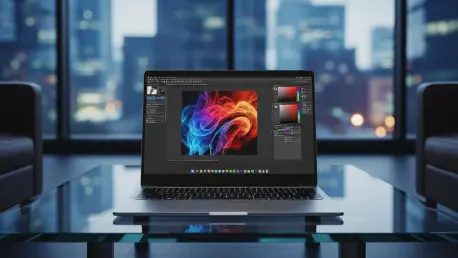

The sudden shift in hardware pricing often creates unique windows of opportunity for consumers who have been tracking specific high-performance builds throughout the current fiscal year. For those monitoring the mid-to-high-end segment, the Gigabyte A18 has emerged as a particularly compelling case study in value, recently reaching a three-month low of $1,849.99 on major retail platforms. This price reduction represents an eight percent discount from its standard listing, moving it into a more accessible bracket for professionals and enthusiasts alike. Unlike typical entry-level machines that compromise on build quality, this model aims to sustain a premium experience across both gaming and creative workflows. By hitting this price milestone, the laptop challenges the current market status quo, offering a configuration that balances modern silicon with a robust thermal design. This price movement suggests a broader trend where high-specification components are becoming more attainable.
Internal Architecture: Balancing High Efficiency with Raw Power
The technological foundation of the A18 relies heavily on the synergistic relationship between its central processor and the dedicated graphics unit. At its heart lies the AMD Ryzen 7 260, a component that has garnered attention for its impressive thermal management while delivering a boost clock speed of up to 5.1GHz. Operating at a modest 54W power draw, this processor is specifically engineered to handle the demanding requirements of AI-enhanced applications and complex computational tasks without thermal throttling. When paired with the NVIDIA GeForce RTX 5070, the system achieves a level of equilibrium that is often missing in thinner gaming laptops. This specific GPU architecture allows for advanced ray tracing and high-frame-rate rendering, ensuring that the visual output remains fluid during intense gaming sessions or high-resolution video editing. This pairing ensures that neither the CPU nor the GPU becomes a bottleneck, providing a seamless experience for the user.
Complementing the high-speed processing core is a generous allocation of 32GB of DDR5 RAM, which has established itself as the baseline requirement for serious multi-tasking in 2026. This high memory bandwidth is essential for users who frequently jump between resource-heavy applications, such as 3D modeling software and modern gaming titles with massive asset libraries. The presence of this much memory ensures that background processes do not interfere with the primary task, maintaining system stability during extended periods of high-load operation. On the storage front, the laptop comes equipped with a 1TB SSD, which provides sufficient space for a standard collection of games and software. However, the design of the chassis acknowledges the growing file sizes in creative industries by providing secondary expansion slots. This modularity allows users to scale their storage capacity as their project archives grow, making the machine a viable long-term tool for varied digital work.
Visual Fidelity: Enhancing Productivity through Display Innovation
The user interaction with the device is largely defined by its QHD+ WQXGA display, which utilizes a 16:10 aspect ratio to prioritize vertical screen real estate. This design choice is particularly beneficial for professionals who rely on expanded vertical space for editing timelines, coding environments, or document comparison. By moving away from the traditional 16:9 widescreen format, the display provides a more expansive canvas that reduces the need for constant scrolling. Beyond the form factor, the screen offers a 165Hz refresh rate, providing the smoothness required for competitive gaming and fluid animations. Color accuracy is another pillar of this display’s appeal, as it covers 100 percent of the sRGB color gamut. This ensures that digital artists and designers can trust the colors they see on the screen, bridging the gap between digital creation and final production. The matte finish of the panel also helps in mitigating reflections, allowing for consistent visibility.
In terms of physical connectivity and peripheral integration, the inclusion of a Thunderbolt 4 port represents a significant advantage for users who require a streamlined workspace. This single interface supports DisplayPort 1.4 for high-resolution external monitors and Power Delivery 3.0, which allows for charging external devices at speeds up to 100W. The utility of such a port cannot be overstated for mobile professionals who need to connect to docking stations or high-speed external storage arrays with minimal cable clutter. Furthermore, the laptop’s overall port selection is designed to accommodate a wide range of legacy and modern peripherals, ensuring compatibility with everything from high-fidelity audio interfaces to standard USB-A devices. This focus on versatile I/O options ensures that the machine remains functional in diverse environments, whether it is being used in a fixed studio setting or as a portable workstation. This connectivity suite effectively removes the need for adapters.
Strategic Investment: Navigating the Competitive Laptop Landscape
When placing the A18 within the broader context of the current market, it occupies a strategic middle ground between specialized gaming rigs and dedicated creative workstations. For instance, while the Gigabyte AERO X16 focuses more on a sleek aesthetic and specific creator-centric optimizations, the A18 offers a more rugged and performance-oriented approach that appeals to a wider audience. Similarly, compared to high-refresh-rate champions like the HP Omen series, which often targets the esports demographic, this model provides a more balanced feature set that excels in color-sensitive work as much as it does in gaming. The recent price adjustment makes this value proposition even more distinct, as many competitors with similar specifications often command a premium well above the $2,000 threshold. This competitive pricing ensures that the A18 remains a top contender for anyone looking to maximize their hardware investment without sacrificing the latest technological advancements in engineering.
Prospective buyers who tracked the market trends correctly identified that the recent price drop presented a rare opportunity to acquire a balanced system at a sustainable cost. It became clear that prioritizing a machine with 32GB of DDR5 RAM and a 16:10 display served the dual purpose of future-proofing and immediate productivity gains. Those who invested in this hardware configuration secured a platform capable of handling the next generation of AI-driven software updates without requiring immediate upgrades. Moving forward, users should have considered the long-term benefits of the Thunderbolt 4 ecosystem to minimize peripheral costs and maximize data transfer speeds. The decision to opt for a QHD+ panel over a standard 1080p screen ensured that the visual clarity remained relevant as media standards continued to evolve. Ultimately, the A18 proved to be a versatile asset for those who sought a blend of gaming power and professional reliability for their digital requirements.