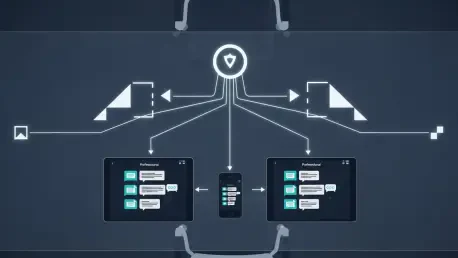

The shift toward integrating sophisticated artificial intelligence directly into messaging platforms has fundamentally altered how professionals manage their daily administrative burdens and document workflows without ever leaving a chat window. Meta has transitioned WhatsApp from a simple peer-to-peer communication tool into a comprehensive productivity suite that leverages Llama 3.5 architectures to parse, summarize, and even generate complex legal or technical documents. This evolution reflects a broader industry trend where the friction between receiving information and acting upon it is being eradicated through seamless LLM integration. By embedding these capabilities into a platform that billions of users navigate instinctively, the barrier to high-level data processing has dropped significantly for many. The landscape of 2026 demonstrates that the convenience of a chat interface often outweighs the robust but cumbersome features of traditional enterprise software systems.
Technological Foundation: Integrating Large Language Models
The recent rollout of advanced multimodal capabilities allows users to upload massive PDF files or sprawling spreadsheets directly into a conversation for immediate analysis by the built-in AI assistant. Instead of manually scouring a fifty-page contract for specific indemnification clauses, a user can simply prompt the assistant to highlight potential risks or summarize the financial obligations mentioned within the text. This functionality relies on highly optimized context windows that can handle substantial datasets without compromising the speed of the mobile application. Companies such as logistics firms are already utilizing these tools to scan bills of lading on the fly, transforming what used to be a desk-bound task into a mobile-first operation. The AI does not merely read the text but understands semantic relationships, allowing it to offer insights that go beyond simple keyword searches or basic optical recognition processes.
Security remains a paramount concern for organizations considering the adoption of such integrated document assistants for sensitive corporate data handling. Meta has addressed these anxieties by implementing a hybrid processing model where local device intelligence handles preliminary sorting before encrypted tokens are sent to secured cloud servers for deeper analysis. The persistence of end-to-end encryption ensures that while the AI can assist the user, the actual contents of the document remain shielded from third-party interception or unauthorized internal access. This architecture maintains the integrity of the communication channel while providing the high-level computational power required for generative AI tasks. As the technology matures between 2026 and 2028, the focus is shifting toward verifiable privacy protocols that allow for even more rigorous auditing of how AI models interact with proprietary business information within the ecosystem.
Strategic Implementation: Maximizing Operational Efficiency
While traditional enterprise tools like Microsoft Teams or Slack have long dominated the corporate landscape, the ubiquity of WhatsApp provides a unique advantage in emerging markets and small enterprise sectors. The learning curve associated with specialized document management software often prevents rapid adoption, whereas the familiar interface of a chat bubble minimizes resistance among staff members. By integrating file conversion, e-signatures, and real-time collaborative editing via AI, the platform is effectively challenging the necessity of standalone office applications for many common business workflows. This strategy mirrors the success of everything apps seen in other regions, where a single portal handles everything from personal banking to professional project management. The current integration emphasizes a streamlined user experience where the AI acts as a digital concierge, suggesting actions based on the documents shared within a private thread.
Organizations that recognized this shift early successfully leveraged these conversational interfaces to reduce operational overhead and improve response times for client inquiries involving complex documentation. To maximize the utility of these tools, businesses established clear guidelines on the types of data permitted within the chat environment and trained employees on effective prompt engineering for document synthesis. The transition necessitated a move away from siloed information repositories toward a more fluid, AI-supported communication model that prioritized accessibility and speed. As the ecosystem matured, the most effective teams focused on integrating existing cloud storage with the messaging AI to ensure a single source of truth remained intact. These proactive measures allowed firms to harness the power of a document assistant without sacrificing organizational control or data governance. Successful adoption of these technologies depended on balancing convenience with a robust framework.