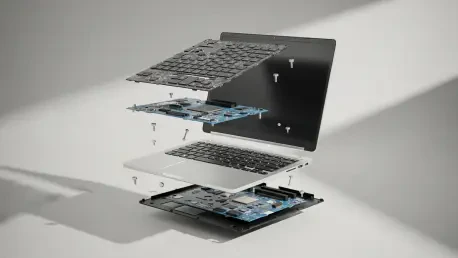

Modern computing has reached a critical crossroads where the sleek, sealed aesthetics of the past decade are clashing violently with a global demand for hardware longevity and environmental accountability. As electronic waste continues to accumulate at an alarming rate, the concept of a “disposable” professional workstation is no longer financially or ethically viable for the modern enterprise. This shift is not merely a consumer preference but a fundamental restructuring of how we perceive the lifecycle of high-end silicon. The following review analyzes the current trajectory of laptop design, examining whether manufacturers are truly embracing modularity or simply performing sophisticated “greenwashing” through minor accessibility tweaks.
The Evolution of Repairable Computing
The narrative of laptop construction has transitioned from the bulky, user-serviceable machines of the early 2000s to the ultra-thin, glued-shut ultrabooks that dominated the market for much of the last decade. However, the emergence of the “Right to Repair” movement has forced a significant pivot in engineering philosophies. Today, repairability is defined by the transparency of the supply chain and the democratization of technical knowledge. It is no longer enough for a device to be physically capable of being opened; it must be supported by a comprehensive ecosystem of documentation and spare parts availability.
This evolution is driven by the realization that hardware performance has plateaued to a point where a three-year-old processor remains highly capable for most enterprise tasks. Consequently, the bottleneck for device longevity has shifted from computational power to physical durability and component failure. By prioritizing repairability, manufacturers are addressing the growing concern over the carbon footprint of manufacturing new units, positioning modularity as a key differentiator in a saturated market.
Structural and Digital Foundations of Repair
Physical Chassis and Modular Design
The mechanical integrity of a repairable laptop relies on a fundamental shift away from structural adhesives in favor of standardized fasteners. Current leaders in this space have replaced proprietary pentalobe screws with standard Phillips or Torx heads, significantly lowering the barrier for entry-level technicians. Beyond the fasteners, the internal layout must be logical; components like the battery, keyboard, and trackpad—which are prone to high wear—should be accessible without removing the entire logic board. True modularity allows for the “hot-swapping” of ports or memory modules, ensuring that a single broken USB-C socket does not necessitate a total motherboard replacement.
Software-Based Repair Barriers and Firmware Support
While physical access is improving, a more insidious challenge remains in the form of “parts pairing” or component serialization. This digital gatekeeping involves using proprietary firmware to lock specific hardware IDs to the motherboard, meaning that even a genuine screen replaced from an identical donor machine might lose functionality unless authorized by a proprietary software tool. This practice effectively centralizes control within the manufacturer’s authorized service centers. For a repair ecosystem to be considered truly open, diagnostic software and firmware calibration tools must be available to independent shops and internal IT departments alike.
Current Industry Dynamics and Regulatory Shifts
The landscape is currently being reshaped by legislative frameworks, most notably the French repairability index, which has served as a blueprint for global transparency. By requiring a visible score at the point of purchase, regulators have incentivized manufacturers to compete on the ease of disassembly and the price of replacement parts. This transparency has revealed a stark divide in the industry: while some brands have leaned into the challenge by publishing free repair manuals, others have doubled down on restrictive ecosystems, arguing that third-party repairs compromise device security or user safety.
Moreover, consumer and enterprise behavior is shifting toward a “total cost of ownership” model rather than an upfront acquisition cost. Organizations are increasingly scrutinizing the “repairability delta”—the difference in long-term value between a device that can be refurbished in-house and one that must be sent back to the manufacturer. This shift is forcing a recalibration of brand loyalty, as reliability is now measured by how quickly a machine can return to service after a failure.
Real-World Applications in Enterprise IT
Large-scale organizations are leveraging modular hardware to revolutionize their operational efficiency, moving away from the “spare pool” method where dozens of laptops sit idle waiting for a user to break their current machine. Instead, IT departments are adopting a modular maintenance approach, where internal staff can replace a cracked screen or a failing SSD in minutes. This reduction in downtime translates directly into productivity gains, especially in decentralized or remote work environments where shipping hardware back and forth creates significant logistical friction.
Furthermore, the integration of advanced device telemetry is changing the nature of preventative maintenance. Modern fleet management tools can now monitor battery health and thermal performance in real-time, allowing IT managers to schedule repairs before a component fails. This data-driven approach, often paired with “PC as a Service” (PCaaS) models, allows companies to extend the functional life of their fleet to five years or more, drastically reducing the capital expenditure associated with the traditional three-year refresh cycle.
Challenges to Widespread Adoption
Despite the clear benefits, the trend toward repairability faces stiff opposition from the design requirement of “thin-and-light” portability. Soldered RAM and storage remain common because they save precious millimeters of vertical space and allow for more complex thermal management systems. For many manufacturers, the trade-off between a sleek profile and user-upgradeability is still weighted toward the former, as aesthetic appeal continues to drive initial sales. Additionally, restrictive maintenance contracts often legally prevent enterprises from performing their own repairs without voiding warranties, creating an artificial barrier to self-sufficiency.
Ongoing development efforts are focused on bridging this gap through high-density modular connectors that mimic the space-saving benefits of soldering without the permanent commitment. However, the market also faces an uphill battle against “software-induced obsolescence.” If a laptop’s hardware is built to last a decade, but the operating system ceases to provide security updates after five years, the mechanical durability becomes moot. Advocacy for extended software support cycles is therefore just as critical as the push for physical screws and modular ports.
The Future of Sustainable Hardware
The trajectory of the industry suggests a move toward a truly circular economy, where a laptop is not a static product but a platform that evolves. In the coming years, we may see the rise of universal repairability standards that dictate everything from screw sizes to component labeling, much like the standardization of USB-C for charging. This would enable a secondary market for upgraded modules, where a user could swap out an aging processor module for a new one while retaining the screen, chassis, and battery, further decoupling hardware utility from the manufacturing cycle.
As sustainability metrics become mandatory in corporate reporting, the ability to demonstrate a low-waste hardware strategy will be a competitive necessity. We are likely to see the decline of the traditional “buy-use-toss” cycle in favor of refurbishment programs that see a single chassis serve multiple users across different tiers of an organization. The ultimate goal is a device that is as easy to upgrade as a desktop PC, yet as portable as a modern tablet, effectively ending the era of planned obsolescence.
Final Assessment of Repairability Trends
The transition toward repairable laptops proved to be one of the most disruptive shifts in the technology sector during the mid-2020s. While industry pioneers successfully demonstrated that modularity does not have to come at the expense of performance or style, the gap between leaders and laggards remained wide. The most successful organizations were those that abandoned the traditional refresh cycle in favor of telemetry-backed maintenance and modular procurement. Ultimately, the industry moved toward a model where hardware longevity became a primary indicator of brand value, forcing even the most restrictive manufacturers to loosen their grip on proprietary repair tools to remain competitive in a sustainability-focused market.