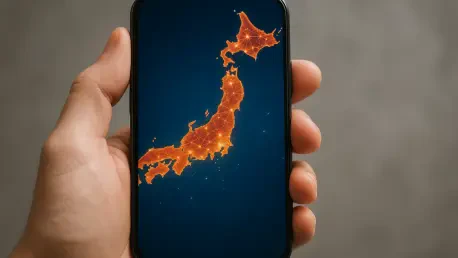

The Japanese telecommunications sector is currently defined by a powerful oligopoly where NTT Docomo, au by KDDI, and SoftBank collectively control more than 80% of all active mobile subscriptions. This landscape is a sophisticated blend of massive infrastructure investments and a high-stakes battle for market share that has intensified throughout the year. While the industry remains dominated by a powerful trio of legacy carriers, the entry of cloud-native disruptors and specialized travel providers has reshaped how the public accesses data across the archipelago. This evolution has created a market where technical superiority, urban performance, and international accessibility are the primary benchmarks for success. As of the current quarter, the “Big Three” infrastructure giants still command the vast majority of total subscriptions, yet the rise of Rakuten Mobile as a fourth major player has introduced aggressive price competition and architectural innovation. This environment has also paved the way for a flourishing secondary market of virtual operators and eSIM providers, ensuring that both long-term residents and short-term visitors have access to world-class connectivity tailored to their specific geographic and budgetary needs. The resulting ecosystem is one of the most resilient in the world, characterized by high speeds and near-ubiquitous coverage.
The Dominance: Legacy Infrastructure Giants
NTT Docomo remains the undisputed gold standard for reliability in the Japanese market, maintaining the largest market share at 36.6% with approximately 92 million active subscribers. Its technical superiority is most evident in its 5G Standalone architecture, which provides the most extensive coverage across the archipelago, including remote islands and mountainous regions that were previously difficult to reach. For users who prioritize a consistent signal in the “deep north” of Hokkaido or the rugged rural terrains of the Japan Alps, Docomo continues to be the primary choice due to its unmatched 4G and 5G reach. The carrier has invested heavily in the current year to ensure that its 5G Standalone network is not just a marketing term but a functional reality, delivering peak download speeds that often exceed 168 Mbps in optimal conditions. This commitment to infrastructure has solidified its reputation among corporate clients and residents who demand a fail-safe connection regardless of their location, making it the bedrock of the country’s digital economy and the preferred partner for many international roaming agreements.
In contrast, au by KDDI has carved out a distinct niche as the leader in customer satisfaction by balancing urban speed with suburban stability and innovative technology integrations. With a market share of 27.1%, au excels in providing low-latency connections that are ideal for modern applications such as cloud gaming and high-definition video conferencing. A significant strategic advantage for the company this year is its deep partnership with SpaceX’s Starlink, which utilizes satellite technology to provide backhaul to remote areas that traditional fiber optics cannot reach physically. This effectively bridges the gap in difficult geographic locations, allowing au to offer high-speed access in places where competitors often struggle with signal attenuation. Furthermore, the carrier has maintained high scores in user experience surveys, consistently outperforming its peers in terms of customer service and plan flexibility. By focusing on a hybrid approach that combines traditional cellular towers with orbital satellite constellations, au by KDDI has managed to offer a premium alternative to Docomo that appeals to tech-savvy users and suburban families alike.
SoftBank rounds out the top three infrastructure giants by positioning itself as a specialist in high-density urban environments where performance demands are at their peak. By optimizing its network specifically for crowded districts like Shibuya, Shinjuku, and Ginza, it often delivers the fastest median download speeds in major cities, frequently hitting the 62.1 Mbps mark. While its rural footprint may lag slightly behind the expansive reach of Docomo, SoftBank has successfully attracted the international community through robust English-language support and services tailored for those who primarily stay within the “Golden Route” of Tokyo, Kyoto, and Osaka. The carrier has also been aggressive in its 5G deployment, reaching a download speed average of 115 Mbps in urban centers. This focus on metropolitan performance, combined with a strong presence in the consumer technology sector through its parent company, allows SoftBank to offer integrated packages that include home internet and streaming services. For the urban professional or the visitor who spends the majority of their time in Japan’s neon-lit megalopolises, SoftBank remains a top-tier contender for speed and accessibility.
Market Evolution: The Rise of Flexible Connectivity
Rakuten Mobile has emerged as a significant fourth player in the telecommunications field, utilizing a cloud-native Open RAN architecture to disrupt traditional pricing models that have long governed the industry. By maintaining lower overhead through its software-defined network, Rakuten offers some of the most competitive data plans in the country, attracting nearly 10 million subscribers and capturing a noticeable portion of the market from the established giants. Its “SAIKYO Plan” has become a benchmark for value, offering unlimited data at prices that forced the “Big Three” to reconsider their own sub-brand strategies. Furthermore, Rakuten’s unique ability to provide remote eSIM provisioning for international travelers without the need for rigorous in-store identity verification has made it a favorite for the tech-savvy and budget-conscious demographic. While its native network coverage continues to expand, reaching approximately 70% of the population, it effectively utilizes roaming agreements with au by KDDI to fill geographical gaps, ensuring that its users remain connected even when outside the primary Rakuten signal area. This disruptive approach has fostered a more dynamic and price-sensitive market environment.
The secondary market is bolstered by providers like Ubigi and Mobal, which cater to specialized user needs that the major carriers often overlook. Ubigi offers a dual-network approach, which allows users to switch between the Docomo and KDDI networks to ensure the strongest signal for travelers who are constantly on the move. This dual-carrier capability is particularly useful for digital nomads who require uninterrupted service while traversing the country’s extensive railway system. Mobal remains a unique entity in the landscape by providing legitimate Japanese phone numbers alongside massive data plans, a service that is critical for individuals who need to handle local logistics such as restaurant reservations, banking, or business transactions. What sets Mobal apart is its commitment to social responsibility, as the provider continues to donate a significant portion of its profits to charitable causes, creating a value proposition that resonates with socially conscious modern consumers. These providers have successfully identified niches where flexibility and specific features are more important than owning the underlying physical infrastructure, providing a vital layer of choice for consumers who need more than a standard contract.
For travelers who require high levels of customer support and simplified onboarding, Sakura Mobile and Japan Wireless provide essential services that are backed by the stability of the major networks. Sakura Mobile is particularly favored by long-term visitors and students for its lenient usage policies and easy-to-understand billing, which avoids the hidden fees often associated with standard domestic contracts. Their focus on providing a seamless experience for those staying over 45 days has made them a staple of the expat community. Meanwhile, Japan Wireless is renowned for its personalized, human-centric English assistance, offering real-time support that helps travelers navigate any technical issues they might encounter. These providers ensure that the technical complexity of the Japanese market does not become a barrier for those who may be intimidated by traditional carrier interfaces. By acting as high-quality intermediaries, these services translate the raw power of the Docomo and SoftBank networks into accessible, user-friendly packages that prioritize the customer experience above all else. This segment of the market ensures that Japan remains one of the most welcoming destinations for global travelers seeking reliable connectivity.
Technological Trends: The Standards of Service
The current market is increasingly defined by the maturity of 5G Standalone technology and the seamless integration of satellite systems into the national mobile grid. 5G is no longer viewed as a luxury or a niche add-on but is instead a standard expectation for any subscriber, with providers now competing primarily on the quality of their ultra-low latency networks. The move toward 5G Standalone architecture has enabled a new wave of industrial applications, from autonomous logistics in manufacturing hubs to enhanced augmented reality experiences in the tourism sector. Furthermore, the successful integration of satellite constellations to eliminate persistent dead zones in the mountains and on remote coastlines suggests that the next phase of competition has moved beyond ground-based towers to orbital infrastructure. This shift ensures total coverage across the country’s varied and often challenging landscape, making the concept of a “no-signal zone” nearly obsolete. These technological advancements have not only improved the speed of data transmission but have also increased the overall capacity of the networks to handle the massive influx of data required by modern smart devices.
Another major trend that has come to the forefront this year is the “softwarization” of the industry, where agile, cloud-based networks force legacy giants to adapt their pricing and sub-brand strategies rapidly. This shift has led to the proliferation of more flexible, digital-only offerings like povo2.0 and LINEMO, which cater to a younger, data-hungry audience that prefers managing their services through an app rather than a physical store. The success of these sub-brands highlights a broader move toward self-service and customization in the telecommunications sector. Ultimately, the barrier to entry for foreigners and short-term visitors has all but collapsed as remote provisioning and 24/7 multilingual support have become the industry standard. This accessibility is a testament to the competition fostered by both the disruptors and the legacy carriers as they strive to capture the attention of a global audience. Japan’s mobile infrastructure has set a high bar for the rest of the world, demonstrating how a mixture of traditional engineering and modern software-driven innovation can create a nearly flawless user experience.
The evolution of the Japanese mobile network market has demonstrated that true leadership was achieved through a combination of infrastructure resilience and consumer-focused innovation. While the heritage carriers maintained their dominance through massive capital investments in 5G Standalone and satellite backhaul, the arrival of agile, cloud-native players forced a shift toward transparency and affordability. This competitive pressure benefited the end user, who gained access to some of the fastest and most reliable data services in the world. The transition toward software-defined networking allowed for a level of service customization that was previously impossible, enabling a diverse range of MVNOs to thrive by serving specific niche demographics. Moving forward, the focus for the industry shifted toward maintaining this high standard while exploring the next frontier of 6G research and further orbital integration. The landscape in Japan proved that a mature market could still find significant room for growth by embracing new architectural philosophies and prioritizing the needs of both local residents and the international community. Stakeholders in other regions looked toward this model as a blueprint for balancing legacy stability with the necessary agility of the digital age.