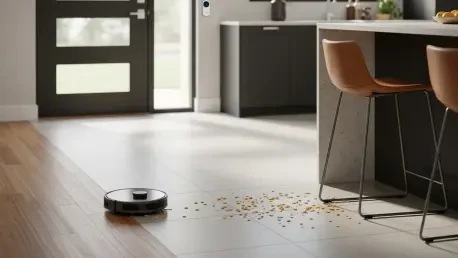

The traditional approach to residential automation often relies on rigid schedules that fail to account for the unpredictable nature of daily human life. While many modern robot vacuums come equipped with sophisticated mapping technology and application-based timers, these tools frequently struggle to address messes when they actually occur. For households with young children, breakfast is rarely a punctual event, often resulting in a trail of crumbs and spills that remains on the floor long after a pre-programmed cleaning cycle has concluded. A vacuum set to run at a fixed hour might start while the family is still seated at the table or finish its task before the most significant debris has even fallen. By integrating a low-cost contact sensor onto a primary exit door, homeowners can transition from arbitrary time-based triggers to event-driven logic. This shift ensures that the cleaning process initiates precisely when the residence becomes vacant and the mess is finalized, making the robot actually smart.
1. Automating Your Cleaning Based on Real Life, Not Just a Clock
The fundamental issue with contemporary vacuum scheduling lies in the disconnect between the software’s clock and the reality of a busy morning. In many homes, the window for breakfast can shift by twenty or thirty minutes depending on factors like lost shoes, slow eaters, or unexpected spills. If a Eufy or similar device is programmed to clean the kitchen at 7:30 AM every morning, it may very well begin its cycle while the family is still navigating the space, creating a physical obstacle and failing to capture the final crumbs of a meal. Conversely, if the vacuum runs too early, the subsequent mess stays on the floor until the next scheduled deep clean, which might not happen until the following afternoon. This inefficiency highlights a significant gap in the smart home experience, where the device remains unaware of the environment’s state or the presence of occupants. Moving toward a sensor-based trigger provides a dynamic solution that respects the flow of real life.
The introduction of a basic contact sensor, such as those used in security systems, offers a reliable way to bridge this gap without expensive upgrades. These sensors work by detecting the physical separation and closure of two magnetic components, typically mounted on a door and its frame. When this technology is linked to a smart home ecosystem like Amazon Alexa or Google Home, it can serve as a powerful trigger for complex routines. For a robot vacuum, the act of closing the front door serves as a definitive signal that the morning chaos has ended and the house is ready for maintenance. This method avoids the pitfalls of geofencing, which can sometimes be unreliable or drain phone battery, by focusing on a concrete physical action. By utilizing the existing infrastructure of a home security system, users can repurpose simple hardware to solve a daily chore frustration. This level of integration represents the next logical step in functional home automation for 2026.
2. How to Set Up the Routine Using Alexa and a Door Sensor
Implementing this automation requires only a few minutes of configuration within a central smart home application. The first phase involves accessing the routine builder by opening the Alexa app on a smartphone, navigating to the “More” icon, and selecting “Routines” before hitting the plus sign to create a new entry. This platform allows for the orchestration of disparate devices from different manufacturers, such as a Ring door sensor and a Eufy X10 Pro Omni vacuum, into a unified workflow. The second phase is the selection of the starting event, which defines exactly what will cause the routine to fire. The user must navigate to the “Smart Home” section, choose the specific “Contact Sensor” located on the front door, and set the condition to “Closes.” This specific trigger ensures that the automation only begins when the door is shut behind the departing residents. It provides a reliable starting point that is tied directly to the physical movement of the household’s inhabitants.
The third phase of the setup process is establishing a specific time window, which is arguably the most vital component for preventing false triggers. Under the “Anytime” section of the routine, constraints should be set to limit the automation to weekdays during a typical morning departure window, such as between 7:15 AM and 7:45 AM. This prevents the vacuum from deploying every single time the door is used for errands or pet care throughout the afternoon. Finally, the fourth phase involves assigning the specific cleaning task to the vacuum. In the action menu, the user selects “Smart Home,” identifies their robot vacuum, and chooses the command to clean a specific room, like the kitchen. This targeted approach ensures that the high-traffic areas prone to breakfast debris are prioritized immediately after the home is vacated. Once these parameters are saved, the system functions autonomously, requiring no further manual input from the user to maintain a clean floor every morning.
3. Why the Time Window Is Essential
Precision in timing is the difference between a helpful automation and a nuisance that wastes resources and adds noise. Without a strictly defined time window, a door-based trigger would cause the vacuum to emerge from its dock every time someone opens the door to fetch the mail or accept a delivery. Such frequent and unnecessary deployments would lead to premature wear on the robot’s components and a rapid depletion of consumables like mop water and cleaning solution. By confining the trigger to a thirty-minute slot in the morning, the system accurately captures the one moment in the day when the house transition from occupied to empty coincides with the presence of fresh floor debris. This creates a highly efficient operation where the vacuum only works when it is truly needed. It also ensures that the device is not wandering through the house while residents are trying to relax or work in other rooms, maintaining a peaceful environment for everyone during the rest of the day.
Efficiency also extends to the maintenance and longevity of the hardware itself, which is a key consideration for modern high-end robot vacuums. Devices like the X10 Pro Omni are designed for heavy-duty use, but reducing unnecessary cycles helps preserve the battery life and the integrity of the mopping pads. When the automation is dialed in correctly, the vacuum handles the breakfast aftermath and returns to its station to self-empty and wash its pads well before the family returns. This means the water tanks last longer between refills and the dust bag requires less frequent replacement. By focusing on a single-room pass during the morning, the device remains fully charged and prepared for its broader whole-house cleaning schedule that typically occurs later in the afternoon. The strategic use of sensors allows the robot to balance immediate cleaning needs with long-term operational health, proving that smarter software logic is just as important as suction power or brush design.
4. A Monthly Overview of Practical Improvements
Observing this system over a month-long period reveals a significant reduction in the mental load associated with household chores and floor maintenance. The vacuuming process transitioned from a task that required constant manual oversight or periodic app adjustments into a completely hands-off background operation. There was no longer a need to worry about the specific timing of breakfast or whether someone had remembered to start the robot before leaving the house. Even on mornings when the routine was delayed by five or ten minutes, the sensor-based trigger waited patiently for the final door closure before signaling the start of the clean. This reliability fosters a sense of trust in the smart home infrastructure, as the technology adapts to the human schedule rather than the other way around. The kitchen floor remained consistently clean, free of the dried oatmeal or scattered crumbs that usually accumulated during the morning rush, which significantly improved the home environment.
This simple integration demonstrated that the most effective smart home solutions often involve connecting existing devices through logical, event-driven triggers. By repurposing a standard security sensor, the functionality of the robot vacuum was significantly enhanced without requiring the purchase of new, specialized equipment. Future considerations might include adding NFC tags for manual overrides on weekends or integrating motion sensors to ensure no pets are in the path of the vacuum during its run. For those looking to optimize their daily routines, evaluating how sensors can replace fixed schedules provided a clear path toward a more responsive home. The automation successfully managed the morning messes, returned to its base for self-cleaning, and remained ready for subsequent tasks without any human intervention. This experiment proved that true intelligence in home appliances is not just about the hardware inside the machine, but how effectively that machine communicates with the surrounding environment.