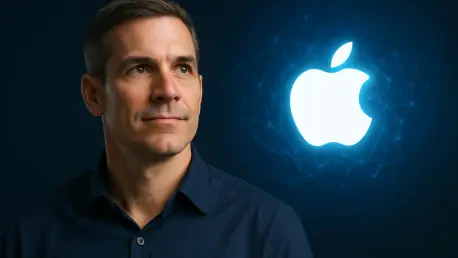

Few corporate handoffs carry stakes this visible, because on Sept. 1 John Ternus will step into the CEO role with a mandate larger than margin protection or supply-chain precision: he must explain, and then ship, an AI vision that fuses Apple’s hardware, software, and services into a daily companion that is private by default and unmistakably useful. Investors, developers, and longtime customers have watched momentum shift toward assistants and models that feel faster, braver, and more open, while Apple’s own “intelligence” arrived as features rather than a felt shift in how devices help. That tension has turned product launches into calibrated refreshes and made Siri feel peripheral at the very moment assistants became the front door to computing. If Ternus cannot make Apple the place where personal context meets trusted automation, others will define that experience on Apple’s screens.
The Unseen Successor: Ternus’s Profile and Test
John Ternus built stature inside Apple by steering hardware through seismic transitions, from Intel to Apple silicon on the Mac to thermal and battery gains that let iPhone cameras punch above sensor size. Colleagues describe a leader who meets dates, trims risk, and prizes reliability at scale, attributes that kept Apple’s cadence intact through manufacturing shocks and component shortages. Yet outside the company, he remains something of a cipher. There is no archive of sweeping interviews, no manifesto, no repeated public tells that reveal a north star. The job now demands more than frictionless execution; it requires a public blueprint that invites customers to expect more, convinces developers to build deeper, and rallies teams to thread intelligence through every ambient moment.
That means translating engineering prowess into an outward-facing story people can understand and then observe in action. Consider how the most resonant platform moves of the past decade were not raw performance claims but coherent narratives tied to lived benefits: instant photo search, seamless device handoff, secure wallet-based transit and payments. Ternus must show, not merely state, how Apple’s custom silicon, secure enclaves, and on-device models unlock actions no one else can credibly promise across phone, watch, tablet, and desktop. Visibility matters because AI leadership is as much message discipline as model weights; partners and regulators scrutinize intent, and users adopt what feels dependable. Without a consistent narrative, each announcement becomes a point feature, not a step toward a system-level assistant that anticipates, coordinates, and protects.
The Gap and Its Costs: AI Stumbles and Upgrade Fatigue
Perception turned into daily friction when Siri failed to keep pace with assistants powered by frontier models from OpenAI, Google, and Anthropic, all reachable on iPhone through apps or the web. Users learned to route hard questions to ChatGPT or Gemini, while Siri often struggled with context, multi-step tasks, or long-running requests. Pain points piled up: identical breaking-news alerts from half a dozen apps despite obvious duplication signals; calendar reminders that fired even while Maps showed the user already in transit; and a call transcription tool capped around 30 minutes, curbing ambitions for interviews, research, or customer support use. Each miss signaled that Apple’s intelligence layer still felt app-bound and time-sliced, not orchestrated across the real patterns of a day.
Those shortcomings bled into hardware sentiment. Annual iPhone and Apple Watch cycles delivered notable camera and durability gains, but the “why upgrade now” story thinned as staple software features flowed back to older devices. When a smart voicemail, a new photo mode, or a keyboard boost landed across several generations at once, the marginal case for a fresh device dulled. Expert observers echoed the diagnosis. Justin Greis, CEO of Acceligence and former McKinsey partner, described Ternus as an elite executor who “knows how to keep Apple in its lane,” a compliment that also implied a missing spark. The historic balance—Steve Jobs’s provocation amplified by Tim Cook’s discipline—tilted after Jony Ive’s exit, leaving Apple with exceptional operations but less visible product zeal. The cost showed up not only in mindshare but in slowed replacement behavior that product photography alone could not reverse.
The Playbook: Integrated, Privacy-First Intelligence
The strategic opening, however, remained unusually clear: integrate signals across Apple devices and services to deliver context-aware help that feels like relief rather than novelty. That requires treating calendar entries, messages, call logs, locations, sensor streams, health metrics, photos, emails, and payment history as inputs to a user-permissioned model that lives partly on-device and partly in a private, encrypted cloud. In this design, the assistant becomes the fastest way to act on personal context—snoozing redundant alerts, routing time-sensitive mail to a wrist tap, pre-drafting replies with citations pulled from recent docs, or reshuffling a morning based on traffic, weather, and an already-late contact. Apple’s advantage lies in the substrate: first-party silicon with Neural Engine acceleration, secure memory domains, and tight scheduling between CPU, GPU, and NPU across iPhone, Watch, iPad, and Mac.
Reclaiming the gateway also meant reasserting platform rules. Rather than forcing users to choose a single model, Apple could expose system intents—summarize, compare, plan, transform—that the assistant brokers. Third-party AI services would plug in through a trust framework: scoped tokens, private set intersections for context, and on-device redaction before any off-device call. The assistant would arbitrate which tool to invoke based on capability, privacy requirements, and user preference, while preserving a single, consistent interface. This model gave developers competition for sanctioned access, not the user’s data. It also created new monetization levers: premium orchestration for enterprises, paid tiers for extended context windows, or revenue shares for AI add-ons purchased through a dedicated catalog. Done right, the result felt less like a model bake-off and more like a dependable conductor for a user’s life.
Next Moves: Turning Vision Into Daily Utility
The near-term bar for credibility sat low enough to step over but high enough to matter. Year one demanded visible, everyday wins: notification deduplication that collapsed identical headlines into one prioritized card; travel-aware reminders that adjusted automatically when Maps detected progress; meeting captures that transcribed beyond 30 minutes, tagged speakers from calendar context, and extracted tasks into Reminders with source links. Shipping these across iPhone, Watch, iPad, and Mac mattered as much as any keynote slide, because usefulness scaled when the assistant met the user wherever attention landed. Equally important, Apple needed to clarify leadership roles on day one: either Ternus as public visionary or a named partner—software or design—that signaled bold ambition with disciplined guardrails.
The most practical steps had been both technical and cultural. Apple had to publish a legible AI roadmap with milestones tied to user outcomes, not model sizes; open a structured plugin program that respected privacy budgets; and measure itself on time saved, errors prevented, and taps avoided. Internally, the company had to fuse Siri, Shortcuts, and system intents into one team with a single backlog and a mandate to prefer cross-device solutions. Communication-wise, keynote stories had to show a full day in the life, not isolated demos. Had Ternus executed these moves with visible ownership, Apple would have regained the initiative on its own terms—trusted, integrated, and quietly powerful—while giving consumers reasons to upgrade and developers reasons to go deep. If he had faltered, Apple’s devices would have continued to shine as premium hardware increasingly animated by someone else’s intelligence.