
The landscape of residential technology is undergoing a seismic shift as the traditional boundaries between static voice commands and fluid artificial intelligence begin to dissolve entirely. Google is making a definitive move by sunsetting the long-standing Nest brand for its audio hardware and introducing the Google Home Speaker, a device engineered specifically to showcase the capabilities of Gemini AI. This transition represents far more than a simple cosmetic makeover or a rebranding exercise; it signals a fundamental evolution where home automation moves away from rigid syntax toward complex, conversational logic. By replacing the legacy Google Assistant with its most advanced generative AI models, the company is effectively positioning the smart speaker as the central neural hub of the modern household. This strategic pivot aims to address the growing demand for an intuitive interface that understands context, remembers previous interactions, and manages the increasing complexity of a connected environment without requiring constant manual oversight.
Market Strategy and Technical Evolution
Global Rollout and Sustainable Design
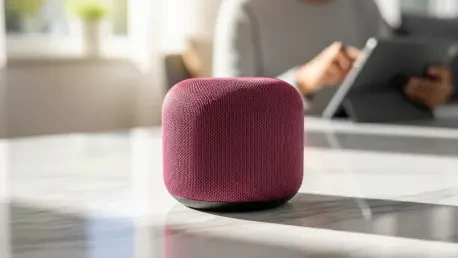
Set for a global release on June 25, 2026, the new speaker arrives after a significant hiatus in the development of Google’s dedicated audio hardware, marking a major milestone in the company’s product lifecycle. This launch serves to streamline the audio ecosystem by retiring the aging Nest Mini and Nest Audio devices in favor of a single, unified flagship product that simplifies the consumer choice. In the United States, users will have access to a vibrant palette of four distinct colors—Porcelain, Hazel, Jade, and Berry—allowing the device to blend into diverse home aesthetics. Conversely, the United Kingdom market will start with a more targeted rollout featuring only two shades, focusing on the most popular neutral tones. Beyond its availability, the speaker’s physical design has been reimagined as an elegant, orb-like structure that prioritizes both visual appeal and environmental responsibility through the use of high-quality materials and a sophisticated, minimalist aesthetic for the modern home.
Sustainability is a core pillar of the new hardware’s construction, reflecting a growing consumer demand for ethically produced electronics that do not sacrifice performance. The unit is wrapped in a specialized 3D-net fabric composed of 87% recycled materials, providing a premium tactile feel while significantly reducing the overall environmental impact of the manufacturing process. Furthermore, the internal engineering utilizes a glue-free assembly process, a significant departure from standard industry techniques that often make devices impossible to repair. This modular approach ensures that the speaker can be easily disassembled for component replacement or recycled at the end of its life cycle, extending the product’s longevity and reducing electronic waste. By choosing materials and assembly methods that prioritize the circular economy, the company is setting a new standard for how smart home devices are built, ensuring that the hardware remains a durable and responsible staple of the household for years.
Audio Performance and Strategic Pricing
Audio performance has undergone a significant upgrade to ensure that the device serves as a high-fidelity speaker in addition to being an advanced AI assistant. The hardware is specifically engineered to deliver a consistent 360-degree soundstage, ensuring that the acoustic output fills any room regardless of where the device is placed in the living space. This omnidirectional sound profile is achieved through a custom-tuned driver array and advanced digital signal processing that compensates for room acoustics in real-time to provide the best possible listening experience. Whether playing high-resolution music or delivering spoken-word content like podcasts, the speaker maintains a clear and balanced frequency response that rivals much larger standalone audio systems. The goal was to create a device that eliminates the sweet spot common in directional speakers, allowing everyone in a room to enjoy the same audio quality, making it an ideal central audio hub for kitchens and open-plan spaces where family members gather.
To maintain a competitive edge in an increasingly saturated market, the entry price for the new speaker has been strategically set at $99, mirroring the cost of previous mid-range offerings while providing access to high-end generative AI capabilities. However, the most significant shift in business strategy lies in the monetization of intelligence through the newly introduced Google Home Premium subscription model, which replaces the former Nest Aware plans. These service tiers, ranging from $10 to $20 per month, are designed to unlock advanced features that go beyond basic connectivity. Subscribers gain access to Gemini Live for fluid, back-and-forth conversations that feel significantly more natural than traditional voice commands. Additionally, the service provides AI-generated summaries of daily activity, ensuring that the recurring cost is justified by tangible improvements in home management and user convenience for the entire household while supporting the ongoing development of the AI.
Gemini Functionality and Legacy Support
At the heart of the user experience are over 50 new features powered by Gemini that allow for more natural and context-aware interactions than were ever possible with legacy assistants. The AI can now process nuanced commands and handle mid-sentence corrections, such as specific requests to turn off all electronics except for a single lamp in the office, and the system will understand the exception without requiring a separate, repetitive command. This level of linguistic flexibility makes the interface feel much more like a conversation with a human assistant than a series of rigid inputs into a computer. Furthermore, the innovative Home Brief feature acts as a digital concierge by synthesizing motion sensor data, family arrivals, and security events into concise, natural-language reports. By transforming raw data into meaningful insights, the speaker adds a layer of intelligence that keeps homeowners informed about the status of their property in a format that is easy to digest and highly personalized to the family needs.
While the new speaker takes center stage, the company is ensuring that its existing user base is not left behind by rolling out Gemini updates to older Nest hardware, including flagship models like the Nest Hub Max. Although these legacy devices will have varying levels of functionality based on their internal processing power, the inclusion of features like Gemini Live helps maintain the value of previous hardware investments for long-term customers. Looking ahead, internal documentation suggests this rebranding is only the beginning of a larger hardware cycle, with a Google Home Display expected to replace the current smart screen lineup in the very near future. This upcoming device is rumored to offer even deeper integration with generative AI, potentially utilizing on-device cameras for advanced gesture control and highly personalized interactions. By unifying the hardware under the Google Home identity, the company is building a more cohesive ecosystem where every device operates on a shared intelligent platform.
Navigating the Smart Home Transition
The transition to a Gemini-powered ecosystem provided a clear blueprint for how generative AI will redefine domestic environments by prioritizing conversational logic over rigid commands. Industry experts observed that the move away from the Nest brand signaled the end of the first era of smart homes, establishing a new phase where software intelligence dictates the long-term value of hardware. To maximize the utility of these advancements, homeowners were encouraged to audit their network infrastructure to support the higher data demands of real-time AI interactions. Stakeholders in the automation space noted that the successful integration of Gemini Live demonstrated the feasibility of long-form human-computer interaction in private settings. Moving forward, the industry turned its attention to the development of standardized privacy protocols to manage the vast amounts of contextual data processed by these models. This shift encouraged a proactive approach to security and transparent data handling to ensure that convenience did not come at the expense of user trust.