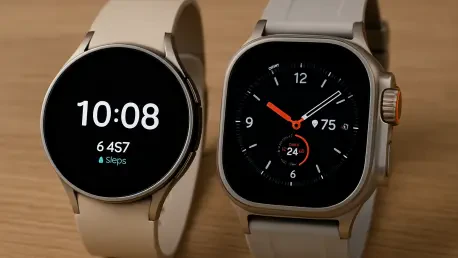

Recent leaks regarding the upcoming release of the Samsung Galaxy Watch 9 and the second-generation Ultra model suggest a significant shift in the company’s pricing strategy as manufacturing costs climb across the electronics industry. While the wearables market has traditionally seen incremental price adjustments, the projected figures indicate that consumers might face a more substantial financial barrier when upgrading to the latest wrist-worn technology. This development comes at a time when the demand for high-end health tracking and seamless ecosystem integration has reached an all-time high, forcing manufacturers to balance sophisticated hardware with retail affordability. Industry insiders point toward several factors contributing to this trend, including the increased cost of specialized sensors and the transition to more durable, premium materials that were once reserved for luxury timepieces. As the technology landscape evolves, these price hikes represent a broader movement within the sector to prioritize long-term value and advanced capability over the mass-market accessibility that defined previous product cycles.
Impact of Component Costs on Consumer Pricing
Escalating Production Expenses: The Global Supply Chain
The rising price tags for the next generation of smartwatches are largely attributed to the soaring costs of raw materials and the complex logistics involved in sourcing high-grade components during the current fiscal period. Specifically, the adoption of grade five titanium and advanced sapphire crystal displays has introduced new financial pressures that the manufacturer must now pass on to the end user to maintain sustainable profit margins. Beyond the exterior housing, the internal architecture of these devices has become increasingly sophisticated, requiring more expensive semiconductor fabrication processes that are currently in high demand globally. This situation is further complicated by the rising labor costs in primary assembly regions and the necessity of investing in more environmentally friendly manufacturing methods which have become standard in 2026. Consequently, the baseline cost of production has moved significantly, making the previous pricing tiers virtually impossible to maintain without sacrificing the quality or the durability of the hardware.
Market Positioning: Defining the Ultra Segment
Samsung appears to be doubling down on the premium segment of the market by positioning the Ultra 2 as a direct competitor to high-end professional sports watches rather than a general-purpose accessory for the average consumer. This strategic pivot involves incorporating specialized features such as multi-band GPS and enhanced water resistance ratings that cater to a niche audience willing to pay a premium for peak performance. By separating the standard model from the Ultra variant with a wider price gap, the company is attempting to create a clearer distinction between everyday utility and professional-grade durability. This approach mirrors the broader trend seen in the smartphone market where flagship devices are increasingly segmented into various performance tiers to capture different consumer demographics. Analysts suggest that while the price hike might deter some casual buyers, the core enthusiast base remains eager for a device that offers the longest battery life and the most rugged chassis currently available in the consumer electronics space.
Technological Advancements and Hardware Innovations
Enhanced Processing Power: The Next Generation Chipset
Central to the new pricing structure is the inclusion of a revolutionary 3-nanometer chipset that promises to deliver unprecedented levels of energy efficiency and computational speed for a wearable device. This jump in processing power allows for more complex background tasks, such as continuous health monitoring and real-time environmental data processing, without the typical drain on the internal power cell. The engineering required to shrink these components while managing heat dissipation represents a significant milestone in wearable technology, justifying the higher research investment reflected in the retail price. Furthermore, the increased memory capacity and faster storage speeds ensure that the device remains responsive even when handling data-heavy applications or sophisticated artificial intelligence algorithms. This technological leap ensures that the new models are not merely incremental upgrades but represent a fundamental shift in what a smartwatch can achieve, providing a performance level that was once restricted to mobile devices.
Integration and Longevity: Future-Proofing the Device
Stakeholders evaluated the trajectory of the wearable market and determined that investing in durable hardware would ultimately provide better long-term returns for users who sought to minimize frequent replacement cycles. It was noted that the implementation of modular software updates and more robust internal cooling systems proved that the focus shifted toward longevity rather than immediate turnover. Moving forward, potential buyers should prioritize models that offer extensive software support and battery health management features to maximize their investment in this high-cost environment. It became clear that the integration of satellite connectivity and advanced metabolic tracking would necessitate a more disciplined approach to personal technology budgeting and hardware selection. Organizations and individual users alike found that the transition to these premium devices required a deeper understanding of how integrated data could improve health outcomes over several years. As the industry moved past the price increase, the emphasis turned toward proactive wellness.