
Scheduling cognitively demanding tasks during the early morning hours is supported by data showing a consistent daily decline in processing speed and attention. For many older adults, the subtle shifts in mental clarity often go unnoticed until they reach a clinical setting, where snapshot evaluations frequently fail to capture the reality of their daily lives. Traditional neuropsychological assessments, while rigorous, are often hindered by the artificial nature of the testing environment and the infrequent schedule of evaluations. This creates a significant gap between how a person functions at home and how they perform during a high-stakes exam in a sterile office. To bridge this divide, researchers at UC Davis Health have pioneered a transition toward ecological validity, utilizing wearable technology to monitor cognitive health in real-time. By leveraging consumer devices that people already wear, medical professionals are now able to see beyond static moments and gain insights into the nuanced complexities of brain health in everyday environments.
Revolutionizing Cognitive Assessment Through Wearables
The Shift From Clinical Settings to Real-World Data
For decades, the medical community relied almost exclusively on periodic clinical evaluations to track cognitive aging, yet these methods are notoriously susceptible to recall bias and the “white coat” effect. Patients are often asked to remember how their memory or thinking has fluctuated over the previous six months, a task that is inherently flawed because current mood, fatigue, or stress levels can heavily influence their retrospective reports. If a patient feels particularly alert on the day of their appointment, the resulting data may present an overly optimistic view of their cognitive status. Conversely, a bad night’s sleep before an exam can lead to scores that do not reflect their true baseline. These limitations highlight the urgent need for tools that can bypass the filters of memory and provide an objective, longitudinal record of a person’s lived experience. Without continuous data, clinicians struggle to distinguish between transient dips and neurodegenerative decline.
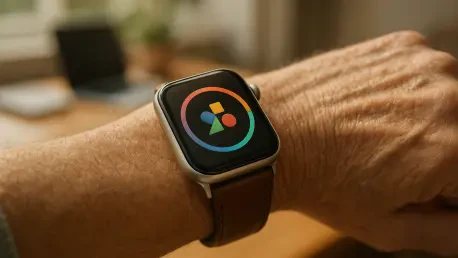
To address these systemic limitations, the recent UC Davis study utilized the Apple Watch to collect micro-longitudinal snapshots from a cohort of 162 older adults over a continuous week. By delivering four prompts throughout each day, the researchers gathered high-resolution data that reflects how individuals function within their natural habitats, away from the artificial pressures of a doctor’s office. This methodology allows for a much more granular understanding of cognitive fluctuations, providing a clearer picture of how specific environmental triggers and daily routines impact the aging brain. This shift toward Ecological Momentary Assessment ensures that the data collected is grounded in the reality of the patient’s life, capturing the ebbs and flows of mental sharpness that occur as they navigate chores, social interactions, and physical activities. By monitoring these patterns in situ, the study provided a robust framework for understanding the relationship between lifestyle and resilience.
Integrating Subjective Insights With Objective Tasks
The integration of subjective self-evaluation with objective performance tasks represents a significant leap forward in understanding metacognitive awareness among the elderly. During the study, participants were required to perform two distinct actions upon receiving a watch prompt: provide a subjective rating of their current mental sharpness and immediately complete brief cognitive tasks. These tasks were specifically engineered to measure processing speed and attention, which are typically the first domains to show decline in the early stages of neurodegenerative conditions like Alzheimer’s disease. By pairing how a person feels about their brain power with how they actually perform in that exact moment, researchers can determine the reliability of self-reported symptoms. This dual-layered approach bypasses the emotional noise often associated with depression or general fatigue, which can sometimes cloud a patient’s perception of their own cognitive health during traditional clinical interviews.
One of the most compelling findings from this research is the strong correlation between perceived mental sharpness and the actual objective test scores recorded on the wearable device. When participants reported feeling less sharp than usual, their performance on the smartwatch tasks consistently demonstrated a measurable decline in both speed and accuracy. This discovery suggests that older adults possess a high degree of metacognitive awareness, meaning they can reliably judge their own thinking processes in real time. This is a critical development because it validates the concerns of individuals who express subjective cognitive worries even when their scores on traditional clinical tests remain within the normal range. By proving that these internal feelings are grounded in objective reality, the study reinforced the value of patient-reported outcomes. This synergy between subjective perception and digital performance data provides a more comprehensive diagnostic tool for identifying decline.
Clinical Implications and the Future of Brain Health
Identifying Digital Biomarkers for Early Detection
The consensus among interdisciplinary experts is that wearable technology offers a sensitive and highly scalable tool for identifying Subjective Cognitive Decline (SCD). Because SCD is frequently recognized as a silent precursor to more severe conditions like Alzheimer’s disease, the ability to detect these subtle, day-to-day fluctuations provides a digital biomarker that could alert clinicians to potential problems years before significant impairment occurs. Traditional diagnostic tools often catch symptoms only after significant damage has already occurred, but continuous monitoring through smartwatches allows for a proactive rather than reactive stance. By identifying the specific patterns of decline through digital signatures, healthcare providers can initiate early interventions that were previously impossible to time correctly. These digital biomarkers represent a new frontier in neurology, turning common consumer electronics into sophisticated diagnostic instruments that work silently.
Furthermore, the data collected from these wearable devices revealed a distinct “time-of-day effect” that has significant implications for how older adults manage their daily lives. The study showed that cognitive performance generally peaks in the morning hours and follows a steady decline as the day progresses. This trend reinforces the critical importance of precision cognitive monitoring, where healthcare providers can offer personalized lifestyle recommendations based on an individual’s specific temporal patterns. For example, understanding when a patient is at their most alert can help them plan for high-stakes activities, such as managing complex financial portfolios or making important medical decisions. By tailoring daily schedules to coincide with these natural cognitive peaks, individuals can maximize their accuracy and safety. This level of personalized guidance is only possible when data is collected continuously, allowing for a deep understanding of unique rhythms that govern the brain.
Enhancing Healthcare Delivery and Research
The integration of smartwatches into the broader landscape of cognitive care has profound implications for the healthcare industry, particularly in terms of cost reduction and the democratization of specialized care. Traditional neuropsychological testing is labor-intensive, requires specialized personnel, and can be prohibitively expensive for many families. In contrast, automated prompts delivered via wearables offer a cost-effective and efficient way to monitor large populations over long periods without the need for frequent office visits. This scalability makes it significantly easier for researchers to identify suitable candidates for clinical trials, ensuring that those in the earliest stages of neurodegeneration receive the most attention and resources. As healthcare systems move toward 2027 and 2028, the use of these remote monitoring tools will likely become standard practice, reducing the burden on clinics while simultaneously increasing the volume and quality of research data.
The broader application of wearable tech in geriatric care successfully bridged the gap between clinical observation and daily lived experience. This approach provided a holistic view of the individual, moving away from unreliable retrospective snapshots and toward a continuous, multi-dimensional understanding of brain health. The shift to a “lab in a watch” model was instrumental in providing patients with a greater sense of agency over their own medical journeys. By using these tools, healthcare providers established a foundation for precision medicine that utilized real-time data to adjust treatments and lifestyle interventions dynamically. This technology ultimately promised a future where cognitive decline was managed with unprecedented detail, safeguarding the autonomy of an aging population. Future efforts focused on integrating these cognitive insights with physical markers like heart rate and sleep patterns, creating a comprehensive monitoring system for acuity.