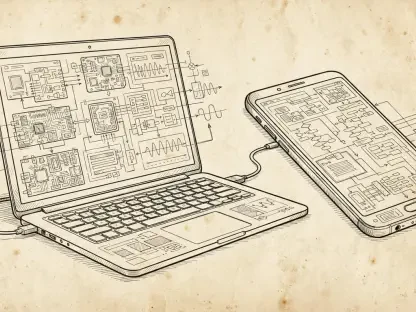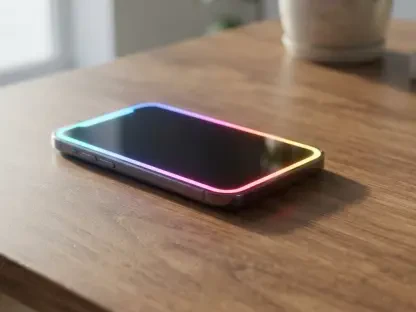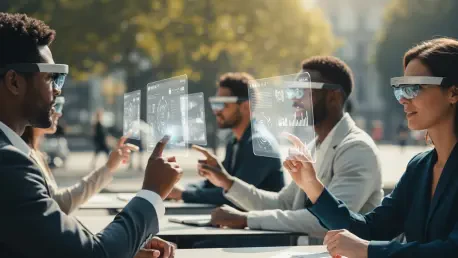

The sight of individuals staring down at rectangular glass slabs has become increasingly rare as sleek, lightweight augmented reality glasses begin to dominate the urban landscape. This shift signifies a fundamental change in how information is consumed, moving away from a secluded screen to an integrated, spatial experience that blends digital data with the physical world. While smartphones have reigned supreme for nearly two decades, the current technological climate suggests that their role is transitioning from primary hub to a secondary, legacy computing device. Current adoption rates for premium wearables indicate a tipping point where the convenience of hands-free interaction outweighs the familiarity of the pocket-sized computer. This transition is not merely about form factor but involves a complete reimagining of the digital interface. As high-speed connectivity becomes more pervasive, the reliance on localized processing is diminishing in favor of distributed, cloud-enhanced visual computing.
Engineering the Path: Mainstream Hardware Evolution
Breakthroughs in Optical Clarity and Miniaturization
The realization of glasses that look like standard eyewear rather than bulky headsets was the primary hurdle for mainstream acceptance. Recent advancements in high-brightness Micro-LED technology have allowed manufacturers to project vibrant imagery onto thin lenses without requiring massive power draws. These displays achieve thousands of nits in brightness, ensuring that digital overlays remain visible even under the direct glare of the midday sun. Complementing these are geometric waveguides that have been refined to minimize light leakage, providing a crisp field of view that rivals high-resolution monitors. Furthermore, eye-tracking sensors within the frames allow for foveated rendering, which concentrates processing power only where the wearer is looking. This specific optimization significantly reduces the computational load, allowing for slimmer designs that maintain thermal stability during intensive usage cycles throughout the day.
Optimizing Power Delivery and Wireless Performance
Beyond visuals, the transition from smartphones hinges on the ability of these devices to last an entire day on a single charge. The introduction of semi-solid-state battery chemistry has provided a higher energy density than traditional cells, allowing for more capacity within the narrow stems of the frames. In tandem with these power improvements, the shift toward off-device processing has been a game-changer. By offloading the most demanding calculations to edge computing nodes or a nearby low-power wearable hub, the glasses avoid the heat generation that plagued earlier iterations. Low-latency wireless protocols now ensure that the interaction between the eyes and the cloud happens in milliseconds, eliminating the motion sickness once associated with visual lag. This distributed architecture means the glasses function less like a standalone computer and more like a sophisticated terminal, maximizing efficiency while keeping the weight low for long-term wear.
Navigating the Shift: The Spatial Computing Ecosystem
Intuitive Interaction through Multimodal Interfaces
A significant barrier to replacing the smartphone was the tactile feedback of a touchscreen, a challenge met with sophisticated spatial interfaces. Modern AR operating systems now rely on high-fidelity hand tracking and subtle neural inputs that detect micro-gestures, allowing users to manipulate digital windows with minimal physical movement. This multimodal approach ensures that interacting with a virtual desktop feels as natural as reaching for a physical object. Voice recognition has also evolved beyond simple commands, utilizing local AI models to understand context and intent with near-perfect accuracy in noisy environments. Consequently, the need to pull a device out of a pocket to type a message or search for information has been replaced by a seamless “look and act” workflow. The interface dynamically adjusts to the user’s environment, pinning useful applications to physical surfaces or dimming distracting notifications when the wearer enters a focused workspace.
Practical Implementations: The New Standard in Connectivity
The landscape of personal technology underwent a monumental shift as the limitations of the handheld form factor became increasingly apparent in a world demanding fluid connectivity. Engineers and software developers successfully addressed the critical bottlenecks of battery life and social friction, creating a pathway for AR glasses to transition from niche gadgets to essential tools. It was observed that users who embraced these spatial systems reported higher levels of situational awareness compared to those tethered to traditional screens. For those still navigating this transition, the immediate focus remained on auditing personal digital workflows to see where spatial overlays provided the most value. Organizations prioritized developing specialized applications that took advantage of the hands-free nature of the hardware. As the ecosystem matured from 2026 into 2028, the legacy smartphone eventually found its new identity as a specialized backup device rather than the primary gateway.