
Listen to the Article
The most dangerous workplace hazards are often invisible until it’s too late. A worker’s fatigue level at hour ten of a shift. The subtle postural strain accumulating over thousands of lifts. The creeping onset of heat exhaustion before symptoms become obvious. For many decades, occupational safety operated on the simple but flawed premise that something had to go wrong before meaningful prevention could begin.
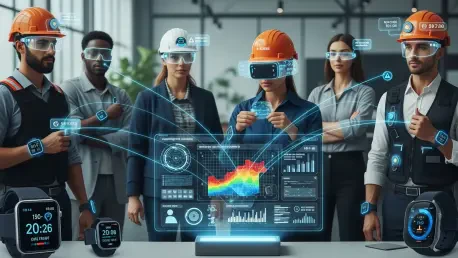
That premise is crumbling. Wearable technology has evolved far beyond consumer fitness trackers into sophisticated systems capable of monitoring movement, environmental conditions, physiological stress, and location in real time. These devices (today embedded in helmets, wristbands, safety glasses, boots, and clothing) are enabling a fundamental shift from reactive incident investigation to predictive risk intervention.
The End of Snapshot Safety
Traditional safety management relied on periodic inspections, incident reports, and compliance checklists. These methods captured isolated moments while missing the continuous reality of how work actually unfolds. A safety audit might find equipment properly maintained and procedures correctly documented, yet end up entirely missing the ergonomic strain accumulating across a workforce or the fatigue building during consecutive overtime shifts.
Wearables operate differently by gathering data continuously without interrupting normal work. Every movement, environmental exposure, heart rate fluctuation, or sudden impact contributes to an evolving, continuous picture of workplace conditions.
Individually, these data points appear insignificant. Collectively, they reveal patterns invisible to periodic observation.
It’s more than just incremental improvement. Organizations gain the ability to identify emerging risks before they manifest as injuries, equipment failures, or medical emergencies. Safety management transforms from investigating what went wrong into preventing what might go wrong. [Human Editor: Insert source to support this claim]
Where Continuous Monitoring Changes Everything
The construction industry remains among the world’s most hazardous precisely because conditions shift constantly. Equipment moves, weather changes, structures evolve, and workers perform physically demanding tasks in unpredictable environments. Static inspections capture only fragments of this dynamic reality.
Smart helmets equipped with environmental sensors detect excessive heat, toxic gases, or dangerously low oxygen levels as conditions change. Motion sensors identify slips, trips, and falls the instant they occur, automatically notifying supervisors with precise location data. Advanced devices distinguish between routine climbing movements and actual falls, reducing false alarms while ensuring rapid emergency response when genuine incidents occur.
But construction represents just one application. Transportation, mining, aviation, and logistics experience similar pain points around fatigue, a risk that develops gradually and remains difficult to detect through traditional supervision. A truck driver experiencing microsleep, a crane operator suffering cognitive decline, or a mining employee working through heat exhaustion may appear outwardly normal while experiencing measurable physiological deterioration.
Wearables monitoring heart rate variability, movement patterns, and physiological indicators provide objective warning signs that subjective assessment cannot match. Organizations can use the data to encourage breaks, task rotation, or schedule adjustments based on evidence rather than waiting for costly mistakes.
Heat, Strain, and the Slow-Burn Injuries
Rising global temperatures have made heat stress an increasingly urgent concern across agriculture, construction, manufacturing, and outdoor maintenance. Heat exhaustion develops gradually, with symptoms becoming noticeable only after significant physiological stress has already occurred. Heat stroke can progress rapidly to confusion, loss of consciousness, organ damage, and death.
Smart wearables continuously monitor body temperature, heart rate, hydration indicators, and environmental conditions. When dangerous thresholds approach, both workers and supervisors receive alerts before medical emergencies develop. What could become a life-threatening situation transforms into a manageable adjustment that involves hydration, cooling, or temporary rest.
Musculoskeletal injuries present a different type of friction, but just as critical. Unlike sudden accidents, these injuries accumulate through thousands of seemingly harmless motions. Workers may not realize they’re placing excessive strain on their backs, shoulders, or wrists until chronic pain develops months or years later.
Motion sensors embedded in belts, shirts, or exoskeletons analyze body mechanics continuously. When workers repeatedly bend incorrectly or lift with poor posture, gentle vibrations provide immediate feedback. It’s a real-time coaching approach that helps employees correct risky movements before tissue damage accumulates.
Making the Invisible Visible
Some of wearable technology’s most valuable applications involve detecting risks that traditionally remained unmeasurable. Workplace stress contributes to accidents, absenteeism, and declining performance, yet quantifying it objectively has proven difficult. Self-reported surveys capture occasional snapshots and depend on employees accurately describing their experiences.
Modern wearables measure physiological indicators associated with stress: heart rate variability, skin temperature, galvanic skin response, and breathing patterns. These metrics cannot determine precisely what someone thinks or feels, but they indicate sustained physiological strain that may increase accident risk. Used responsibly, this information helps organizations identify demanding work periods, optimize staffing, and reduce chronic stress exposure without relying solely on subjective reporting.
Location awareness adds another dimension. Large industrial facilities contain hazardous zones, moving vehicles, restricted areas, and heavy machinery. Indoor positioning systems using Bluetooth, ultra-wideband, or radio frequency technologies determine worker locations with impressive precision.
Workers entering restricted zones receive immediate alerts. Forklift operators get warnings when pedestrians approach blind intersections. Emergency responders know exactly where injured employees are located. During evacuations, managers gain instant visibility into who remains inside hazardous areas. Continuous situational awareness replaces verbal communication and manual headcounts.
The Trust Problem
Here’s where many wearable initiatives stumble. Continuous monitoring naturally raises questions about surveillance, consent, data ownership, and potential misuse. Workers reasonably worry that information collected for safety purposes could eventually influence performance evaluations, disciplinary actions, or insurance decisions.
Trust becomes essential to successful implementation, not merely an ethical obligation but a practical necessity. Organizations must clearly communicate what data they collect, why they collect it, who accesses it, how long they retain it, and precisely how they’ll use it. Employees who distrust monitoring systems resist adoption, disable devices, or question management’s intentions. The technology’s effectiveness depends entirely on workforce acceptance.
But there’s a distinction between safety monitoring and productivity surveillance. The same wearable detecting fatigue could theoretically monitor work pace, break frequency, or movement efficiency. Blending safety objectives with productivity evaluation risks undermining employee confidence. The most successful initiatives maintain clear boundaries between health protection and performance management.
Wearables collect highly sensitive information including physiological measurements, location histories, and behavioral patterns. Protecting this data requires robust encryption, secure storage, access controls, and compliance with privacy regulations. A breach involving wearable health information carries consequences far beyond ordinary security incidents.
Implementation Realities
Beyond the trust situation, there are practical challenges that might affect deployment. Poorly calibrated systems produce excessive alerts, leading to alarm fatigue where workers begin ignoring notifications altogether. Overly conservative thresholds may fail to identify genuine risks. Effective implementation requires ongoing calibration and collaboration between technology providers, occupational health experts, and frontline employees.
Cost historically limited adoption, particularly among smaller organizations. Early systems required substantial investment in specialized hardware, software infrastructure, and technical support. However, declining sensor prices, cloud computing, and battery improvements have dramatically improved affordability. Thankfully, capabilities can increasingly integrate into standard personal protective equipment, with helmets incorporating communication systems and environmental sensors, eyewear presenting hazard information, gloves monitoring vibration exposure, boots detecting slips or prolonged standing.
The Road Ahead
Future risk detection will likely involve integrated ecosystems rather than isolated devices. Wearables will communicate with smart machinery, environmental monitoring systems, autonomous vehicles, and AI models simultaneously. Risk assessment will become contextual, evaluating individual physiological data alongside environmental conditions, equipment status, weather, and historical incident patterns.
Advances in sensor miniaturization will make devices less intrusive. Flexible electronics embedded in fabrics, adhesive skin patches, and smart textiles may eventually replace many standalone devices. Improved battery efficiency and energy harvesting technologies will reduce operational limitations. Continuous monitoring may simply become a standard characteristic of workplace attire.
Regulatory frameworks will evolve alongside technological capabilities. Governments, labor organizations, and privacy advocates are examining how wearable technologies should be governed. Standards concerning consent, data minimization, algorithmic accountability, and worker rights will increasingly shape responsible deployment.