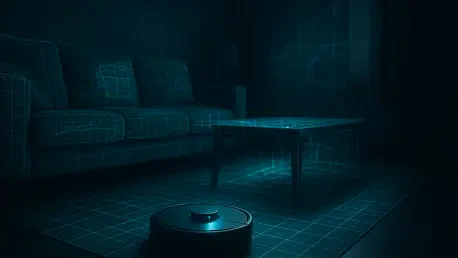

The financial impact of security failures is mounting for DJI as the company faces projected losses of $1.5 billion alongside its inclusion on the FCC Covered List. This staggering valuation decline highlights a deeper systemic crisis involving the DJI Romo robot vacuum, which has become a cautionary tale for the burgeoning autonomous home agent industry. Security researcher Sammy Azdoufal recently exposed a catastrophic vulnerability while attempting a relatively benign task: controlling his vacuum using a standard gamepad. His investigation revealed that the extraction of a single private API token could grant an attacker unauthorized access to thousands of other devices globally. This incident transcends a simple software bug, representing a fundamental breakdown in how modern smart devices manage user authentication and data privacy. By leveraging this single point of failure, an intruder could theoretically peer into private residences across the world, turning helpful household tools into surveillance instruments without the owners’ knowledge or consent.
Anatomy of Systemic Technical Failures
Technical Failures: MQTT and API Security
The core of the vulnerability lies in the DJI Romo’s implementation of the Message Queuing Telemetry Transport (MQTT) protocol, which is a standard messaging format for the Internet of Things. While DJI utilized standard Transport Layer Security (TLS) to encrypt data during transit, it failed to implement granular, topic-level access controls at the application layer. This meant that once a user was authenticated, the system did not sufficiently restrict which data streams they could access, allowing for broad interception.
By exploiting this lack of isolation, a researcher demonstrated that an authenticated user could subscribe to wildcard topics, effectively listening to communications intended for other devices. This technical oversight enabled the harvesting of private data from approximately 7,000 units across 24 different countries within a matter of minutes. The architecture essentially treated all authenticated users as part of a single trusted environment, a design flaw that turned a localized gamepad connection into a global security breach.
Data Compromise: Visual and Spatial Privacy
The sheer volume of sensitive information exposed during the breach is unprecedented for a consumer household device. In a single testing session, the researcher harvested over 100,000 distinct messages, which included live camera streams and real-time microphone audio. This level of access provided a window into the most private aspects of a user’s home life, as the robot vacuum’s high-definition sensors and recording hardware remained active and accessible to the unauthorized party throughout the session.
Beyond audiovisual data, the breach exposed critical spatial information such as 2D and 3D floor maps generated during cleaning cycles. These maps, combined with real-time sensor data, could allow a malicious actor to understand the exact layout of a residence, including the location of valuable items or entrances. Furthermore, a persistent flaw allowed the viewing of video streams without requiring a security PIN, suggesting that even standard user protections were bypassed by the underlying protocol failures.
Industry Trends and Strategic Shifts
Systematic Flaws: The Pattern of Reactive Patching
This incident is not an isolated event but rather a symptom of a broader trend in the smart home industry where security is often treated as a secondary concern. Similar failures have recently plagued other major brands, such as Ecovacs, where hijacked units were used to broadcast racial slurs due to PIN validation occurring only on the app rather than the server. Likewise, flaws in Dreame devices allowed unauthorized real-time camera access and the theft of saved image galleries, proving that high-end features often introduce high-end risks.
A recurring theme among manufacturers like Wyze and Anker Eufy is the reliance on reactive, incomplete patching rather than proactive security. In the case of the DJI Romo, an initial fix only partially resolved the issue, requiring subsequent updates months later to address the root cause. This “move fast and break things” approach to cloud-connected artificial intelligence is becoming unsustainable as consumer trust erodes and regulatory bodies begin to demand more rigorous testing before products reach the mass market.
Strategic Pivots: Moving Toward Edge Computing
For developers and investors, the “agent” label now represents a significant liability if not paired with robust security architecture. To mitigate these risks, the industry must pivot toward “security-by-design” principles, prioritizing edge-based processing over centralized cloud dependencies. By processing sensitive data locally on the device itself, companies can significantly minimize the “blast radius” of any single vulnerability, ensuring that a breach of one unit does not lead to a systemic compromise of the entire user base.
The transition to decentralized models also addresses the limitations of server location as a security metric. Even if servers are physically located in the United States, they can often be accessed by international personnel or compromised via remote API exploits. Reducing the reliance on persistent cloud connections for basic functionality is a necessary step for financial and reputational survival. Companies that fail to adopt these granular security mandates risk facing the same regulatory and economic fallout currently impacting the drone and robotics sector.
Proactive Solutions: Enhancing Security Standards
The DJI Romo incident confirmed that current autonomous home architectures were fundamentally fragile and required immediate structural reform. For consumers, the convenience of these devices came at the cost of total domestic surveillance exposure, a trade-off that was no longer acceptable under modern privacy standards. The findings suggested that until the industry adopted more robust, decentralized security mandates, any device equipped with a camera and a cloud connection had to be viewed as a potential point of failure. Moving forward, homeowners should prioritize devices that offer physical camera shutters and localized data storage options that do not require an active internet connection for core operations. Manufacturers, in turn, must implement mandatory third-party security audits and hardware-level encryption that remains independent of cloud-based API tokens. The transition from reactive patching to proactive, granular security was no longer an option but a necessity for the long-term viability of the smart home ecosystem. Ensuring that internal maps and audio never leave the local network will be the definitive benchmark for the next generation of domestic robotics.