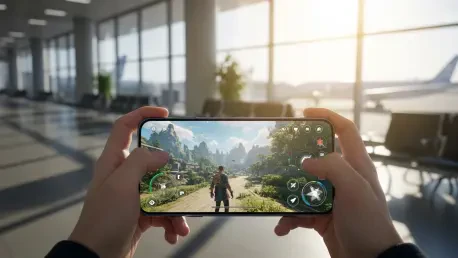

The current state of the mobile gaming market in March 2026 represents the ultimate realization of a decade-long ambition to place console-equivalent power directly into the pockets of billions of users globally. Unlike previous years where mobile titles were often viewed as secondary or simplified versions of traditional games, the current landscape features high-fidelity graphics and mechanical depth that challenge established home systems. This evolution is driven by the widespread adoption of advanced neural processing units in smartphones, which allow developers to implement complex lighting, physics, and artificial intelligence routines that were previously impossible on handheld hardware. As a result, the boundary between hardware categories has essentially vanished, creating a unified ecosystem where the platform is defined by convenience rather than technical limitation. This month’s leading releases highlight a strategic focus on cross-platform persistence and live-service longevity, catering to an audience that demands both immediate accessibility and deep, long-term engagement.
Tactical Refinement: Evolution of Competitive Mobile Combat
Rainbow Six Mobile stands as a definitive benchmark for tactical shooters, successfully migrating the high-stakes environmental destruction and precise gunplay of its predecessor to a touch-based environment. Released late last month, the title emphasizes five-versus-five matches where the destruction of walls and floors is a core gameplay mechanic rather than a visual flourish. The technical achievement here lies in the optimization of the proprietary engine, which maintains a consistent frame rate even during intense firefights involving multiple gadgets and structural collapses. Players are tasked with navigating iconic environments like Bank and Clubhouse, which have been meticulously redesigned to balance competitive integrity with the shorter session lengths typical of mobile play. By introducing mobile-exclusive maps such as Restaurant, the developers have ensured that the game offers a fresh experience even for veterans of the franchise. This release proves that the demand for complex, high-skill-cap competitive titles on mobile is stronger than ever.
Parallel to the growth of tactical shooters is the full-scale arrival of Warframe on mobile, a project that demonstrates how massive, decade-old live-service universes can be compressed without losing their soul. This is not a “lite” or companion app but a comprehensive port that includes over fifty unique combat suits and the entire cinematic narrative history of the Origin System. The most critical component of this release is the seamless cross-platform save and play functionality, which allows a user to start a mission on a home console and complete it on a commute via their smartphone. This level of technical synergy is vital for modern retention strategies, as it removes the friction between different life environments and ensures the game remains a constant presence in the player’s daily routine. The ability to render hundreds of enemies and complex particle effects on a handheld screen marks a significant milestone in mobile engineering, pushing the expectations for what “triple-A” mobile gaming should look like from 2026 to 2028.
New Paradigms: Roguelite Mechanics and Social Integration
The explosion of the “survivor-like” or “bullet heaven” genre has reached a fever pitch this month, with major intellectual properties like Hunter x Hunter and Medabots adopting the roguelite loop to drive engagement. Hunter x Hunter Nen x Survivor leverages the intricate power systems of its source material to create a high-speed action experience where players must survive escalating waves of enemies using randomized skill upgrades. The gameplay loop is inherently suited for the mobile platform, offering a “one-more-run” addiction factor that thrives on short bursts of play. Similarly, Medabots Survivors utilizes a charming chibi art style to reinvent its classic robot-battling mechanics for a new generation. These titles highlight a broader industry trend where developers are moving away from traditional level structures in favor of dynamic, procedurally generated challenges. By focusing on mechanical variety and character customization within a simplified control scheme, these games have successfully captured both the hardcore demographic and casual players.
Beyond the frantic pace of roguelites, the release of ABYSSDIA signifies a maturing of the Action RPG genre through the integration of deep social simulation and cooperative raiding. Developed by NHN Corp, the game prioritizes real-time coordination between four players, requiring precise timing and role management to overcome massive, screen-filling bosses. However, the game’s true innovation lies in its “affinity” system, which encourages players to bond with their digital companions through non-combat activities like sharing meals or engaging in voiced narrative sequences. This approach addresses a growing desire for emotional investment and community building within mobile spaces, transforming the game from a simple combat simulator into a vibrant social hub. The high-quality 3D animations and professional voice acting further enhance the immersion, setting a new standard for presentation in the genre. As social features become increasingly sophisticated, the lines between gaming apps and social media platforms continue to blur, creating a more holistic digital experience.
Strategic Outlook: Defining the Handheld Future
The inclusion of the Tomb Raider origin story as a premium mobile port this month serves as a crucial reminder that high-quality, single-player narrative experiences still hold immense value in a market dominated by free-to-play models. This release provides the full base game along with all twelve DLC packs, offering a complete, uncompromised adventure that focuses on exploration and survival. The success of such ports indicates that a significant segment of the mobile audience is willing to pay an upfront cost for a polished, advertisement-free experience that mirrors the quality of traditional gaming consoles. This trend is likely to expand as storage capacities on mobile devices continue to grow, allowing for larger assets and more complex world-building. Furthermore, the simultaneous launch of major titles on both Android and iOS has become the industry standard, ensuring that global gaming communities remain connected regardless of their hardware preferences. This unified approach is essential for maintaining the competitive balance and social health of modern mobile titles.
Looking ahead, the mobile gaming industry is moving toward a state of permanent “live” evolution, where the distinction between a game launch and a long-term service has almost entirely disappeared. The games released in March 2026 illustrate a commitment to frequent content updates and community-driven development that will dictate the market’s direction through 2028 and beyond. Developers are now focusing on creating “forever games” that can adapt to changing player behaviors and hardware advancements through modular updates rather than requiring full sequels. This strategy relies heavily on robust back-end infrastructure and cloud-integrated features that allow for rapid deployment of new assets and gameplay modes. As the ecosystem matures, the emphasis shifted toward ensuring that mobile titles are not just distractions, but central pillars of the broader entertainment landscape. Organizations moved to secure long-term player loyalty by prioritizing technical stability, fair monetization, and deep narrative engagement across all handheld experiences.