
The digital landscape has undergone a radical transformation as users increasingly reject the noise of algorithmic manipulation in favor of platforms that prioritize genuine human connection over viral metrics. Leading this charge is the unexpected but highly anticipated return of Friendster, a name once synonymous with the early social web, now reimagined for a modern era under the stewardship of Friendster Labs Inc. This relaunch is spearheaded by programmer Mike Carson, who secured the iconic domain for twenty thousand dollars in Bitcoin and meticulously finalized all brand trademarks by May 2025. Unlike the numerous unofficial iterations and phishing risks that appeared in recent years, this version represents a complete structural reboot built from the ground up without any ties to previous management or legacy data. The platform has intentionally distanced itself from the data-mining practices of the past, focusing instead on a lean, privacy-conscious architecture that caters to those seeking an escape from the influencer-dominated mainstream.
Reimagining Social Interaction Without Algorithms
The core philosophy driving this iteration of Friendster represents a significant departure from contemporary social media trends that prioritize endless scrolling and the accumulation of massive, impersonal follower lists. Instead of competing for global visibility, the platform is engineered to facilitate real-life friend networks that mirror organic human relationships. To achieve this, the development team has committed to maintaining an environment entirely free of advertisements and manipulative, algorithmic-based feeds that often distort reality. This commitment ensures that users only see updates from people they actually know, fostering a sense of community that has been largely lost in the pursuit of engagement metrics. By removing the pressure of public likes and high-stakes performance, the site encourages a more relaxed and authentic form of digital expression where the primary value lies in the connection itself rather than the potential for wide distribution or commercial gain.
The user interface of the new Friendster focuses on traditional social elements that emphasize utility and direct communication over flashy, attention-grabbing features. Users have access to a straightforward friend feed, alongside one-to-one and group messaging capabilities designed for private and secure dialogue. Interactions are limited to basic reactions, such as hearts and thumbs-up, which reduces the complexity and social anxiety often associated with more elaborate feedback systems. Furthermore, the technical footprint of the platform is remarkably small, with the mobile application occupying only six and a half megabytes of space. This lean design philosophy extends to the backend, where the absence of data-tracking scripts and ad-tech integration results in a faster, more responsive experience. By stripping away the bloat of modern social networking, Friendster provides a focused toolset that serves as a niche alternative for individuals who value digital minimalism and high-speed functionality.
Bridging the Digital Divide via Physical Proximity
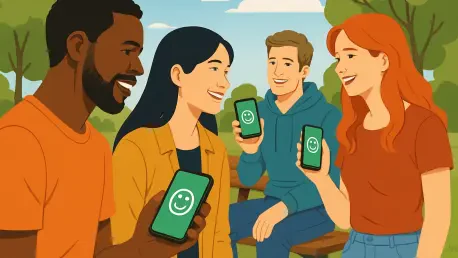
A defining feature of the 2026 relaunch is its innovative emphasis on physical proximity as a prerequisite for digital connection, effectively grounding online interactions in the real world. While the application is currently an exclusive offering on the App Store for iPhone and iPad users, it leverages modern hardware capabilities like Bluetooth and local network access to enable in-person linking. This mechanism requires users to be in the same immediate vicinity or physically tap their devices together to establish a formal connection on the platform. Such a requirement serves as a natural deterrent to the stranger-discovery culture that dominates other social networks, ensuring that every contact in a user’s list is someone they have actually met. This approach not only enhances personal safety by preventing unsolicited interactions from distant actors but also reinforces the platform’s mission to supplement, rather than replace, physical human presence and social interaction.
Although the service initially began as an invite-only platform to manage early growth and maintain community standards, it has since transitioned to a model where anyone can register for an account. However, the requirement for physical interaction to form connections remains a central pillar of the user experience, preventing the platform from devolving into another repository for passive content consumption. This intentional friction in the networking process forces users to be more deliberate about who they add to their digital circles, creating a curated space where notifications carry actual personal weight. By utilizing short-range wireless technologies to verify social bonds, Friendster effectively bridges the gap between the screen and the physical environment. This strategy addresses long-standing concerns regarding the isolating effects of technology by making the device a facilitator for face-to-face meetings rather than a barrier to them.
Navigating the Shift from Global Scale to Personal Depth
Historically, Friendster was a titan of the early internet under the guidance of its original founder, Jonathan Abrams, reaching a peak of over one hundred million users before it eventually ceased operations in 2018. The current revival seeks to recapture the intimate and personal spirit of that original site while directly addressing the modern anxieties of privacy, security, and digital noise. By prioritizing verified, face-to-face connections, the platform positions itself as a specialized alternative for those looking to move away from the invasive nature of current social giants. The transition from a massive, global-scale network to a more intimate, local-focused tool reflects a broader societal shift toward valuing quality over quantity in digital life. This pivot allows the platform to remain agile and focused on the needs of its specific user base without the burden of maintaining the complex moderation and monetization infrastructures required by larger, more anonymous social media conglomerates.
The successful rollout of this proximity-based model suggested a new path forward for social technology that prioritized the user’s immediate environment over global trends. Developers recognized that the saturation of the digital market required a fundamental change in how people perceived their online identities. By emphasizing a small digital footprint and the exclusion of tracking software, the platform provided a safe harbor for privacy-conscious individuals who felt overwhelmed by the data-harvesting practices common in the industry. As the community grew, it became clear that the value of the network was found in the strength of its local clusters rather than the sheer number of its total participants. This shift in focus empowered users to reclaim their social lives from the grip of high-velocity information streams. The project eventually demonstrated that a return to simpler, more direct forms of communication could effectively mitigate the negative psychological impacts of the hyper-connected digital age.