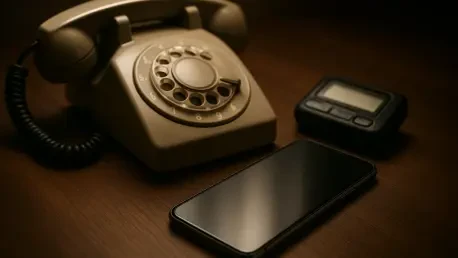

Earlymobilecommunicationrequiredindividualstocarryloosequartersandhuntforpublicpayphonesjusttorespondtoasimplethreedigitcodeonanumericpager. This specific one-way loop defined the late twentieth-century mobile experience, where the arrival of a “beep” acted as a summons to find a tethered connection to the world. Before the ubiquity of high-speed data, the pager was a revolutionary tool that untethered people from their desks, even if only by a short digital leash. These devices were initially the domain of emergency responders and high-level executives, but they rapidly trickled down into the hands of the general public, particularly the youth. The psychological shift was profound; for the first time, individuals were reachable regardless of their location, creating a new social expectation of availability. However, the lack of a return channel meant that a page was often an ambiguous signal, requiring a physical search for a telephone. This era was characterized by a distinct blend of mobility and stationary dependency that modern users rarely encounter.
From Numeric Codes to Digital Shorthand
The Pager Code Phenomenon
The numeric limitations of early pagers did not stifle expression; rather, they catalyzed a new form of digital linguistics that bypassed the need for expensive and time-consuming return calls. Since the screens could only display digits, users developed an intricate lexicon of numeric codes that translated into complex phrases, such as using “143” to signify the number of letters in “I love you” or rotating the device to read “07734” as “hello.” These codes became a private language among friends and partners, allowing for emotional check-ins and logistical updates without ever uttering a single word. This phenomenon demonstrated a fundamental truth about human interaction: when faced with technical constraints, users will always innovate to maximize the emotional bandwidth of the medium. These sequences were the spiritual ancestors of today’s emojis and stickers, serving as a shorthand that conveyed tone and intent through a very narrow pipe. This reliance on coded brevity laid the groundwork for the future of rapid, silent communication.
Technical Constraints: Social Innovation
Beyond the simple exchange of numbers, the pager era introduced a specific social etiquette and a level of urgency that shifted how people perceived time and distance. Receiving a page was an interruption that demanded immediate cognitive processing, as the recipient had to weigh the importance of the sender against the availability of a nearby landline. In professional settings, this facilitated rapid response times, but in social spheres, it fostered a sense of hyper-connectivity that was previously unknown. The scarcity of characters meant that every transmission was highly intentional, contrasting sharply with the continuous and often trivial stream of data seen in modern applications. This period also highlighted a growing divide between those who were “on call” and those who remained unreachable, eventually leading to the mass adoption of mobile technology across all demographics. The pager proved that there was a massive, untapped demand for discrete messaging, even if the technology to respond instantly was not yet available to the general public.
The Modern Shift Toward Multimedia
The Rise of SMS: Multi-Tap Entry
The transition to the first generation of mobile phones introduced the Short Messaging Service, yet the hardware limitations of the time continued to shape how language was used. Devices like the Nokia 2110 or the 3310 series utilized standard twelve-key numeric pads, which forced users into a grueling process known as multi-tap entry to select individual letters. To type a simple word, a user had to press the same key multiple times in rapid succession to cycle through the alphabet. This physical labor, combined with the strict 160-character limit imposed by early cellular networks, made brevity a necessity rather than a choice. Consequently, acronyms like “BRB” and “LOL” became standardized parts of the lexicon to save time and reduce physical strain on the thumbs. These linguistic shortcuts were born out of a genuine need for efficiency, and they have remained so deeply ingrained in digital culture that they continue to dominate text-based communication even on the sophisticated high-speed devices used throughout 2026.
Predictive Text: The QWERTY Transition
As hardware evolved, the introduction of T9 predictive text and eventually full physical keyboards on devices like the BlackBerry significantly reduced the friction of sending a message. This technological leap allowed users to type at speeds approaching those of a traditional computer, facilitating longer and more nuanced conversations. The move from physical buttons to the dynamic glass screens of the smartphone era further accelerated this trend, making messaging the primary mode of global interaction. This shift was not merely about speed; it represented a fundamental change in how people maintained social bonds, moving away from synchronous voice calls toward asynchronous, text-heavy exchanges. The convenience of being able to compose a message at one’s own pace and review it before sending changed the nature of interpersonal diplomacy. Despite the removal of character limits, the habits formed during the era of multi-tap entry persisted, becoming a permanent fixture of how modern society communicates.
The Multimedia Revolution: Final Considerations
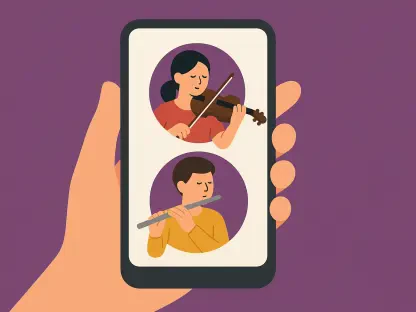
In 2026, the landscape of texting expanded into a multi-sensory environment where plain text was often supplemented by high-definition video and augmented reality. This multimedia revolution, which began with the integration of cameras, turned every message into visual storytelling. However, as communication became complex, users navigated new challenges related to digital privacy and focus. Organizations and individuals prioritized end-to-end encryption and metadata protection to ensure that private conversations remained secure. Looking forward, it was advisable to employ digital well-being tools to manage notifications and to favor platforms that respected user data sovereignty. The evolution from plastic pagers to advanced smartphones demonstrated that while the medium transformed from digits to data-heavy streams, the core human desire for efficient and discreet connection remained the primary driver of progress. The lessons learned from the 90s still informed modern digital design and emphasized the importance of clarity in a world of infinite connectivity.