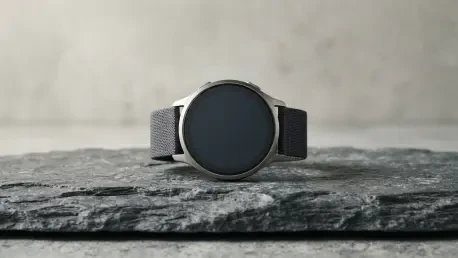

Industry analysts point out that while the 6.9mm measurement likely excludes the sensor array protrusion, it still represents a significant advancement in ergonomic design for high-performance wearables. This strategic pivot highlights a growing consumer demand for devices that provide flagship-level capabilities without the physical burden of traditional, heavy hardware. By focusing on a “thin-and-light” architecture, the engineering team has addressed a long-standing grievance among fitness enthusiasts and health-conscious professionals who find larger chassis cumbersome during intensive routines or throughout the night. The shift toward a 6.9mm profile suggests a broader industry trend where sleekness is no longer seen as a compromise but as a premium feature in its own right. This development aims to bridge the gap between minimalist fitness trackers and feature-rich smartwatches, offering a solution that prioritizes wearer comfort without sacrificing the robust functionality that power users expect.
Engineering the Ultra Slim Profile
The structural foundation of the device rests on a specialized titanium-alloy unibody, a choice that balances high-tensile strength with a remarkably low mass. Titanium has long been favored in the aerospace industry for its resilience, and its application here ensures that the 6.9mm frame remains rigid under pressure. Unlike traditional stainless steel or aluminum, this alloy provides superior resistance to dents and scratches while maintaining a sophisticated aesthetic that appeals to luxury consumers. This specific material selection is vital because a thinner chassis is inherently more susceptible to bending or warping if not reinforced with high-quality components. By utilizing a unibody construction, the design minimizes the number of potential failure points, resulting in a cohesive structure that feels solid despite its slender appearance. This engineering choice reinforces the idea that premium wearables can be both delicate in form and exceptionally durable in function.
Beyond the choice of materials, the ergonomic refinement of the device focuses on the interface between the watch and the human wrist. Traditional smartwatches often suffer from a top-heavy design that leads to shifting during high-intensity workouts, which can negatively impact the accuracy of optical sensors. The reduced thickness of the Watch Air addresses this issue by lowering the center of gravity, ensuring a more stable and flush fit against the skin. This stability is crucial for athletes who require precise data during running or cycling, as well as for users who track their sleep cycles and find larger devices intrusive. Furthermore, the lightweight nature of the titanium alloy means that the device remains comfortable over extended periods, reducing wrist fatigue. This meticulous attention to physical dimensions reflects a deeper understanding of user behavior, where the best technology is that which the wearer can effectively forget they are wearing until it is needed.
Technology Integration and Future Outlook
Complementing the architectural slimness is a sophisticated 1.92-inch AMOLED LTPO display that dynamically adjusts refresh rates to conserve power. This efficiency is paramount for maintaining battery life within a 6.9mm frame, where internal volume is strictly limited. Despite these space constraints, the device incorporates a rotating crown and multifunction buttons, ensuring that tactile navigation remains a core feature for active users. The screen itself is protected by curved sapphire glass and achieves a peak brightness of 3,500 nits, making it exceptionally legible in direct sunlight. Furthermore, a full suite of health sensors, including heart rate monitoring and ECG functionality, is integrated into the chassis. These components are meticulously arranged to ensure high data accuracy without adding bulk to the device. By housing these advanced tools in such a slender profile, the engineering team has successfully maintained the functionality of a professional-grade smartwatch while prioritizing a lightweight and discreet user experience.
The evolution of wearable ergonomics reached a significant milestone with this development, as the industry effectively moved toward a future where discreet, high-performance tools became the standard. Looking back, the success of this ultra-slim architecture encouraged other manufacturers to prioritize internal component miniaturization and advanced power management. Consumers who sought a balance between aesthetic elegance and technical depth found the integration of LTPO displays and high-brightness panels to be the new benchmark for the industry. For those looking to adopt this technology, prioritizing devices that offered a titanium-alloy build ensured a longer lifespan and better resistance to daily wear. Ultimately, the industry moved toward a future where the distinction between a fashion accessory and a medical-grade monitor became increasingly blurred, setting a standard for comfort that future generations of wearables were compelled to follow. This strategic shift successfully bridged the gap between luxury design and utility.