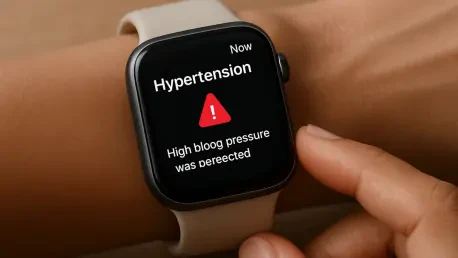

A quiet revolution is currently unfolding on the wrists of millions of people who remain entirely unaware that their blood vessels are signaling a silent, internal struggle against rising pressure. This hidden physiological battle, known as hypertension, represents one of the most significant hurdles in modern medicine due to its ability to remain undetected for years. Apple’s health division, guided by the expertise of figures such as Steve Waydo and Dr. Rajiv Kumar, recognized that the most dangerous health conditions are often the ones that provide no physical warning signs. By leveraging the persistent presence of the Apple Watch, the company endeavored to transition a sophisticated piece of consumer electronics into a proactive health monitor capable of identifying this “silent killer” long before it culminates in a cardiovascular emergency.
The core philosophy driving this endeavor is the democratization of health data, moving it from the sterile environment of a clinic into the hands of the individual. Nearly half of all adults in the United States currently live with some form of hypertension, yet a staggering fifty percent of those individuals are oblivious to the strain their hearts endure daily. The development team understood that the key to addressing this crisis lay in visibility. By creating a system that illuminates these invisible signals, Apple sought to provide a continuous safety net, transforming the user’s relationship with their own biology from reactive concern to proactive management.
Shedding Light on the Cardiovascular Signals You Can’t Feel
Hypertension is a uniquely deceptive condition because the body often adapts to high pressure without triggering the nervous system’s pain receptors. While a person might feel energetic and healthy, the high-velocity blood flow is systematically weakening the structural integrity of their arteries. Apple’s health researchers realized that to combat such an elusive foe, they needed a tool that was as constant as the condition itself. The Apple Watch was the ideal candidate for this role, providing a platform for long-term physiological monitoring that traditional medical tools could not match.
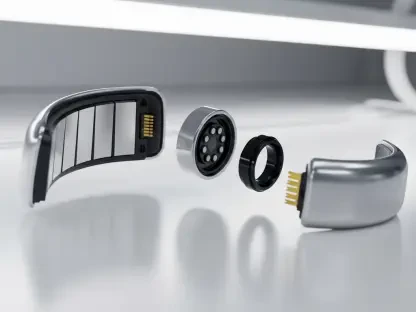
The transition from a wearable device that tracks steps to one that monitors complex cardiovascular trends required a fundamental shift in how biometric sensors are utilized. The engineering team moved beyond basic heart rate tracking to analyze the subtle morphology of the pulse wave. This involved looking at the minute changes in how light is absorbed by the skin as blood pulses through the wrist. By focusing on these nearly imperceptible signals, the technology began to uncover the narrative of a user’s heart health, revealing patterns that occur during sleep, exercise, and moments of rest, which are often the most telling indicators of underlying vascular stress.
The Clinical Necessity of Moving Beyond Snapshot Diagnostics
The traditional medical approach to blood pressure involves the use of an inflatable cuff, providing a measurement that is essentially a frozen moment in time. While these snapshot diagnostics are valuable, they are prone to significant limitations, such as “white coat hypertension,” where a patient’s stress in a clinical setting causes a temporary spike in pressure. Conversely, some individuals experience “masked hypertension,” where their readings appear normal in a doctor’s office but remain dangerously high throughout the rest of the day. Apple’s initiative was designed to bridge this diagnostic gap by providing a longitudinal view of cardiovascular health that persists outside the four walls of a clinic.
When the heart must exert excessive force to move blood through the vascular system, it creates a persistent back pressure that gradually damages organs, including the kidneys, brain, and the heart itself. Because these changes are frequently asymptomatic, infrequent clinical checks often miss the nuances of daily life that contribute to a person’s true risk profile. By monitoring signals across various contexts—such as the recovery period after a brisk walk or the steady rhythm of a deep sleep—the Apple Watch offers a comprehensive data set that captures the reality of a user’s physiological state. This continuous window into the heart ensures that temporary fluctuations do not overshadow long-term trends, allowing for a more accurate assessment of cardiovascular well-being.
A Decade of Innovation: Engineering the Apple Watch Health Ecosystem
The path to a functional hypertension notification system was not a swift achievement; it was a decade-long journey characterized by sensor refinement and intensive data modeling. Starting from the current landscape in 2026 and looking back over the development cycle, the engineering team had to overcome immense technical hurdles to ensure clinical-grade reliability. In collaboration with the University of Michigan, the Apple Heart Study provided a massive repository of clinical data, serving as the “ground truth” necessary to train the sophisticated machine learning architectures that power the watch’s sensing capabilities. These models are designed to process thousands of independent variables within a single cardiovascular signal, identifying the specific “signatures” of high pressure.
The development process utilized a rigorous “rinse and repeat” cycle of testing and refinement. Developers were not just looking for signals in a quiet laboratory; they had to account for the “noisy” realities of daily human life. This meant training the algorithms to distinguish between the cardiovascular signals of hypertension and the normal physiological responses to movement, sweat, temperature changes, and even the way a watch strap is tightened. To ensure the tool was equitable and effective for a global population, the team prioritized diverse demographic data, testing the technology across different ages, skin tones, and physical activity levels. This commitment to inclusivity ensured that the notifications remained accurate for every user, regardless of their background or lifestyle.
Scientific Rigor and Expert Perspectives on Diagnostic Trust
A central challenge for the clinical researchers at Apple was striking a delicate balance between sensitivity and specificity. In the world of medical alerts, high sensitivity ensures that almost every case of a condition is caught, but it often leads to a high rate of false positives. According to Dr. Kumar, the team recognized that frequent, inaccurate alarms would lead to “alert fatigue,” causing users to ignore the device or become unnecessarily anxious. Therefore, the strategic priority was to ensure that every notification was “rock-solid.” By tuning the system to minimize false alarms, Apple sought to build a foundation of diagnostic trust where a notification is viewed as a significant and reliable indicator of a health issue.
This emphasis on accuracy has been validated by a growing body of evidence from the medical community. Clinicians have noted that when patients present data from their wearable devices, it facilitates a more informed and data-driven conversation about treatment plans. There have been numerous accounts of individuals who, prompted by a notification, sought medical attention only to discover they were in the early stages of severe hypertension. These firsthand reports underscore the life-saving potential of the technology. The goal was never to replace the physician but to empower the patient with the information necessary to seek professional care at the right time.
Practical Strategies for Integrating Wearable Data into Healthcare
While the notification system is a powerful technological feat, Apple emphasizes that it serves as a catalyst for professional medical consultation rather than a final diagnosis. The data collected by the watch is intended to be a tool for starting a conversation with a healthcare provider. Users are encouraged to view these notifications as an invitation to investigate their long-term physiological trends more deeply. To maximize the effectiveness of this technology, individuals should maintain consistent wear patterns, allowing the machine learning models to establish a stable baseline of their unique cardiovascular rhythm.
Integration into a broader health routine is the most effective way to utilize these wearable insights. By combining hypertension notifications with other metrics like activity tracking and sleep quality monitoring, users can gain a holistic understanding of how their lifestyle choices impact their heart health. This integrated approach allows for a more nuanced view of well-being, where a user can see the direct correlation between increased physical activity and improved vascular signals. The technology acts as a silent partner in health, providing the necessary prompts to ensure that the “invisible” aspects of cardiovascular health remain at the forefront of a person’s wellness strategy.
In the final assessment of this technological journey, the team looked back at how the integration of long-term physiological monitoring and sophisticated machine learning successfully addressed a pervasive global health challenge. The engineers and clinicians observed that by making the invisible metrics of the heart visible, they empowered millions to take control of their cardiovascular futures. This development cycle proved that when consumer technology was held to the standards of clinical rigor, it served as a bridge between daily life and medical intervention. Ultimately, the project moved the needle on personal health management, ensuring that the warning signs of the “silent killer” were no longer ignored but were instead met with early and informed action. These advancements laid the groundwork for a future where wearable technology functioned as a constant, reliable guardian of human vitality.