
The transition to iOS 27 has introduced unprecedented functionality to the mobile ecosystem, yet it has also brought specific challenges for certain hardware configurations during the installation process. When an iPhone becomes completely unresponsive after a major firmware update, the immediate assumption is often that the internal logic board or battery has suffered a catastrophic failure. However, in the vast majority of cases occurring in 2026, the device is simply caught in a state of software suspension where the display driver or the bootloader fails to initialize properly. This phenomenon, often referred to as a “bricked” state, can be triggered by interrupted data streams during the update or a mismatch between the new kernel and existing system cache. To resolve this without seeking immediate professional repair, users must engage in a series of systematic diagnostic and recovery steps designed to bypass the software hang. Understanding the difference between a hardware defect and a frozen operating system is the first critical step toward reviving the device. By carefully observing the device’s reaction to power inputs and hardware-level commands, one can determine whether the problem requires a simple restart or a more complex system-level reinstallation.
- Initial Diagnostic Checks: Distinguishing Hardware From Software
Before diving into technical restoration methods, it is imperative to conduct a basic physical assessment to determine if the phone is actually powered off or if the display assembly itself has failed. One of the most effective ways to confirm system activity is to manipulate the external hardware switches or test the tactile feedback mechanisms. By toggling the Silent switch or connecting the device to a verified 20W power source, a user may detect a slight vibration or hear the distinctive charging chime. If these sensory cues are present despite a completely black screen, the issue is localized to the display driver or the hardware screen assembly rather than the central processing unit. This distinction is vital because a phone that is “awake” but dark requires a different troubleshooting path than a phone that is genuinely unresponsive to all power inputs. If the device remains silent and still during these tests, the troubleshooting must proceed under the assumption that the iOS 27 update has halted the core system processes.
A secondary but equally crucial diagnostic step involves a thorough inspection for any signs of physical or environmental damage that might have been exacerbated by the update’s high thermal demands. Major system updates like iOS 27 exert significant stress on the battery and the internal thermal management systems, which can cause pre-existing vulnerabilities to manifest as a total shutdown. If the iPhone has been recently exposed to liquid ingress or has suffered a significant impact, the heat generated during the installation process could have compromised a weakened seal or a loose internal connector. In such scenarios, attempting to force the phone back to life with a high-wattage charger could potentially cause further damage to the sensitive logic board components. If physical damage is visible or suspected, the most prudent course of action is to avoid repeated power-on attempts and seek a professional hardware inspection. However, if the device was in pristine condition prior to the software update, one can proceed with confidence to the manual override procedures to clear the frozen memory.
- Method 1: Performing a Forced Manual Hardware Restart
The most immediate solution for a device that has frozen during the final stages of the iOS 27 installation is to initiate a forced manual restart. This procedure is designed to cut power to the processor at the hardware level, which effectively clears the frozen memory and forces the system to reboot from scratch. Unlike a standard shutdown, which requires the software to be functional, a forced restart bypasses the operating system entirely to reset the hardware logic. This is often the only way to break out of a kernel panic or a “black screen of death” where the phone is stuck in a low-power loop. Because this method does not interact with the storage partition, it is entirely safe for personal data and serves as the primary tool for resolving minor software conflicts that arise during the initial boot sequence of a new operating system version.
To execute this sequence correctly, one must follow a precise timing protocol that has been standardized across modern iPhone models. First, quickly press and let go of the Volume Up key. Second, quickly press and let go of the Volume Down key. Third, press and keep holding the Side button for approximately 20 to 30 seconds. It is critical to ignore any prompts that might appear on the screen and continue holding the button until the Apple logo finally appears. Only when the logo is visible should the Side button be released. This extended hold time is necessary for the system to register the hardware-level override command. If the logo fails to appear after 30 seconds, it may indicate that the battery is too depleted to initiate the boot sequence or that the system requires a deeper level of intervention through a wired connection.
- Method 2: Implementation of a Deep Charging Cycle
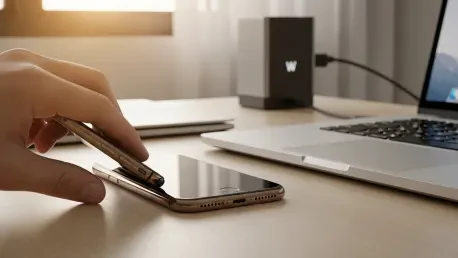
When an iPhone remains unresponsive even after a forced restart attempt, it is possible that the battery voltage has dropped below the critical threshold required to power the display. During the iOS 27 update, the device performs millions of operations that consume power at an accelerated rate, and if the battery was not sufficiently charged, it might have entered a deep discharge state. To address this, one must first ensure that the connection point is free of any physical obstructions. Use a wooden or plastic toothpick to gently remove lint or dust from the charging port, being careful not to bend the internal pins. Once the port is clean, plug the phone into a 20W or higher wall adapter using a certified cable. It is essential to avoid using computer USB ports for this particular recovery step, as they often do not provide the necessary amperage to wake a dormant battery.
After connecting the device to a reliable power source, one must wait patiently for at least 60 minutes while leaving the phone completely undisturbed. During this period, the power management integrated circuit works to stabilize the battery cells and reach a baseline charge that allows the screen to illuminate. Even if the device shows no immediate sign of life, the internal components are slowly accumulating the energy needed for a full system boot. Once the hour has passed, while the phone remains plugged into the wall adapter, the user should once again attempt the forced restart sequence involving the Volume Up, Volume Down, and Side button. This combination of a deep charge and a hardware-reset command often clears the power-related deadlock and allows the device to finally display the Apple logo and resume its normal operation.
- Method 3: Utilizing Specialized Repair Software Solutions
For users who find the manual button sequences difficult to time correctly or who are concerned about potential data loss, third-party repair tools offer a more automated and user-friendly alternative. Applications such as Tenorshare ReiBoot have been specifically updated for the 2026 technology landscape to handle the unique error codes and system architecture of iOS 27. These programs function by communicating with the device’s internal bootloader via a USB connection, allowing them to bypass frozen software layers that manual buttons might not be able to reach. This approach is particularly effective when the phone is stuck on a black screen but is still technically capable of communicating with a computer. By using a specialized interface, the software can guide the device into the correct mode and apply targeted patches to the system files without the need for a full wipe.
The process for using such software is designed to be straightforward and accessible for non-technical users. First, download and open the repair application on a computer and plug in the unresponsive iPhone using a high-quality data cable. Second, choose the safe repair option, often labeled as “Standard Repair,” which focuses on fixing the operating system while strictly preserving all personal files and settings. Third, allow the program to identify the specific device model and download the necessary iOS 27 firmware files directly from the official servers. Finally, click the start button and wait for the progress bar to complete the installation. It is imperative not to unplug the phone during this time, as any interruption in the data flow could result in a permanent software failure. This method provides a high success rate for resolving boot loops and unresponsive states that are otherwise difficult to fix through manual intervention.
- Methods 4 and 5: Recovery and DFU Mode Restoration
If the iPhone is experiencing a boot loop, where the Apple logo appears briefly before the screen goes dark again, the software environment may be too corrupted for a standard restart. In this situation, the device must be placed into Recovery Mode to rewrite the operating system. To start, connect the iPhone to a Mac or a PC equipped with the latest version of the Apple Devices app. Trigger the recovery screen by pressing Volume Up, then Volume Down, and then holding the Side button until a “cable and computer” icon appears on the phone’s display. Once the computer detects the device, a window will pop up offering several choices. One should select the Update option, as this attempts to reinstall the iOS 27 framework without erasing any data. This process can take some time, and if it exceeds 15 minutes, the phone may exit Recovery Mode, requiring the user to repeat the button sequence.
When all other methods fail to produce a functional device, the final resort is a full factory reset through the Device Firmware Update (DFU) mode. This is the most advanced restoration step possible because it completely wipes the device and reinstalls the firmware from the ground up, deleting all personal data in the process. To enter DFU mode, link the iPhone to a computer and quickly press Volume Up, then Volume Down. Hold the Side button for 10 seconds until the screen turns black, then, while still holding the Side button, press and hold the Volume Down button for 5 seconds. Release the Side button but continue holding the Volume Down button for an additional 10 seconds. If done correctly, the screen will remain black, but the computer will state it has found a device in recovery mode. At this point, clicking Restore iPhone will initiate the complete wipe and reinstallation of the system, which is the ultimate solution for fixing deep-seated software corruption.
- Final Insights: Strategic Steps for Long-Term Device Reliability
The restoration of an unresponsive device after the iOS 27 update was successfully achieved by many users who followed these systematic protocols. In most instances, the initial fear of hardware failure was replaced by the relief of seeing the familiar interface once the software conflict was resolved. These steps proved that even the most advanced smartphones in 2026 still rely on fundamental hardware-level overrides to navigate complex firmware errors. Once the device was back in an operational state, it became clear that maintaining a clean charging port and using high-wattage power supplies were essential habits for preventing future power-related hangs. The experience highlighted the importance of having professional-grade repair software or a reliable computer connection as a backup for the increasingly complex update cycles that define the current mobile era.
Moving forward, the primary takeaway for any iPhone user was the necessity of maintaining current backups before initiating major system changes. While the recovery tools provided a path back to functionality, the risk of data loss during a DFU restoration remained a significant concern for those without recent cloud or local copies of their information. It was also observed that devices with healthy batteries and ample storage space tended to navigate the iOS 27 update with fewer complications, suggesting that pre-update maintenance is just as important as post-update troubleshooting. By keeping the device in peak physical condition and utilizing the automated repair options available, users were able to ensure their hardware remained resilient against the evolving demands of modern software. Taking these proactive measures helped stabilize the ecosystem and reduced the frequency of unresponsive states across the user base.