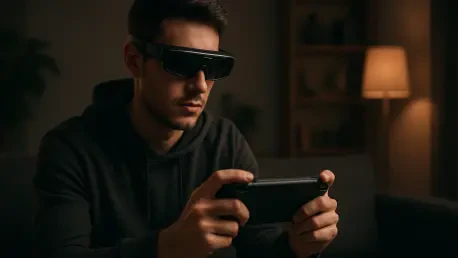

The software’s current limitation to 3DoF means users can experience rotation-based VR content but lack the positional tracking found in 6DoF systems. Portable gaming consoles like the Steam Deck have fundamentally changed how users interact with their digital libraries, yet the dream of a seamless, high-fidelity virtual reality experience on these handhelds has often remained just out of reach for many enthusiasts. This technological gap has prompted independent developers to explore creative solutions for hardware like the Xreal 1S glasses. By utilizing the xreal-linux driver, enthusiasts can now transform their augmented reality peripherals into functional SteamVR headsets within a Linux environment. This development represents a significant milestone in 2026, as community-driven projects continue to outpace official software releases in terms of niche feature implementation. The driver focuses on tracking head rotation through internal inertial sensors, providing an immersive entry point into the SteamVR ecosystem while maintaining a lightweight software footprint that respects the resource constraints of portable devices.
Engineering High-Frequency Data Streams
Protocol Implementation for Virtual Ethernet Links
To achieve the necessary responsiveness for virtual reality, the xreal-linux project implements a sophisticated communication layer between the glasses and the host machine. The hardware interfaces with the Linux system via a standard USB 2.0 connection, which the driver then uses to establish two distinct virtual Ethernet links. This architecture is crucial for managing the heavy flow of information required for low-latency head tracking. Specifically, the software monitors port 52998 to capture a high-frequency stream of data from the internal inertial measurement unit. These records arrive at a rate of approximately 1,400 per second, ensuring that even minor head movements are registered with precision. By treating the glasses as a network-attached sensor array, the driver circumvents some of the limitations inherent in traditional peripheral protocols. This method allows for a steady transmission of yaw, pitch, and roll data, which is essential for maintaining the illusion of a fixed virtual world during a session.
Resolution Scaling and Stereo Rendering Modes
Beyond the tracking of motion, the driver must also manage the visual output to ensure compatibility with the stereoscopic requirements of SteamVR. When a virtual reality session begins, the software triggers a transition in the device’s display profile, moving away from standard monitor mirroring toward a specialized side-by-side mode. This configuration utilizes a total resolution of 3840×1080, which is effectively split across the two internal displays to provide a unique perspective for each eye. This creates the necessary depth cues for a 3D environment while maintaining the clarity expected from high-end AR hardware. The driver’s ability to automate this switch is a key feature, as it removes the need for manual configuration of display settings within the Linux desktop environment. Consequently, the Xreal 1S can act as a native VR headset, rendering the SteamVR dashboard and various compatible titles with the appropriate aspect ratios and field-of-view adjustments required for maximum immersion.
Analyzing Compatibility and Hardware Restrictions
Graphics Architecture and Software Environment Demands
While the progress made in 2026 is impressive, the xreal-linux driver currently operates within a relatively narrow hardware and software ecosystem. The project is primarily optimized for devices utilizing AMD graphics processors, making it a natural fit for the Steam Deck but leaving users of Nvidia and Intel hardware in an experimental or unsupported state. Furthermore, the software requires a specific Linux environment to function correctly, with the Bazzite distribution being the primary target during this stage of development. Operating the glasses in desktop mode is a necessity, as the driver does not yet support the Steam Deck’s dedicated Game Mode or the Flatpak version of the Steam client. These restrictions highlight the complexities of developing custom drivers for highly integrated systems. Users must be willing to navigate a more traditional desktop interface and manage AppImage binaries, which may deter those looking for a plug-and-play experience similar to that of official console peripherals.
Calibration Challenges and Future Sensor Integration
The initial testing phases revealed that certain hardware features remained untapped, such as the integrated 6DoF camera, which stayed inactive during standard SteamVR sessions. Additionally, developers encountered persistent issues with yaw drift because the magnetometer calibration had not been fully resolved at the time of release. Despite these hurdles, the community provided actionable pathways for future refinement, suggesting that users who prioritized stability should focus on calibrating their environments to minimize magnetic interference. Moving forward, the project demonstrated that reverse engineering could successfully unlock proprietary hardware for broader use cases. Enthusiasts were encouraged to contribute sensor logs and GPU performance data to help expand compatibility across a wider range of Linux distributions. The successful implementation of 3DoF tracking served as a foundational step, proving that portable AR glasses possessed the latent capability to function as versatile VR tools in a desktop environment.