
The landscape of personal computing is undergoing its most radical transformation since the introduction of the multi-touch screen as Apple prepares to fundamentally dismantle and rebuild its iconic Siri assistant. For years, the digital helper has lagged behind the sophisticated generative capabilities seen in newer platforms, leading to a mounting sense of frustration among loyal users who expect seamless intelligence from their premium devices. In response to this widening technological gap, internal reports and supply chain leaks suggest that the upcoming iOS 27 update will introduce a version of Siri that operates primarily as an advanced chatbot rather than a simple voice-activated command tool. This shift represents a seismic change in corporate strategy, moving away from a decade of isolated development toward a collaborative ecosystem that integrates third-party models to provide real-time reasoning and multi-step problem solving. This initiative aims to restore the iPhone’s status as a premier AI device while significantly enhancing the daily productivity of its global user base through superior contextual awareness.
Redesigning the iPhone Interface for AI
The anticipated software update introduces a dramatic reorganization of the iPhone user interface to prioritize artificial intelligence as the primary method of navigation and interaction. Central to this redesign is the repurposing of the Dynamic Island, which will now serve as a permanent hub for AI status and activity, featuring fluid animations that signal when the assistant is processing complex background tasks without obstructing the user’s primary view. Furthermore, a new “Search or Ask” panel will be integrated into the system, accessible via a downward swipe from the top center of the screen, essentially merging traditional search functions with conversational AI. This adjustment is so fundamental that it requires the relocation of the notification center to the top-left corner, a decision that underscores how deeply Apple intends to weave AI into the daily tactile experience of using a smartphone. This shift acknowledges that generative interactions are becoming as essential as basic notifications, requiring a dedicated space within the primary visual real estate of the device to remain accessible at all times.
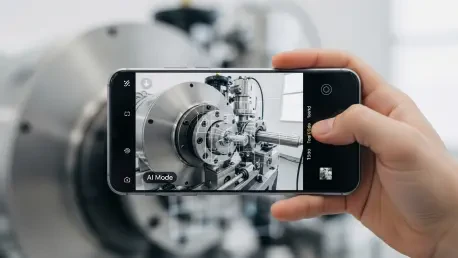
Beyond the home screen, the integration of intelligent features extends deep into the core system applications, most notably within the redesigned Camera interface. A dedicated “AI Mode” is set to replace current rudimentary visual lookup tools, allowing users to capture images and immediately route them to the chatbot for sophisticated analysis, such as identifying complex machinery or summarizing text found in physical documents. This functionality is expected to leverage a combination of on-device processing and cloud-based reasoning to provide instant answers to visual queries, effectively turning the camera into a bridge between the physical world and digital intelligence. By embedding these controls directly into the primary gestures and hardware inputs, the system anticipates a transition toward wearable technology, such as smart glasses or audio-only interfaces. This strategy ensures that the interface remains intuitive while simultaneously expanding the scope of what a handheld device can perceive and interpret for its user in real time, moving beyond simple photography toward true environmental understanding and interaction.
The Billion-Dollar Partnership: Integration of Google Gemini
In a move that surprised many industry observers who have long followed the company’s insistence on vertical integration, the new Siri will reportedly be powered by Google Gemini under a massive licensing agreement. Strategic insiders suggest that this deal involves an annual payment of approximately one billion dollars, reflecting the immense cost and technical difficulty of maintaining a top-tier large language model in-house. While the company continues to develop its own proprietary models, the immediate need to provide competitive reasoning capabilities necessitated this partnership with a former rival. This arrangement allows the assistant to handle complex queries that require deep contextual understanding, a feat that previous iterations of the software struggled to achieve consistently. By outsourcing the core logical engine to Google, the focus shifts toward optimizing the user experience and ensuring that the privacy-preserving local hardware can interface smoothly with massive cloud-based data structures, maintaining a balance between high-performance intelligence and corporate security.
Although Gemini serves as the primary backbone, the new architecture is designed to support a multi-agent environment where users can choose between various artificial intelligence providers. This “choice of agents” strategy is intended to prevent a total reliance on a single external partner and offers the flexibility to route specific specialized tasks to models like Anthropic’s Claude or OpenAI’s ChatGPT. However, this open-ended approach has not been without significant tension, as reports indicate that earlier attempts at integration led to friction between the technology providers regarding branding and subscription visibility. OpenAI, in particular, has reportedly voiced concerns that the system settings were designed in a way that obscured their platform’s unique contributions, potentially hindering their ability to convert free users into paid subscribers. Balancing these diverse corporate interests while maintaining a cohesive and polished user experience remains one of the most significant engineering and diplomatic hurdles for the upcoming software rollout, as the company seeks to manage multiple competing AI interests.
Overcoming Legal Challenges: Rebuilding Consumer Confidence
This aggressive push toward a chatbot-centric ecosystem follows a challenging period of legal scrutiny and public relations setbacks regarding previous marketing claims. The company recently agreed to a $250 million class-action settlement to resolve allegations that it misled consumers about the actual functional state of its initial artificial intelligence features during the launch of the iPhone 16. Plaintiffs argued that the marketed capabilities were largely aspirational and not fully operational at the time of purchase, creating a “trust gap” that harmed the brand’s reputation for reliability. Consequently, the development of the iOS 27 features is being treated as a critical corrective measure to prove that the company can deliver on its promises. The focus has shifted from high-concept marketing to demonstrating tangible utility in everyday tasks, such as managing calendars through conversational intent or drafting complex documents based on brief voice prompts. Success in this area is essential for reclaiming the narrative of leadership in a field where consumer expectations have reached an all-time high.
Rebuilding this trust requires more than just functional software; it requires a transparent demonstration of how the new Siri handles sensitive personal data within a third-party framework. Critics have pointed out that using Google Gemini as a primary engine could potentially compromise the long-standing commitment to user privacy if the data handoff is not managed with extreme precision. To address these concerns, the redesigned system will reportedly utilize an advanced encryption layer that strips personal identifiers from queries before they reach external servers, ensuring that the conversational intelligence remains helpful without becoming intrusive. This technological safeguard is vital for convincing a skeptical public that the convenience of an advanced chatbot does not come at the cost of personal security. As the project nears its final stages of development, the emphasis is being placed on ensuring that every interaction feels both remarkably smart and inherently secure, thereby validating the hardware investments made by millions of users worldwide and setting a standard for future AI deployments.
Launch Details: Deployment and Hardware Constraints
The official introduction of this new AI-driven ecosystem is scheduled to take place at the Worldwide Developers Conference on June 8, 2026, marking a pivotal moment for the future of the platform. This event will provide developers with the necessary tools and APIs to begin integrating their own applications with the chatbot-first version of Siri, allowing for a robust ecosystem of third-party plugins before the general public release. The roadmap indicates a phased rollout, with developer betas launching immediately after the keynote and a public release following in September. This structured timeline is intended to provide several months of rigorous testing to ensure that the integration with Google Gemini remains stable under the massive load of millions of active users. During this period, the focus will remain on refining the multi-agent selection interface and ensuring that the new gesture-based search panels work flawlessly across various screen sizes and orientations, preparing the global market for a major shift in how mobile operating systems are perceived.
Despite the broad excitement surrounding the update, the advanced nature of these features imposes significant hardware requirements that will leave some long-time users behind. The full suite of conversational capabilities and on-device reasoning will likely be restricted to the iPhone 15 Pro, 15 Pro Max, and subsequent models from the iPhone 16 series onward. This “hardware floor” is a result of the high memory and processing demands of the neural engine required to run the local components of the AI system efficiently. While older devices may receive some superficial updates to the interface, the core experience of a persistent chatbot history and complex document summarization will remain exclusive to more modern silicon. This decision has sparked a debate about the longevity of mobile devices in the AI era, yet it also highlights the physical limitations of legacy hardware when confronted with the next generation of computing tasks. For those with compatible hardware, the upgrade represents a transition into a more interactive and anticipatory era of personal technology.
The Strategic Path Forward: Implications for the Ecosystem
The transition toward a chatbot-centric interface signaled a move that prioritized long-term utility over short-term hardware cycles by focusing on how users actually lived their digital lives. Engineers worked to ensure that the persistent conversation history allowed the system to learn from past interactions, creating a personalized digital assistant that genuinely understood the context of individual workflows. This evolution transformed the smartphone from a collection of isolated applications into a unified, reasoning companion capable of executing complex series of tasks across different software environments. By integrating these features into the core of the operating system, the developers established a new standard for how artificial intelligence should function within a closed hardware ecosystem. The focus remained on reducing the friction between human intent and machine execution, ensuring that the technology served to enhance productivity rather than simply acting as a novelty or a gimmick for the sake of marketing during the early stages.
Looking ahead, the successful deployment of these features established a foundation for future hardware innovations, such as smart glasses and augmented reality interfaces that rely on visual and auditory AI. The shift in gesture controls and the central role of the Dynamic Island prepared the user base for a world where screens might no longer be the primary way to interact with data. Stakeholders observed that the collaboration with external providers like Google and OpenAI was a necessary step in keeping the platform relevant while internal research teams caught up with the pace of global AI development. The project demonstrated that even the most insular companies must eventually embrace a more open and collaborative approach to solve the most difficult technical challenges of the modern era. As the software matured, it became clear that the goal was not just to build a better chatbot, but to redefine the very nature of personal computing in a way that was more intuitive, responsive, and ultimately more human-centric than anything that had existed before.