
While the 50MP main sensor delivers the most consistent exposure in the industry, the lack of hardware innovation highlights Google’s heavy reliance on software to bridge the performance gap. This philosophy has defined the Pixel lineage since its inception, yet in 2026, the strategy faces its most rigorous examination as global competitors transition toward massive one-inch optics and high-velocity silicon. The Pixel 11 Pro XL arrives not as a hardware revolution, but as a sophisticated refinement of the idea that a smartphone’s value is derived from its intelligence rather than its raw specifications. For the modern consumer, this creates a fascinating tension between the desire for cutting-edge components and the practical reality of a device that simply works with unparalleled intuition. Google is wagering that users will prioritize a seamless, AI-driven experience over the brute force of a spec sheet, even as the pricing moves further into the ultra-premium territory.
The arrival of the Pixel 11 Pro XL marks a transition point where the traditional metrics of mobile success—benchmarks and sensor sizes—are being challenged by generative utility. As mobile photography reaches a plateau in physical sensor development, the focus has shifted toward how that data is processed, interpreted, and manipulated. This device represents the culmination of Google’s efforts to integrate its Gemini AI deeply into the fabric of the operating system, creating a tool that is as much a personal assistant as it is a communication device. However, this software-heavy approach must still coexist within a physical frame that is subject to the laws of physics, heat dissipation, and battery chemistry. The result is a flagship that feels like a portal to the future of computing, even while its internal components occasionally struggle to keep pace with the ambitions of its designers.
Refined Design: Physical Innovations and Material Craftsmanship
Google has opted for a path of steady evolution in the aesthetic identity of the Pixel 11 Pro XL, maintaining the iconic horizontal camera bar that has become the brand’s visual signature. This design is not merely a branding exercise; it serves a profound functional purpose by providing a centered, stable base that prevents the phone from wobbling when placed on a desk or wireless charger. Furthermore, the bar’s placement at the top of the chassis naturally encourages a grip that keeps fingers well away from the lenses, solving an ergonomic frustration common in devices with large, circular camera housings. The transition between the camera bar and the rear glass is smoother than in previous iterations, suggesting a more mature manufacturing process that treats the module as an integrated part of the body rather than an appendage.
The build quality of the 11 Pro XL reflects its premium market positioning, featuring a polished aluminum frame that provides a rigid, high-end feel. Both the front and rear panels utilize Gorilla Glass Victus 2, ensuring that the device can withstand the rigors of daily use in 2026. The back glass is treated with a silky matte finish that is exceptionally effective at resisting oil and fingerprints, maintaining a clean look even after extended handling. This year, the color palette has been expanded to include Fog, Canyon, Obsidian, and a particularly striking Olive variant. The Olive model, which features muted green tones paired with gold-hued metal edges, offers a sophisticated aesthetic that manages to be distinct without being overly ostentatious, appealing to users who want their technology to reflect a sense of professional style.
Aesthetic Refinement: Developing a Premium Visual Identity
The ergonomic profile of the Pixel 11 Pro XL has been subtly adjusted to make its 6.8-inch frame more manageable for the average user. The corners of the aluminum frame are now more generously rounded, allowing the device to nestle comfortably in the palm without the sharp edges that sometimes plagued larger flagship designs. This focus on “hand-feel” is critical in an era where phones are used for hours on end, and Google has successfully balanced the need for a large screen with the necessity of comfort. The buttons offer a satisfying, tactile click, and the weight distribution feels more balanced than in the previous Pro XL model, reducing wrist fatigue during long photography sessions or gaming marathons.
Beyond the physical dimensions, the choice of materials in the 2026 lineup indicates a move toward long-term durability. The polished frame is not just for show; it acts as a heat sink for the internal components, while the reinforced glass panels are designed to minimize the impact of accidental drops. There is a sense of cohesion in the design that makes the Pixel 11 Pro XL feel like a singular, solid object rather than a collection of separate parts. This level of craftsmanship is essential for justifying a price tag that competes directly with established leaders in the luxury smartphone segment, ensuring that the device feels as expensive as it actually is from the moment it is removed from the box.
Integrated Functionality: The Return of the Notification LED
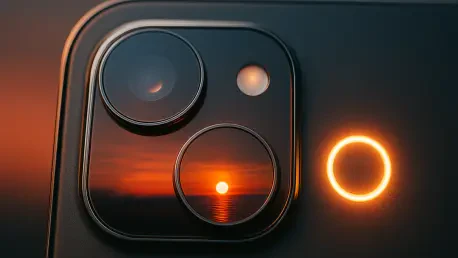
One of the most significant changes to the physical interface is the introduction of the HiLight system, which replaces the previous generation’s temperature sensor. HiLight consists of a ring of multi-colored LEDs surrounding the camera flash, acting as a modern interpretation of the classic notification light. This allows users to assign specific colors to different contacts or app categories, providing a visual cue about incoming information without needing to wake the primary display. It is a discreet solution for those who keep their phones face-down during meetings or dinners, allowing for a quick check of priority alerts without the distraction of a full screen lighting up.
The HiLight system also integrates with Google’s Gemini AI, pulsing with a distinct blue and purple glow when the assistant is active or processing a complex request. While some might find the AI visualization redundant, the return of a dedicated notification light is a major functional win for the Android community. Additionally, Google has standardized its Pixelsnap magnetic accessory system across the entire 11 series. This magnetic array allows for a wide ecosystem of chargers, wallets, and stands to snap securely to the back of the phone. By adopting a standard that mimics the convenience of MagSafe, Google has eliminated one of the few remaining friction points for users switching from the iOS ecosystem, making the Pixel 11 Pro XL a more versatile tool for daily life.
Display Excellence: Visibility and Technical Specifications
The front of the Pixel 11 Pro XL is dominated by a 6.8-inch Super Actua LTPO OLED panel that represents the current pinnacle of Google’s display technology. With a resolution of 1344 x 2992 and a pixel density of 486ppi, the screen is incredibly sharp, rendering text and high-resolution images with crystalline clarity. The LTPO backplane allows for a truly adaptive refresh rate that can drop as low as 1Hz for static content to save power and ramp up to 120Hz for fluid scrolling and high-frame-rate gaming. This dynamism is handled invisibly by the software, ensuring that the user always experiences maximum smoothness without having to manage settings manually, which is a hallmark of Google’s user-centric design philosophy.
A standout feature of this year’s display is its incredible peak brightness, which now reaches 3,600 nits. This specification is not just a laboratory curiosity; it has profound implications for real-world usability in the bright sunlight of 2026. High-dynamic-range content pops with life, and the screen remains perfectly legible even under direct midday sun, a feat that few competitors can match. This makes the Pixel 11 Pro XL an ideal tool for outdoor photographers who need to accurately judge exposure and color while on location. The color calibration is tuned for accuracy, providing a faithful representation of the digital world that serves as a reliable viewfinder for the sophisticated camera system housed just a few millimeters behind it.
Super Actua Technology: Defining the Visual Experience
The visual experience provided by the Super Actua panel goes beyond simple brightness and resolution metrics; it involves a sophisticated layer of processing that adjusts the display in real-time based on ambient lighting. Google’s improved ambient EQ technology ensures that whites always look neutral whether the user is under warm indoor lighting or cold fluorescent bulbs. This prevents the eye strain that can occur when a screen is mismatched with its surroundings, making the Pixel 11 Pro XL one of the most comfortable devices for long-term reading and content consumption. The contrast ratios are, as expected from high-end OLED, virtually infinite, providing deep blacks that make movies and night-mode interfaces look stunning.
Furthermore, the touch response on this display has been tuned for extreme precision, with a high polling rate that makes every swipe and tap feel instantaneous. This responsiveness is particularly noticeable when using the on-screen keyboard or navigating complex UI elements in creative apps. The bezels surrounding the display have been further reduced and are now perfectly symmetrical on all four sides, creating an immersive “all-screen” effect that maximizes the usable area without increasing the overall footprint of the phone. This commitment to visual symmetry and performance highlights Google’s intent to provide a hardware experience that is as refined and polished as the software it runs.
Technical Durability: Scratch Resistance and Surface Integrity
To protect this advanced display, Google has introduced a new anti-scratch coating that is claimed to be twice as durable as previous industry standards. This coating is fused directly into the Gorilla Glass Victus 2, creating a surface that is not only resistant to shattering from drops but also highly resilient against the micro-scratches that often accumulate from pocket sand or keys. Maintaining the integrity of the display surface is critical for maintaining the clarity of the Super Actua panel over the phone’s projected seven-year lifespan. Initial testing suggests that this new coating also has oleophobic properties that are more persistent than before, keeping the screen cleaner for longer periods between wipes.
Beyond its physical toughness, the display’s durability is also reflected in its resistance to “burn-in,” a historic concern for OLED panels. The Pixel 11 Pro XL utilizes a new generation of organic materials that are more stable at high brightness levels, ensuring that the UI elements do not leave permanent ghosts on the screen even after years of use. This is a vital consideration for a device that promises nearly a decade of software updates. The combination of high-end visual performance and robust physical protection ensures that the screen remains the center of the user experience, providing a consistent and beautiful window into the Google ecosystem.
Photography: The Pixel Secret Sauce and AI Integration
The camera system on the Pixel 11 Pro XL remains the device’s primary draw, utilizing a triple-lens configuration that prioritizes consistency and ease of use over complex manual controls. The 50MP main sensor serves as the anchor, delivering images with the hallmark “Pixel look”—a balance of deep shadows, bright highlights, and natural skin tones that avoids the over-processed appearance of many modern smartphones. While the sensor itself is not a massive one-inch unit, Google’s HDR+ algorithms have been refined to squeeze every bit of data from the pixels, resulting in photos that look professional right out of the camera. The shutter response is nearly instantaneous, allowing users to capture fleeting moments without the lag that often plagues high-resolution sensors.
Consistency across the lenses is another area where the Pixel 11 Pro XL excels. Whether shooting with the 50MP main, the 48MP ultrawide, or the 48MP 5x telephoto, the color science and dynamic range remains virtually identical. This uniformity is crucial for serious photographers who want their shots to look cohesive regardless of the focal length used. The telephoto lens, in particular, has seen a hardware bump with a larger 1/1.95-inch sensor, which significantly improves its performance in challenging lighting conditions. At 5x zoom, images are sharp and detailed, and even as the digital zoom moves toward the 120x “Pro Zoom” limit, the AI does an admirable job of cleaning up noise and stabilizing the frame to deliver usable results for long-distance documentation.
The Optical Suite: Engineering Stability Across Focal Lengths
Macro photography is handled by the 48MP ultrawide lens, which features an advanced autofocus system capable of locking onto subjects just centimeters away. This mode activates automatically as the phone nears an object, providing a seamless transition for users looking to capture intricate details of nature or textures. The ultrawide lens itself offers a 126-degree field of view, making it ideal for sweeping landscapes or tight architectural shots. While ultrawide lenses often suffer from distortion and softness at the edges, Google’s software corrections are remarkably effective at straightening lines and maintaining sharpness across the entire frame, ensuring that the wide perspective doesn’t come at the cost of image quality.
In low-light scenarios, the Pixel 11 Pro XL continues to lead the industry with its Night Sight technology. The combination of optical image stabilization and multi-frame synthesis allows the device to capture bright, clear images in near-total darkness without the need for a tripod. For the 2026 model, Google has improved the speed of Night Sight processing, meaning users no longer have to hold the phone still for several seconds to get a great shot. This efficiency extends to the telephoto lens as well, which can now produce clean nighttime images at 5x zoom that were previously impossible. This versatility ensures that the Pixel remains a reliable companion for photography in any environment, from a sun-drenched beach to a dimly lit restaurant.
Generative Utilities: Magic Capture and Artistic Control
The most innovative addition to the photography experience this year is Magic Capture. This feature allows the Pixel 11 Pro XL to record high-quality video while simultaneously using AI to analyze the footage and extract 50MP-equivalent still photos. By identifying peak moments—such as the height of a jump or a perfect smile—the software processes these frames to look like native high-resolution photographs, complete with the full HDR+ treatment. This effectively eliminates the anxiety of having to choose between filming a memory and photographing it. While currently limited to specific frame rates and resolutions, Magic Capture represents a significant leap forward in how we document our lives, making the process more passive and allowing the user to stay present in the moment.
To further enhance creative control, Google has introduced “Camera Looks,” a set of four distinct processing baselines that allow users to choose the aesthetic of their photos before they even press the shutter. “Standard” provides the classic Pixel contrast, “Natural” offers a flatter and more realistic color profile, “Shadows” creates a moodier look with deeper blacks, and “Vanilla” provides a warmer, more vibrant tone reminiscent of traditional film stocks. These looks are not simple filters; they are fundamental changes to the way the image signal processor interprets data. When combined with the Gemini-powered editing tools that allow for complex scene manipulation through voice or text commands, the Pixel 11 Pro XL becomes a powerful creative studio that fits in a pocket.
Processing Power: Tensor G6 and Software Longevity
At the heart of the Pixel 11 Pro XL lies the Tensor G6, a processor designed by Google specifically to handle the heavy lifting of modern artificial intelligence. Unlike traditional mobile chips that focus primarily on peak CPU and GPU speeds, the Tensor G6 is architected to optimize machine learning tasks, such as real-time language translation, voice recognition, and image synthesis. This specialization is evident in the fluid performance of the Android 17 operating system, where Gemini AI is integrated into almost every interaction. From summarizing long email threads to generating contextual replies in messaging apps, the processor handles these complex tasks with a level of speed and efficiency that makes them feel like a natural part of the user experience.
Despite this focus on AI, the Tensor G6 still provides more than enough power for typical flagship activities. Multitasking is a breeze, especially with the 16GB of RAM found in the higher-tier models, allowing users to jump between heavy apps without them closing in the background. However, it is important to note that in raw synthetic benchmarks, Google’s silicon still trails behind the top-tier chips from Apple and Qualcomm. While this discrepancy is rarely noticeable in daily use, it can become a factor during prolonged sessions of high-end gaming or when rendering complex 4K video projects. For the vast majority of users, the trade-off for better AI integration and cooler operation during standard tasks is a worthwhile compromise, but power users should be aware of the hardware’s limits.
Tensor G6 Architecture: Optimization for Intelligent Tasks
The integration of the Tensor G6 with the Android 17 kernel allows for a level of power management that was previously unattainable. The chip can selectively power down specific cores and neural units when they aren’t needed, extending battery life during passive tasks like music streaming or ebook reading. This “intelligence-first” architecture also enables the phone to handle on-device AI processing for privacy-sensitive tasks, ensuring that personal data like voice recordings and private messages are never sent to the cloud for analysis. This focus on privacy is a key pillar of the Pixel brand in 2026, positioning the 11 Pro XL as a secure choice for professionals and privacy-conscious individuals alike.
Furthermore, the Tensor G6 includes a dedicated security core that works in tandem with the Titan M3 security chip to protect the device against sophisticated hardware-level attacks. This multi-layered approach to security is a major reason why Google is confident in offering seven years of guaranteed software and security updates. This commitment means that a Pixel 11 Pro XL purchased today will remain secure and up-to-date until 2033, a lifespan that significantly exceeds the industry average. For consumers, this longevity adds tremendous value to the initial purchase price, as the phone will retain its functionality and security for nearly a decade, reducing the need for frequent and expensive upgrades.
Software Longevity: The Decade-Long Vision of Android 17
The software experience on the Pixel 11 Pro XL is arguably its greatest strength, offering a “clean” version of Android that is free from the duplicative apps and intrusive bloatware found on many competing devices. Android 17 introduces a more conversational interface where Gemini acts as a unifying layer across all Google services. This allows for complex cross-app actions, such as asking the phone to “find the flight details from my email and add them to my calendar while also booking a ride for that time.” The fluidity of these interactions is what defines the Pixel experience, making the technology feel helpful rather than demanding.
Beyond the AI features, the commitment to long-term support is a game-changer for the Android ecosystem. By promising seven years of OS upgrades, Google is ensuring that the Pixel 11 Pro XL will continue to receive new features and interface improvements long after other 2026 flagships have been abandoned by their manufacturers. This strategy not only benefits the consumer but also has positive implications for the environment by encouraging users to keep their devices for longer. The combination of a refined, bloat-free interface and a decade-long support window makes the Pixel 11 Pro XL one of the most practical and sustainable investments in the current smartphone market.
Critical Performance Weaknesses: Video and Power Constraints
While the Pixel 11 Pro XL is a triumph of still photography and software design, it is not without its significant shortcomings, particularly in the realm of video. As we move through 2026, video content has become the primary way many users document and share their lives, and in this area, Google continues to lag behind its primary rival, Apple. The video footage from the 11 Pro XL, while perfectly adequate for casual social media use, often suffers from over-sharpening and a lack of the natural cinematic texture found on the latest iPhone. Additionally, the native recording is still capped at 4K 60fps, missing the 120fps high-frame-rate options that are increasingly becoming a standard for creative professionals who want to capture high-quality slow-motion footage.
Google’s primary solution to these hardware limitations is “Video Boost,” a feature that uploads video files to the cloud for enhanced processing. While the results can be impressive—improving dynamic range and low-light clarity—the process is inherently cumbersome. It requires a high-speed internet connection, consumes significant amounts of data, and results in a long delay before the final “boosted” video is available to view. In a world where users expect instant gratification, relying on cloud processing to fix video quality feels like a stop-gap measure for a lack of on-device processing power. For a device priced at $1,299, consumers have a right to expect world-class video performance directly from the camera app without needing a secondary cloud-based step.
Video Limitations: Hardware Conservatism and Processing Gaps
The lack of 8K recording or higher frame rates at 4K is indicative of the Tensor G6’s focus on AI over raw throughput. While the NPU is world-class, the image signal processor seems to struggle with the massive amounts of data required for high-bandwidth video. This is further complicated by thermal management; under heavy video recording loads, the Pixel 11 Pro XL can become quite warm, leading to aggressive throttling that can result in dropped frames or a forced reduction in screen brightness. These are the moments where the “software-first” approach hits a physical wall, reminding the user that no amount of algorithmic cleverness can entirely compensate for a lack of raw hardware muscle.
Furthermore, the audio recording in video mode, while clear, lacks the sophisticated spatial depth and wind-reduction capabilities found on some competing flagships. While Google offers the “Audio Magic Eraser” to clean up clips after they are recorded, the base audio quality should ideally be higher to begin with. For those who prioritize mobile filmmaking or high-quality vlogging, these limitations make the Pixel 11 Pro XL a harder sell than the iPhone 18 Pro Max or even the latest specialized video phones from Sony. It is an excellent tool for capturing memories, but it falls short of being a truly professional-grade video production tool, a gap that Google will need to address in future iterations.
Power Management: Battery Endurance and Charging Standards
Battery life remains another persistent challenge for the Pixel 11 Pro XL. Despite a physically large 5,115mAh battery, the device often struggles to make it through a full day of heavy use. This is particularly noticeable when using power-hungry features like the 3,600-nit display at full brightness or engaging in extensive AI-assisted photography. By the evening, many users will find themselves reaching for a charger, a stark contrast to the multi-day endurance offered by some of the newer silicon-carbon battery technologies being deployed by Chinese manufacturers. The Tensor G6, while efficient for AI, seems to be less optimized for overall power consumption than the latest chips from Qualcomm.
Charging speeds also leave room for improvement. While the 45W wired charging is a step up from previous Google models, it remains significantly slower than the 80W, 100W, or even 120W standards seen elsewhere in the flagship market. A full charge still takes over an hour, whereas competitors can reach a 100% state in less than 30 minutes. In 2026, where “top-up” charging is a common habit, the Pixel’s slower speeds can be a source of frustration. While the inclusion of the Pixelsnap magnetic system makes wireless charging more convenient, the actual charging rates are still modest. For a “Pro XL” device intended for heavy users, the combination of average endurance and middle-of-the-pack charging speeds is a compromise that is becoming increasingly difficult to ignore at this price point.
Market Positioning: The Value of the Software-First Strategy
The Google Pixel 11 Pro XL enters a market where the competition has never been more fierce, and its $1,299 starting price places it in direct contention with the most capable devices on the planet. This positioning forces a difficult conversation about value. On one hand, the Pixel offers a software experience that is undeniably superior in its intelligence, cleanliness, and long-term support. It is the only phone that truly feels like it was designed by a search and AI company, providing a level of helpfulness that its rivals have yet to replicate. For many, this “smart” experience is worth the premium, as it simplifies the complexities of daily digital life and provides a level of reliability that is hard to quantify but easy to appreciate.
On the other hand, the hardware trade-offs are real. When compared to the Oppo Find X9 Pro or the iPhone 18 Pro Max, the Pixel 11 Pro XL is technically outclassed in areas like battery technology, charging speed, and raw video performance. Google is essentially asking its customers to pay a “software tax”—a premium for the engineering that goes into the AI and the clean interface, rather than the physical components themselves. Whether this is a fair trade depends entirely on the user’s priorities. If one values the most consistent still camera and the best version of Android, the Pixel is the obvious choice. However, if one demands the absolute cutting edge in hardware specifications, the competition offers more for the same amount of money.
The Software Premium: Evaluating the 2026 Flagship Landscape
The competitive landscape in 2026 has seen a surge in “hardware-first” flagships that are pushing the boundaries of what a smartphone can physically do. Devices from brands like Vivo and Xiaomi are now common sights in international markets, bringing massive sensors and incredible optical zoom capabilities that technically exceed the Pixel’s array. However, these devices often suffer from cluttered software and inconsistent update cycles. This is where Google finds its niche; by providing a polished, predictable, and highly intelligent alternative, it appeals to a segment of the market that is tired of the “spec wars” and simply wants a high-quality tool that won’t be obsolete in three years.
The choice between a Pixel and its competitors often comes down to a choice between a device that is a great “phone” and a device that is a great “computer.” The Pixel 11 Pro XL leans heavily into the latter, acting as a portal to Google’s vast array of services and AI tools. For a user deeply embedded in the Google ecosystem—using Workspace, Photos, and Gemini daily—the integration offered by the Pixel is a force multiplier for productivity. The price tag, therefore, covers not just the hardware in the box, but the seven years of service and the continuous improvement of the AI features that will make the phone feel new long after the hardware has aged.
Actionable Conclusions: Navigating the Mobile Future
The final assessment of the Google Pixel 11 Pro XL revealed a device that prioritized the user’s daily experience over raw technical dominance. It was observed that the phone excelled in providing a consistent, dependable photography tool that required zero expertise to achieve professional-looking results. For the prospective buyer, the decision should rest on whether the sophisticated AI tools like Magic Capture and the refined integration of Gemini justified the premium price. Those who value the peace of mind offered by a seven-year update cycle and a clean, bloat-free interface found the Pixel to be an unrivaled choice in the Android ecosystem, despite the known limitations in its video and battery performance.
Moving forward, consumers should consider their specific use cases before committing to this flagship. If mobile cinematography or high-end gaming are the primary drivers of a purchase, looking toward competitors with more robust hardware might be the more practical path. However, for the majority of users who want a beautiful, intelligent, and highly reliable companion for photography and daily organization, the Pixel 11 Pro XL represented a peak achievement in functional design. The strategy of using software to bridge the hardware gap proved successful for the “everyman” flagship, creating a device that felt more like a helpful partner than a mere piece of technology. Actionable steps for buyers included testing the “Camera Looks” in-store to see if the aesthetic matched their personal style and evaluating their charging habits to see if the 45W limit was a true dealbreaker in their daily routine.