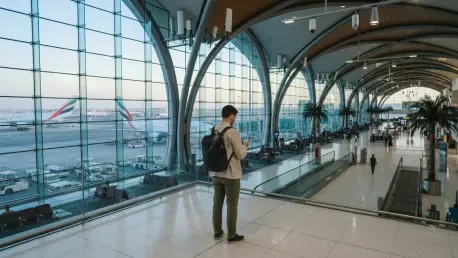

To ensure consistent signal strength throughout crowded terminals, Dubai International Airport integrated next-generation infrastructure that supports high-definition video and rapid file transfers. As a global aviation titan serving over 95 million travelers annually as of the last cycle, the facility faced the daunting task of maintaining connectivity in a dense environment of steel and glass. Through a high-stakes partnership with telecommunications leader du, the airport successfully deployed a sophisticated 5G+ network capable of exceeding 3 gigabits per second download speeds. This rollout represents more than just a speed boost; it serves as a critical backbone for an increasingly digital-first travel industry. By prioritizing high-performance mobile data, the airport manages to bridge the gap between heavy operational demands and the soaring expectations of international passengers. This initiative ensures that the hub remains competitive on a global scale while providing the necessary bandwidth to support emerging technologies that will define air travel from 2026 to 2028 and beyond. The deployment is a strategic response to the massive data consumption patterns observed among modern travelers who require instant access to cloud services and high-definition media.
Architectural Integration of High-Speed Connectivity
Overcoming Structural Barriers to Signal Integrity
Traditional mobile signals often struggle within massive indoor spaces due to the density of building materials and the sheer volume of simultaneous connections. To resolve this, the 5G+ deployment utilized a dense network of small cell sites and massive Multiple-Input Multiple-Output technology tailored specifically for the airport’s unique topography. These systems work in tandem to eliminate dead zones and manage signal handovers seamlessly as passengers move between terminals. By utilizing higher frequency bands that offer greater data capacity, the network maintains its 3Gbps peak even during the busiest periods of the winter travel season. This architectural precision ensures that the signal remains robust despite the physical barriers of the bustling corridors. Such technical rigor highlights a shift toward dedicated indoor wireless strategies that treat connectivity as a primary utility, much like electricity or water, essential for the modern traveler’s workflow and entertainment needs in 2026. This allows for a more reliable user experience regardless of the airport’s physical complexity, ensuring that every corner of the vast terminal remains a high-speed zone.
Operational Efficiency Through Low-Latency Networks
While the consumer benefits are immediately visible, the backend advantages of this 5G+ integration are equally transformative for airport stakeholders. Operational teams now leverage the low-latency environment to facilitate real-time monitoring of baggage handling systems and ground service equipment. By providing a reliable data pipe, the network allows for the deployment of sophisticated AI-driven logistics tools that can predict and mitigate delays before they cascade through the flight schedule. Ground crews equipped with high-speed mobile devices can access high-resolution technical diagrams or participate in live video consultations with maintenance centers, drastically reducing the time required for aircraft turnaround. This move toward a fully digitized operational environment minimizes the reliance on legacy systems, which often suffer from congestion in such high-traffic zones. Consequently, the integration of this next-generation mobile standard serves as a catalyst for a more responsive and agile management style across the entire airport ecosystem. It provides the foundation for more complex digital workflows that keep the airport running smoothly under high capacity.
Elevating the Passenger Digital Experience
For the modern traveler, the airport has transitioned from a waiting room to a high-speed mobile office and entertainment lounge. The jump to 3Gbps allows for the instantaneous synchronization of large cloud-based project files, enabling business travelers to remain productive without the frustrations of buffering or dropped connections. Beyond professional needs, the network supports the latest in high-fidelity entertainment, such as 8K video streaming and low-latency cloud gaming, which were previously impractical on public networks. This level of performance is particularly vital as more passengers adopt data-intensive devices like augmented reality headsets for navigation or immersive shopping experiences within the duty-free sections. By removing the friction associated with slow data, the facility fosters an environment where digital engagement is limited only by the hardware in the user’s hand. This seamless connectivity transforms the layover experience into a valuable window of productivity, reinforcing the hub’s reputation as a world-class destination. It ensures that passengers can stay connected to their personal and professional lives with zero interruptions during their journey.
Strategic Directions for Future Aviation Hubs
The successful integration of the 5G+ network at Dubai International Airport redefined the baseline for mobile connectivity in high-density transportation hubs. By achieving speeds that surpassed 3Gbps, the collaboration between aviation officials and telecommunications experts proved that technical limitations in indoor environments could be overcome with strategic engineering. This project moved the needle from basic internet access to a sophisticated utility that empowered both travelers and operational staff. Looking forward, the focus should shift toward optimizing this bandwidth to support a wider array of Internet of Things devices and automated security protocols. Organizations must consider these high-capacity networks not as an endpoint, but as the foundational layer for all future digital transformations. As global travel volumes continue to rise from 2026 onward, the priority will be maintaining this performance through continuous software updates and hardware scaling to meet the ever-increasing data demands. This proactive investment in infrastructure serves as a model for other global cities aiming to modernize their gateway facilities. Building such robust systems today ensures that the aviation industry remains resilient against the digital challenges of tomorrow.