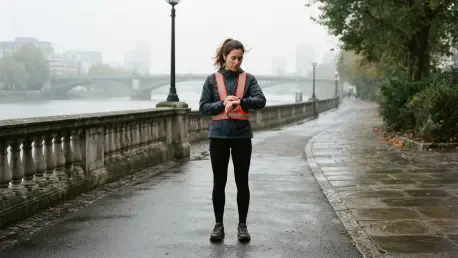

Modern smartwatches are evolving into comprehensive safety ecosystems featuring satellite-enabled emergency calls and automated pulse detection for solo athletes. This technological shift addresses a growing concern among city dwellers who find their fitness routines compromised by rising anxieties over personal security. For many, a single encounter with urban aggression can transform a dedicated year-round runner into a fair-weather exerciser, one who only feels comfortable when the sun is high and the paths are crowded. The psychological weight of such incidents often lingers far longer than any physical bruise, effectively shrinking the boundaries of where individuals feel they belong. Reclaiming these spaces is not merely a matter of physical recovery but an exercise in rebuilding confidence through strategic preparation. By leveraging current advancements in wearable hardware, athletes are beginning to find ways to mitigate the feeling of vulnerability that often accompanies solitary training in secluded or poorly lit environments. This process involves a transition from isolation to active awareness.
Enhancing Environmental Perception Through Audio
Traditional audio solutions have long been a double-edged sword for runners, offering the “magic and allure” of music while simultaneously cutting off the user from their immediate surroundings. Noise-canceling technology, while impressive for travel or office work, creates a dangerous sensory vacuum on city streets by masking the sounds of approaching vehicles or footsteps. To counter this, many athletes in 2026 have transitioned to open-ear audio designs, such as the Shokz OpenFit Pro, which use bone conduction or directed air conduction to deliver sound without obstructing the ear canal. This design philosophy ensures that environmental feedback—the ring of a bicycle bell or the gait of a passerby—remains audible, providing a critical early warning system. By maintaining a connection to the acoustic landscape, runners can enjoy their podcasts or playlists without sacrificing the situational awareness necessary to navigate complex urban terrains where hazards can emerge from any direction.
The move toward situational awareness represents a fundamental shift in how wearable technology is marketed to the fitness community, moving away from isolation and toward integration. When the ear canal is left open, the brain can more effectively process spatial data, allowing for a quicker response to potential threats or simple mechanical dangers like an uneven sidewalk. This technological choice serves as a psychological anchor, reducing the hypervigilance that often plagues those returning to exercise after a traumatic event. Instead of constantly looking over their shoulder, the athlete can rely on their natural hearing, augmented by devices that respect the priority of safety. This balance of entertainment and vigilance allows for a more relaxed running experience, which is essential for maintaining a consistent training schedule. As these devices become more sophisticated, the clarity of ambient sound is being refined, ensuring that safety does not have to come at the expense of high-quality audio during a long-distance run.
Documenting Real-Time Interactions With Smart Optics
One of the most significant hurdles in addressing street harassment or unprovoked attacks is the lack of objective evidence, which often leads to closed police investigations and a feeling of powerlessness for the victim. Smart eyewear, such as the Meta Oakley Vanguard series, is filling this gap by incorporating high-definition cameras that can be activated via simple voice commands. This hands-free functionality is vital for runners who need to keep their eyes forward and their hands free while maintaining pace. The presence of a visible recording device acts as a potent psychological deterrent, signaling to potential aggressors that their actions are being documented in real-time. For a runner who has previously faced the frustration of an “insufficient evidence” ruling, the ability to capture footage provides a profound sense of empowerment and agency. This technology transforms the runner from a passive target into an active observer who can hold others accountable for their behavior in public spaces.
Beyond the security benefits of recording, smart glasses facilitate a defensive posture by allowing for seamless communication without the distraction of a smartphone screen. Looking down at a handheld device is a moment of significant vulnerability, as it breaks the user’s line of sight and diminishes their awareness of the immediate environment. By utilizing heads-up displays or integrated speakers, smart optics keep the athlete’s head up and their gaze scanning the horizon. This posture is not only better for running form but also communicates alertness to anyone in the vicinity. The integration of AI-driven voice assistants further enhances this by enabling the runner to send messages or make calls without breaking their stride. This continuous connectivity ensures that help is always a voice command away, bridging the gap between solitude and safety. The ability to navigate via subtle audio cues or lens overlays further reduces the need for external distractions, keeping the runner’s focus on the road ahead.
Establishing a Safety Net With Advanced Watches
The modern smartwatch has evolved into a sophisticated health and security hub, offering a layer of protection that operates independently of traditional cellular signals. High-precision GPS tracking in current models like the Google Pixel Watch 5 provides pinpoint accuracy even in dense urban canyons where tall buildings often scramble satellite data. This ensures that live location sharing—a staple feature for many solo athletes—remains reliable, allowing trusted contacts to monitor a runner’s progress in real-time. Perhaps more critical is the advent of “Loss of Pulse Detection” and advanced fall sensors that can distinguish between a deliberate stop and a medical or physical emergency. If the device detects an anomaly, it can initiate a countdown before automatically contacting emergency services with the user’s exact coordinates. This automated responsiveness is a game-changer for those who may be incapacitated or unable to reach their phone, providing a redundant safety net that functions silently during every workout.
While no single piece of technology can guarantee absolute safety in a metropolitan environment, the synthesis of these tools allows for a significant reclaiming of personal territory. By prioritizing awareness over distraction, runners can successfully transition from a state of trauma-induced paralysis to active goal achievement. The ultimate value of this wearable ecosystem is found in its ability to manage the emotional responses that often trigger a “fight or flight” reflex in previously dangerous locations. For those seeking to replicate this recovery, the recommended strategy involves layered redundancy: combining open-ear audio for awareness, smart optics for documentation, and satellite-enabled watches for emergency response. By adopting this tiered approach to wearable safety, individuals move beyond mere survival and return to the performance goals that define their athletic identities. This transition proves that with the right tools, the path to reclaiming public spaces remains accessible for everyone.