
The release of iOS 27 marks a definitive departure from the historical limitations of mobile assistants by integrating deep generative capabilities directly into the core of the operating system. For years, users have navigated a landscape of rigid voice commands that often felt disjointed or lacked the necessary context to complete complex, multi-step requests. This update addresses those specific frustrations by shifting the underlying architecture toward proactive intelligence, where the system anticipates needs rather than simply reacting to prompts. By prioritizing a more intuitive user experience, Apple is finally narrowing the gap between its ambitious marketing promises and the daily functional reality of artificial intelligence within its ecosystem. This strategic pivot focuses on making technology feel seamless and helpful, moving the needle from a basic utility to a sophisticated digital companion that understands the nuances of human interaction through context.
The Apple-Google Strategic Alliance: Foundations of a New Era
The backbone of this massive software transformation is a monumental partnership with Google, where Gemini models now power the next generation of Apple Foundation Models. This collaboration represents a calculated decision by leadership to prioritize immediate functional excellence by utilizing Google’s proven cloud infrastructure and refined model capabilities. By doing so, the ecosystem can offer top-tier generative features immediately while continuing to develop and refine internal technologies over the coming years. This alliance is not merely a technical bridge but a strategic realignment that acknowledges the speed at which the industry is moving. It allows for a level of sophisticated reasoning and natural language processing that would have taken significantly longer to achieve through isolated development. Consequently, the user experience is elevated by a foundation that is both robust and capable of handling high-level cognitive tasks without the typical latency associated with legacy systems.
Despite the heavy reliance on external technology providers, there is a doubled-down commitment to security through the Private Cloud Compute framework. This ensure that while the massive processing power of Gemini handles the heavy lifting, user data remains shielded within a proprietary environment that is inaccessible to outside entities. The reported $1 billion-per-year deal highlights a pragmatic approach to modern competition, where the immediate delivery of a superior product takes precedence over the slower development of a purely in-house solution. This infrastructure allows for the offloading of complex queries to high-performance servers without compromising the privacy standards that have become a hallmark of the brand. By maintaining this strict boundary, the integration demonstrates that high-performance artificial intelligence and absolute user privacy are no longer mutually exclusive. This approach creates a trustworthy environment for users who were previously hesitant to share personal data with cloud-based models.
Reimagining Siri: The Project Campos Architecture
Under the internal codename Project Campos, the primary voice assistant is evolving from a simple graphical overlay into a standalone conversational hub. This new architecture allows for a thread-based interaction style similar to dedicated AI interfaces like ChatGPT, enabling the assistant to handle complex follow-up questions and multi-step tasks without losing track of previous context. This shift solves the memory issue that has historically plagued voice assistants, allowing for a much more natural dialogue where the system remembers details from earlier in the conversation. For example, a user can discuss a travel itinerary and then ask for a weather update at the destination ten minutes later without having to specify the location again. This continuity transforms the assistant into a persistent entity that understands the flow of human thought and intent. It effectively eliminates the frustration of having to repeat basic information, making the interface feel truly intelligent.
The visual representation of this architectural change is equally striking, featuring a redesigned interface where the Dynamic Island utilizes a subtle glowing aura to signal active processing. This design shift reflects a move toward a more immersive experience where the assistant feels less like a disruptive tool and more like an integrated layer of the entire operating system. The aesthetic overhaul is intended to signal the arrival of a more modern, capable era of intelligence that is always present but never intrusive. When a task is initiated, the visual feedback is responsive and fluid, providing a sense of transparency regarding what the system is currently doing. This immersive approach ensures that the interface remains functional across various applications, allowing for a persistent presence that can assist with on-screen content in real time. By focusing on these visual cues, the design team has created a way for users to feel more connected to the processing power happening beneath the glass of their device.
Democratizing AI: Siri Extensions and Practical Utility
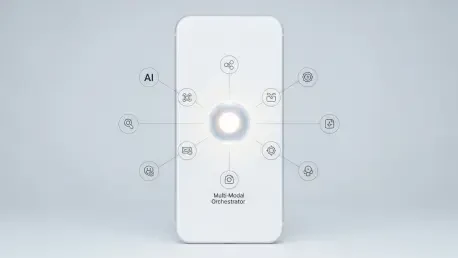
In a move toward a more pluralistic ecosystem, the introduction of Siri Extensions allows users to choose their preferred AI engines for specific tasks. Instead of being locked into a single model for every request, individuals can now route creative writing tasks to one provider while relying on another, such as Gemini or Claude, for data-heavy research or coding assistance. This positioning turns the central assistant into a sophisticated orchestrator that manages various high-level services, giving the user unprecedented control over their digital experience. This flexibility acknowledges that different models have different strengths and that a one-size-fits-all approach is no longer sufficient for the modern professional. By opening the platform in this manner, the system becomes a gateway to the best tools available in the industry, all managed through a single, unified interface that prioritizes the user’s specific workflow requirements.
Beyond these structural changes, the update introduces tangible everyday benefits through advanced visual intelligence and organizational tools found deep within the system. Users can now utilize automatic nutrition label scanning, which extracts data from food packaging and integrates it directly into health tracking metrics without manual entry. Additionally, the software features seamless business card integration and AI-driven tab grouping in Safari, which organizes research sessions based on the thematic content of the open pages. These backend innovations aim to reduce the friction of manual data management, making the device significantly more useful in practical, real-world scenarios. By focusing on these micro-efficiencies, the intelligence layer proves its value in the small moments of a user’s day, not just during high-level queries. This practical application of technology ensures that the improvements are felt across the entire spectrum of device usage, from productivity to personal well-being.
Hardware Evolution: Constraints and Future Integration
The full power of iOS 27 is closely tied to specific hardware requirements, targeting the iPhone 15 Pro and the newest iPhone 18 series. This barrier to entry is a technical necessity to support the intense processing demands of the updated Neural Engine, ensuring that the most sophisticated features run smoothly and securely on the device itself. High-speed local processing is essential for maintaining the privacy and latency standards required for a truly responsive experience. Furthermore, the update includes specific optimizations for foldable displays, allowing features to bridge multiple active windows for enhanced multitasking and data transfer between applications. This hardware-software synergy ensures that the most advanced capabilities are not throttled by older components, providing a clear path for future development. It also encourages a faster adoption of modern hardware as the benefits of the new intelligence layer become an essential part of the modern mobile experience for professionals.
As the deployment of these features progressed, the success of this transition depended heavily on the ability to deliver these ambitious tools with a high degree of reliability. While the reliance on external models highlighted the challenges of rapid in-house development, the integration of a multi-model extension system suggested that the platform was ready to lead the next era of mobile intelligence. These updates fundamentally redefined the relationship between individuals and their personal devices by making the interaction more conversational and context-aware. Those who sought to maximize their productivity looked toward upgrading their hardware to fully leverage the thread-based memory and visual intelligence features. Looking forward, the focus remained on refining the orchestrator role of the assistant, ensuring it could navigate an increasingly complex landscape of third-party plugins. This evolution ultimately proved that a flexible, open approach to model integration provided a more robust and personalized user experience than a closed system.