
The modern smart home frequently suffers from a fragmented architecture where disparate devices operate within isolated silos, creating a cumbersome user experience that often discourages the very automation it was designed to provide. As households accumulate everything from intelligent lighting and climate control systems to high-definition security cameras and automated entryways, the need for a singular, robust command center becomes increasingly apparent for efficient management. Vivint has addressed this complexity with the release of the Smart Hub Pro 2, a device engineered to act as the definitive brain for residential ecosystems while ensuring seamless interoperability across multiple communication protocols. By consolidating control into a centralized interface, the system aims to eliminate the friction associated with switching between various mobile applications to perform simple household tasks. This development represents a shift toward a more cohesive digital environment where the hardware recedes into the background, allowing the functional benefits of a connected home to take center stage for all residents.
Engineering the Unified Residential Core
Implementation of Universal Protocol Support
Integrating various wireless standards like Matter and Thread into a single physical unit allows for a level of cross-brand compatibility that was previously unattainable without specialized technical knowledge. The Smart Hub Pro 2 leverages these standards to ensure that devices from different manufacturers can communicate with one another without the latency issues typically associated with cloud-based relays. This transition toward local processing not only speeds up the response time for simple commands, such as turning on a hallway light when a door opens, but also provides a more resilient framework that continues to function even during internet service interruptions. By prioritizing the Matter protocol, the hub establishes a future-proof foundation that allows homeowners to expand their systems with confidence, knowing that new hardware will integrate effortlessly. The reliability of this wired and wireless hybrid approach ensures that the fundamental operations of the smart home remain consistent and predictable at all times, regardless of external network stability.
Reimagining the Local Control Experience
The physical interface of the central command unit has undergone a significant transformation to prioritize intuitive navigation and immediate access to the most frequently used automation routines. A large, high-resolution touchscreen provides a vivid display for live camera feeds, allowing residents to monitor their property without having to locate a smartphone or tablet. This localized control point serves as a shared dashboard for all family members, simplifying the management of complex climate schedules and lighting scenes through a unified design language. The software overlay is designed to be responsive and customizable, enabling users to pin specific devices or shortcuts to the home screen for one-touch activation. This approach reduces the cognitive load required to operate a sophisticated home network, making advanced technology accessible to users regardless of their technical proficiency. By centralizing these controls, the system encourages a more interactive relationship between the residents and their living space, fostering a sense of mastery over the various automated components.
Enhancing Security and Data Integrity
Advancements in Local Edge Processing
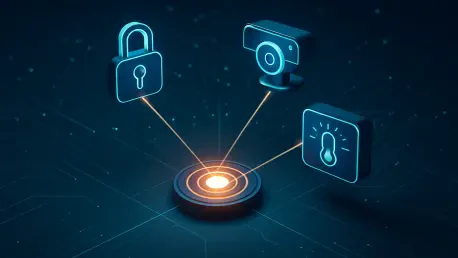
Security remains a paramount concern for modern households, and the shift toward edge computing represents a major step forward in protecting personal data from external vulnerabilities. By processing facial recognition and person detection algorithms locally on the hub’s internal processor, the system minimizes the amount of sensitive video data that must be uploaded to the cloud. This localized approach to artificial intelligence not only enhances privacy but also drastically improves the speed at which the system can identify and respond to potential threats. For instance, the hub can distinguish between a family member and a stranger in real-time, triggering specific automated responses based on the identity of the person detected. The reduction in cloud dependency means that even if the external network is compromised, the primary security features of the home remain active and secure. This self-contained data ecosystem provides a level of digital sovereignty that is increasingly valued by privacy-conscious consumers who are wary of large-scale data collection and storage.
Strategic Evolution of Automated Living
Homeowners and technical administrators successfully navigated the transition to centralized management by implementing robust security protocols that prioritized local data handling over cloud reliance. To ensure the longevity of their systems, users conducted comprehensive reviews of their existing smart hardware to verify compatibility with the new Matter-enabled infrastructure. The shift toward a unified interface allowed residents to create more complex automation routines without the need for third-party middleware, effectively reducing the complexity of the digital home. Developers focused on refining the communication between edge devices and the central hub to ensure that latency remained minimal as more sensors were added to the network. These efforts resulted in a more stable and responsive environment that could adapt to the changing needs of the modern household. This transition set a new standard for how residential technology should be deployed, emphasizing the importance of local control and data privacy while providing a clear roadmap for future hardware integrations.