
The boundaries between physical and digital environments have finally dissolved into a seamless interactive landscape as spatial computing moves from a niche hobby to a fundamental pillar of modern professional and personal interaction. This shift is primarily driven by the arrival of ARKit 3.0, which introduces sophisticated depth-sensing and human-centric features that redefine how hardware perceives the world. Developers are no longer restricted by static planes or simplified object recognition; instead, the technology now facilitates a nuanced understanding of human movement and environmental geometry. By integrating advanced machine learning models directly into the framework, the system provides a robust platform for applications that require millimeter-level precision. This technological leap marks a definitive transition toward an era where digital objects behave with the same physical presence as tangible ones. As enterprises look to integrate these capabilities into their daily operations, the focus shifts from mere visualization to deep, functional immersion that changes how work is performed and content is consumed on a global scale.
Advancing Human Integration: Motion Capture and Occlusion
The most significant advancement within this update is the introduction of People Occlusion, which allows digital content to realistically pass behind or in front of individuals in the real world. Previously, augmented reality suffered from a layering problem where digital objects always appeared on top of the camera feed, breaking the illusion of depth and physical presence. Now, using real-time segmentation, the software identifies human forms and adjusts the rendering of virtual elements to maintain correct spatial order. This capability is paired with sophisticated Motion Capture, which enables the tracking of human movement through a single camera without the need for specialized suits or external sensors. By mapping 2D body positions into a 3D skeletal structure, the system can mirror a user’s actions onto digital avatars or trigger interactive elements based on gestures. These features collectively ensure that the digital layer respects the physical constraints of the human body, fostering a level of immersion that was previously unattainable outside of high-end research laboratories or film production sets.
Building on this foundation of human-centric interaction, the framework now supports the simultaneous use of both front and back cameras to expand the scope of interactive experiences. This dual-camera capability allows a user to participate in an augmented environment using their facial expressions and head movements while simultaneously mapping and interacting with the world around them. For example, a user might see their own face reflected onto a digital character that reacts to their real-time emotions while they explore a virtual architectural model projected onto their living room floor. Furthermore, the updated tracking algorithms now support up to three people at once, facilitating complex social interactions within a single shared frame. This expansion of the sensor payload ensures that the device acts as a comprehensive portal rather than just a simple lens, capturing the full context of the user’s surroundings and identity. The technical overhead of managing multiple data streams has been significantly reduced through hardware-specific optimizations, ensuring that these complex tasks do not compromise the device’s battery life or thermal performance during extended professional use.
Strategic Implementation: Navigating the New Spatial Frontier
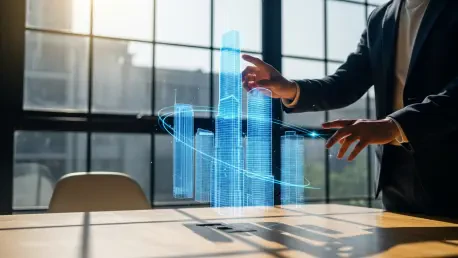
The evolution of spatial computing is also defined by the ability for multiple users to interact with the same digital artifacts simultaneously in a shared physical space. Collaborative Session support has been refined to allow for near-instant synchronization of world maps and digital objects across several devices, creating a unified experience for teams. This development is crucial for industries such as urban planning or industrial design, where stakeholders need to visualize and manipulate a shared 3D model in real-time. The framework now includes enhanced persistence, which ensures that a digital project started in one session remains in its exact physical location for subsequent interactions, even if the device is turned off or moved. This persistence is achieved through a combination of visual-inertial odometry and cloud-based anchoring systems that recognize specific environmental signatures. By treating the digital layer as a persistent part of the landscape rather than a temporary overlay, the technology encourages long-term engagement and complex project management. This shift toward multi-user persistence effectively turns the real world into a blank canvas for collaborative innovation and long-term digital architecture.
The launch of this updated framework provided a clear roadmap for organizations seeking to capitalize on the next wave of computing by prioritizing spatial awareness and user-centric design. Decisions were made to move away from isolated experiences toward interconnected systems that utilized the full depth of the physical environment. Companies that successfully integrated these tools focused on creating utility-driven applications that solved specific logistical challenges, such as real-time warehouse navigation or remote medical consultations. To maximize the potential of this technology, stakeholders had to invest in high-quality 3D assets and robust network infrastructures capable of handling synchronized data streams. The industry moved toward a standard where digital interaction was expected to be as intuitive as physical manipulation, necessitating a rethink of traditional user interface paradigms. Future considerations centered on the ethical implications of persistent spatial data and the need for standardized protocols to ensure interoperability between different hardware platforms. By embracing these advancements, the professional landscape transformed into a more dynamic and interactive environment where information was no longer confined to screens but was woven into the very fabric of the physical world.